
Standard LiFePO4 batteries in volume, your brand on the product, or a configuration built around your equipment — supplied by LJY Energy, a China-based LiFePO4 battery supplier and OEM/ODM solutions provider.
How we work: LJY Energy is a Shenzhen LiFePO4 battery supplier and OEM/ODM coordinator, not a factory. Production is carried out by qualified manufacturing partners to the written specification confirmed with you; we manage specification confirmation, supply and export. Send your brief: voltage, capacity, volume band and target market
LJY Energy provides standard and customized LiFePO4 battery solutions for overseas brands, distributors & resellers, wholesale distributor program partners, installers and equipment manufacturers. Start from a standard model for repeat procurement, add your branding, or have voltage, capacity, BMS, communication and enclosure configured around your application. Every project is specified and confirmed in writing before production.
Flexible specifications
Voltage, capacity, BMS and enclosure configured per project
One point of contact
One contact from specification confirmation to export
Volume & repeat supply
The same confirmed specification held across repeat orders
OEM / ODM support
Your brand, labels, packaging and documentation
Who This Page Is For
Distributors & wholesalers
Building a repeatable LiFePO4 range for their market
Brands
That want their own label, packaging and product documentation
Installers & system integrators
Who need batteries matched to their inverters and systems
Equipment manufacturers
Integrating a battery pack into a machine, vehicle or device
Three Ways to Work With Us
ROUTE 1 · STANDARD
Standard Models, Volume Supply
Order proven standard models — 12V, 24V, 48V / 51.2V ranges for storage, mobility and industrial use — in volume, with the same specification held stable across repeat orders. Start from the product catalog.
ROUTE 2 · OEM
OEM — Your Brand
Your logo, labels, packaging and manuals on a standard or lightly configured battery. The practical route for distributors and brands who need shelf-ready product without a development program. For a ready 12.8V RV & marine private-label program (100–300Ah), see the RV & marine private-label program. For a common ESS base model, start from the 51.2V 200Ah LiFePO4 battery.
ROUTE 3 · ODM
ODM — Your Configuration
Voltage, capacity, BMS behaviour, communication, enclosure and dimensions configured around your equipment and confirmed specification by specification. See custom battery solutions.
What We Can Customize
Customization is handled per project: tell us the target, we confirm what is achievable for that configuration — in writing — before anything is produced.
Voltage
12V, 24V, 36V, 48V / 51.2V and other configurations on request, matched to your system voltage and charger.
Capacity & Format
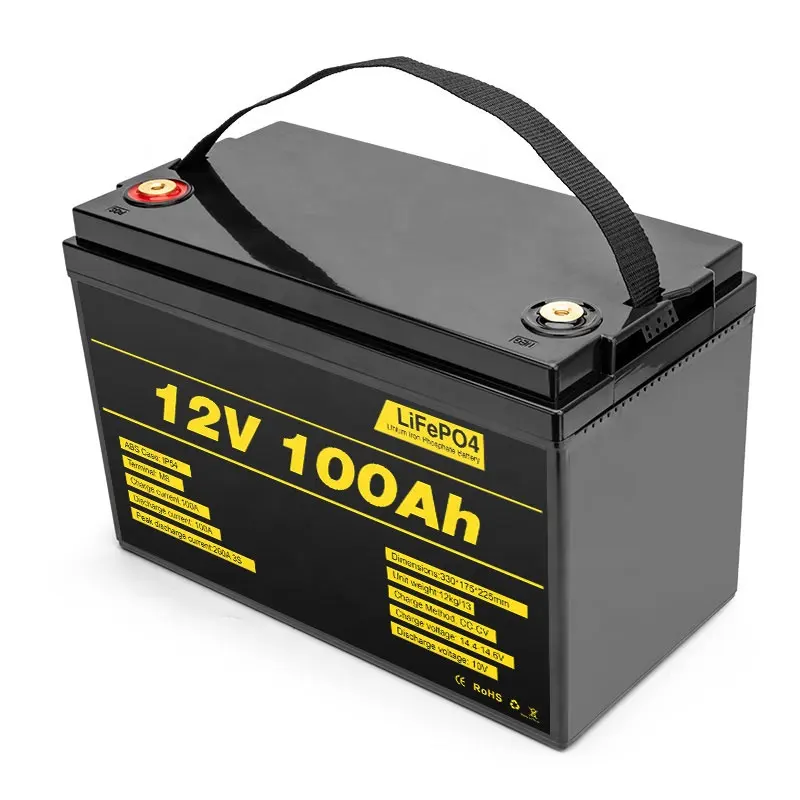
Capacity matched to your application, in standard cases or project-specific formats — sized for runtime, space and weight targets.
BMS & Protection
BMS selected and configured for your use case: charge/discharge limits, low-temperature charging protection and self-heating options for cold climates.
Communication
CAN, RS485 and Bluetooth options, with inverter and system communication matched and confirmed against your equipment before production.
Enclosure & Dimensions
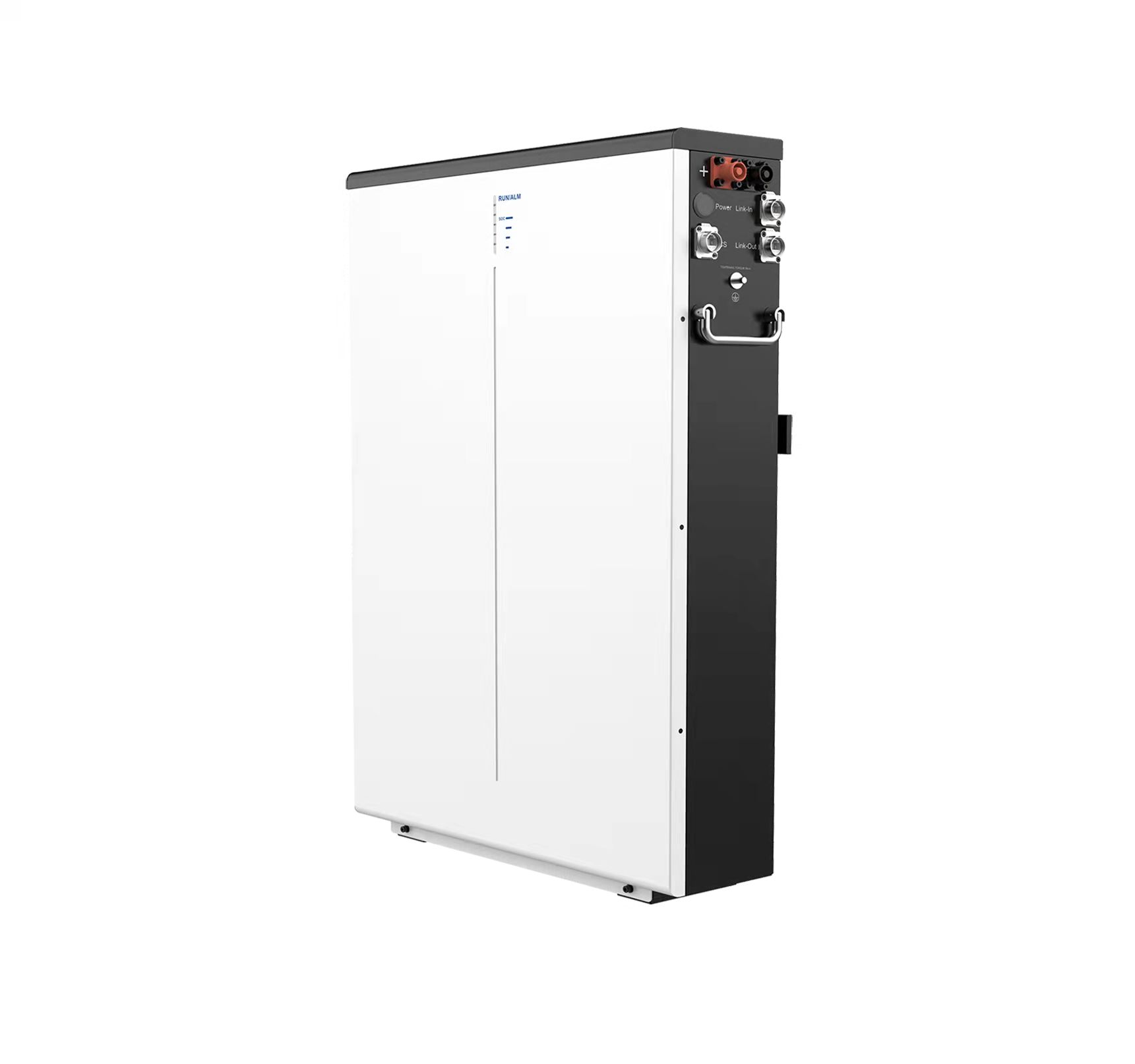
Standard housings, wall-mounted and rack formats, or dimensions adapted to your installation space and mounting method.
Connectors & Cabling
Terminal types, connectors and cable arrangements matched to your equipment, so the pack lands in your assembly or installation without rework.
Display & Monitoring
State-of-charge displays, indicator options and app/Bluetooth monitoring where the configuration supports it — confirmed per model.
Logo & Labels
Your brand on the product: logo, rating labels and model naming prepared to your artwork and market requirements.
Packaging & Documentation
Retail or bulk packaging designed for your sales channels, with manuals and documentation under your brand.
Configurable Options at a Glance
The cards above in one view. This is not a fixed menu — every option is confirmed against your model and project in the written specification before production.
| Option | What Can Be Configured | Status |
|---|---|---|
| BMS & protection | Protection thresholds, continuous and peak current rating, smart BMS features | Confirmed per project |
| Communication | CAN / RS485 protocol profile matched to your inverter or equipment; Bluetooth monitoring | Confirmed per project |
| Parallel configuration | Module count and bank layout, depending on configuration | Confirmed per project |
| Self-heating | Available upon request for low-temperature applications | Confirmed per project |
| Enclosure & colour | Case format and dimensions within the platform; colour options depending on model | Confirmed per project |
| Branding | Logo, rating labels and model naming prepared to your artwork | Confirmed per project |
| Packaging & documentation | Retail or bulk packaging; manuals and documents under your brand | Confirmed per project |
| Connectors & cabling | Terminal type, cable sets and lengths for your installation | Confirmed per project |
Not sure which route fits your project?
Send us your application, target voltage and capacity, and estimated quantities. We will propose the simplest route that meets it — standard, OEM or ODM — with the specification points that need your confirmation.
Typical Applications
OEM and ODM projects most often start from an application. These are the ones we support most — each links to the relevant solution or product range:
- RV & caravan manufacturers — factory-fit house batteries for motorhome and caravan builders; private-label packs also covered under the 12.8V RV & marine private-label program
- Portable power station brands — LiFePO4 packs supplied on an OEM basis
- Home energy storage — wall-mounted and rack systems for residential solar brands and installers
- Golf carts — dedicated single-pack conversions and fleet programs
- Telecom backup power — 48V standby batteries for base stations and remote sites
- Material handling — 24V batteries for pallet jacks, stackers and warehouse equipment
Not your application? Browse all battery solutions by application — if your use case is battery-powered, we can usually propose a configuration for it.
How It Works
- Requirements discussion — Tell us your application, target voltage and capacity, quantities, branding needs and any equipment the battery must work with.
- Proposal & specification confirmation — We propose a suitable configuration and confirm every specification line — electrical, mechanical, communication, branding, packaging — in writing.
- Sample validation — Samples can be arranged so you can evaluate fit, communication and performance in your own system before committing to volume.
- Volume supply — Production follows the confirmed specification, which is kept stable across repeat orders.
- Export & delivery — Export packing, dangerous-goods documentation for lithium batteries and delivery terms agreed in advance, with repeat supply arranged for ongoing programs.
OEM/ODM Battery Spec Request Checklist (A–M)
Start here if you want the short path: OEM/ODM LiFePO4 RFQ checklist (five starter fields + common mistakes).
Use this checklist to brief any LiFePO4 OEM/ODM project: with us or with another supplier. You don’t need to fill every line to start. Mark each line Required, Preferred or Open (advise me). A supplier that confirms each line in writing, and flags what it cannot confirm, saves you a re-quote, a failed sample or a disputed shipment. Keep the confirmed version: it is the reference for samples, mass production, inspection and warranty claims.
LJY Energy is a supplier and OEM/ODM coordinator, not a factory. Nothing below states an MOQ, price, lead time, warranty length or capacity: those are confirmed per project in the quotation. Certificates are available or arranged per project; testing and certification fees are borne by the buyer.
Download the fill-in version: OEM/ODM spec request template (PDF, printable) · plain-text version. Columns: Field / Your requirement / Required-Preferred-Open / Supplier confirmation / Evidence supplied (document name, revision).
Short on time? Start with five lines: application and duty cycle (A2), nominal voltage (B1), capacity and energy (B2), target markets (A5) and annual forecast band (J3). The rest can be marked “Open (advise me)”.
Jump to: A. Project and application · B. Electrical · C. Cells · D. BMS and communication · E. Temperature · F. Mechanical, enclosure and terminals · G. Branding, labelling and documentation · H. Packaging and shipping · I. Certifications and compliance (by market) · J. Quantities, forecast and commercial · K. Samples, QC and inspection · L. Warranty terms to negotiate (not fixed numbers) · M. After-sales and RMA
A. Project and application
| # | Field | What to write | Why it matters |
|---|---|---|---|
| A1 | Company type and role | OEM equipment maker / brand owner / distributor / integrator / installer | Decides whether you need private label, a fixed BOM across years, or catalogue models. |
| A2 | Application and duty cycle | e.g. golf cart, RV house bank, marine trolling, telecom backup, home ESS, AGV; hours per day, cycles per day, float vs cycling | Cycling and float use need different BMS settings, cell choice and warranty basis. |
| A3 | Equipment the battery must work with | inverter/charger/controller/motor brand and exact model, firmware if known | Compatibility is decided per model and protocol, not per brand. |
| A4 | Operating environment | indoor/outdoor, vibration (vehicle/boat), altitude, humidity/salt spray | Drives enclosure, fixing, conformal coating and test plan. |
| A5 | Target markets (countries) | list every country of sale | Sets certificate, labelling and language requirements (section I). |
B. Electrical
| # | Field | What to write | Why it matters |
|---|---|---|---|
| B1 | Nominal voltage | 12.8 / 25.6 / 38.4 / 51.2 V or other; series count if known | Must match the equipment’s voltage window, including the charger’s absorption voltage. |
| B2 | Capacity / energy | Ah and Wh/kWh; usable vs nominal | Ah alone hides the voltage; usable energy depends on the DoD window you allow. |
| B3 | Operating voltage window | min/max V at the equipment terminals | The BMS cut-offs must sit inside the equipment’s own limits, or one side trips first. |
| B4 | Continuous discharge current | A, at what ambient temperature | Sizes BMS, cells, busbars and terminals. The most common undersizing failure. |
| B5 | Peak / surge current | A and duration (e.g. 2× for 10 s, motor inrush, inverter start) | Motors and inverters draw inrush the BMS must tolerate without nuisance trips. |
| B6 | Charge current and charger | max charge A, charger type (alternator, DC-DC, solar MPPT, inverter-charger) | Alternator and generator charging need current limiting. Mismatch shortens life or trips the BMS. |
| B7 | Capacity test basis | discharge rate (e.g. 0.2C/0.5C), temperature, cut-off voltage, charge method | Without stated conditions, two “100Ah” quotes are not comparable. |
| B8 | Cycle-life claim basis (if requested) | cycles to what end-of-life % at what DoD, C-rate and temperature | A cycle number without conditions can’t be verified or claimed against (see cycle-life claims guide). |
| B9 | Series/parallel expansion | max units in parallel/series, and whether the BMS supports it | Parallel and series limits are a BMS design limit. Over-stating them causes field failures. |
| B10 | Self-discharge / storage | expected storage time before use, storage SoC | Distributors hold stock. Storage SoC and a recharge interval protect the cells. |
C. Cells
| # | Field | What to write | Why it matters |
|---|---|---|---|
| C1 | Cell chemistry | LiFePO4 (LFP) | Confirms the chemistry on every document (UN38.3, SDS, labels). |
| C2 | Cell format | prismatic / cylindrical (e.g. 32700) / pouch; preferred capacity (e.g. 100/105/280/314Ah) | Format drives pack size, weight, vibration robustness and serviceability. |
| C3 | Cell brand/model preference | named brand and model, or “supplier to propose, in writing” | “Grade A” with no brand and model is not a specification (see Grade A vs Grade B cells). |
| C4 | Cell grade and new/unused requirement | new, unused, same production batch; matching criteria (capacity, IR, voltage spread) | There is no universal grading standard. Write the measurable criteria you will accept. |
| C5 | Cell traceability | QR/serial readable and recorded per pack; batch test report | Lets you trace a field failure to a batch and settle disputes. |
| C6 | Cell test evidence | cell maker datasheet; cell UN38.3; cell IEC 62619 / UL 1642 if applicable | Pack documents don’t replace cell documents, and vice versa. |
D. BMS and communication
| # | Field | What to write | Why it matters |
|---|---|---|---|
| D1 | BMS rating | continuous/peak A, MOSFET or relay/contactor | Must cover B4/B5 with margin at the stated ambient temperature. |
| D2 | Protection set-points | over-/under-voltage per cell, over-current, short-circuit, over-temperature, low-temperature charge cut-off | You need the numbers to test samples and judge claims later. |
| D3 | Balancing | passive/active, balance current | Affects long-term capacity consistency in large banks. |
| D4 | Communication protocol | CAN / RS485 / RS232 / Bluetooth / none; protocol name (e.g. “Pylontech-compatible CAN”), baud rate, ID setting | Inverter and controller pairing depends on the exact protocol and settings. Confirm per model. |
| D5 | Equipment pairing evidence | wanted: test log or screenshot with your exact inverter/controller model and firmware | Brand-level “compatible with X” isn’t evidence. Many inverter makers only warrant listed batteries. |
| D6 | Monitoring / app | Bluetooth app, display/SOC meter, data export | A distributor’s support team needs BMS data for remote diagnosis and warranty claims. |
| D7 | Firmware | who holds it, update method, change notification | Unannounced firmware changes can break pairing on repeat orders. |
| D8 | Wake-up / shutdown behaviour | sleep mode, wake by charge or button, standby drain | Prevents “dead on arrival” reports after long storage. |
E. Temperature
| # | Field | What to write | Why it matters |
|---|---|---|---|
| E1 | Operating range | charge °C range, discharge °C range | LiFePO4 must not be charged below about 0 °C without heating (lithium plating risk). |
| E2 | Self-heating | required / not required; heating power and trigger temperature; heating energy source | Needed for cold-climate RV, marine and off-grid use. Adds cost and changes the BMS design. |
| E3 | High-temperature derating | max ambient, enclosure ventilation | Battery boxes in engine bays or sun-exposed cabinets run hot. |
F. Mechanical, enclosure and terminals
| # | Field | What to write | Why it matters |
|---|---|---|---|
| F1 | Max dimensions L×W×H and weight | mm/kg; group size (e.g. BCI 24/27/31, 8D, GC2) if replacing lead-acid | Drop-in replacements must fit the existing tray and hold-downs. |
| F2 | Enclosure material | ABS/PC, steel, aluminium; colour | Affects impact, fire behaviour, weight and branding. |
| F3 | Ingress protection | IP rating needed (e.g. IP65/IP67) | Marine, golf and outdoor use. Write the IP code, not “waterproof”. |
| F4 | Mounting and orientation | upright only / any orientation; rack 19-inch; wall mount; fixing points | Some cell formats and vents restrict orientation. Rack units need the rail spec. |
| F5 | Vibration / shock requirement | vehicle or marine; standard or test you require | Golf, AGV and marine packs fail at busbars and welds under vibration. |
| F6 | Terminals | stud size (M6/M8/M10), terminal type, polarity layout, torque spec | Wrong terminals mean adapters, poor contact and heat. |
| F7 | Breaker / switch / fuse | built-in breaker, on/off switch, fuse requirement | Some markets and installers expect integrated DC protection. |
| F8 | Handles, cable kit, accessories | handles, cables, comms cables, brackets | Missing accessories turn into field complaints and extra freight. |
G. Branding, labelling and documentation
| # | Field | What to write | Why it matters |
|---|---|---|---|
| G1 | Private label scope | logo on case, rating label, model naming, colour | Sets artwork deadlines, MOQ effects and who owns the label claims. |
| G2 | Label content by market | rating label fields, warnings, symbols, languages, serial/date code, QR | Market rules set mandatory label content (e.g. EU Battery Regulation labelling). Wrong labels can block customs or a retailer. |
| G3 | Manual and documents | user manual, installation guide, spec sheet, in which languages | Installers and distributors need them to sell and support the product. |
| G4 | Model-number control | your model name ↔ supplier model, written mapping | Certificates and UN38.3 refer to the supplier model. Without the mapping, documents can’t be traced. |
H. Packaging and shipping
| # | Field | What to write | Why it matters |
|---|---|---|---|
| H1 | Shipping classification | UN3480 (batteries alone) / UN3481 (packed with or contained in equipment) | Sets packaging, labels, documents, carrier acceptance and cost. |
| H2 | Transport mode | sea (IMDG) / air (IATA DGR) / road / rail; FCL or LCL | Air rules are stricter. Since 1 Jan 2026, IATA also caps UN3481 packed with equipment at 30% state of charge (>2.7 Wh). Batteries shipped alone (UN3480) already had the 30% cap. |
| H3 | Shipping documents required | UN38.3 test summary (pack-level, your model), SDS, DG declaration, packing certificate if required by carrier | Carriers and forwarders refuse lithium cargo without the exact-model documents. |
| H4 | Packaging spec | carton/wood case, drop/stack requirement, pallet type, units per carton/pallet, SoC at shipment | Damaged lithium batteries are a DG incident, not just a claim. |
| H5 | Incoterm and ports | EXW/FOB/CIF/DAP/DDP + Incoterms 2020, origin/destination port | Decides who pays freight, DG fees and insurance, and where risk passes. |
I. Certifications and compliance (by market)
List what your market requires. The supplier answers per model and project: available or arranged per project, with testing and certification fees borne by the buyer.
| # | Field | What to write | Why it matters |
|---|---|---|---|
| I1 | Required standards by market | examples, check with your compliance advisor: UN38.3 (transport, all markets); IEC 62619 (industrial/ESS); IEC 62133-2 (portable); UL 1973 (stationary/auxiliary incl. RV); UL 9540/9540A (ESS systems, US); UL 2271 (light EV incl. golf/LSV); CE + EU Battery Regulation 2023/1542 (EU); market listings such as Australia CEC | Requirements depend on product, market and channel. Pay only for the ones your channel actually needs. |
| I2 | Who holds each certificate | named holder on each certificate/report (cell maker, pack maker, brand) | A certificate covers the holder’s model at that assembly level, not “the factory”. |
| I3 | Witness or own testing | will you test samples at your own lab or a third party? | Agree the method in advance so results are accepted by both sides. |
| I4 | Budget and timeline owner | who pays and when; re-test if the design changes | Certification can take longer than production. Plan it into the launch date. |
J. Quantities, forecast and commercial
| # | Field | What to write | Why it matters |
|---|---|---|---|
| J1 | Sample quantity | e.g. 2–5 units per configuration | Enough to test and keep a reference (“golden”) sample. |
| J2 | Trial / pilot order | quantity band | First production run validates the process before volume. |
| J3 | Annual forecast | quantity band per year, seasonality, number of SKUs | Lets the supplier plan cells and price realistically. A band is fine; precision isn’t required. |
| J4 | Quantity tiers for pricing | e.g. 50 / 200 / 1000 units | Gives you the price curve instead of one price. |
| J5 | Payment preference | T/T split, L/C, other | Payment terms carry risk for both sides; agree them before samples. |
| J6 | Target price or budget band (optional) | band per unit or per kWh | Helps the supplier propose a cell/BMS level that fits, instead of over- or under-specifying. |
K. Samples, QC and inspection
| # | Field | What to write | Why it matters |
|---|---|---|---|
| K1 | Sample acceptance tests | capacity at stated conditions, IR, cell voltage spread, BMS protection check, comms pairing with your equipment, fit check | Written pass/fail criteria stop “the sample was fine but production isn’t” disputes. |
| K2 | Golden sample | sealed reference unit kept by both sides | Physical reference for colour, label, fit and performance in a dispute. |
| K3 | Production QC records | per-pack test record (OCV, IR, capacity or charge/discharge check, insulation, BMS function), serial list | Gives you traceability and evidence for warranty decisions. |
| K4 | Third-party inspection | pre-shipment inspection by an agency you appoint (e.g. SGS, BV, TÜV, Intertek, QIMA); sampling plan (e.g. ISO 2859-1 Level II); AQL for critical/major/minor | You hire and pay the inspector. Booking it into the contract keeps access and timing clear. |
| K5 | Change control | supplier must notify before changing cell, BMS, firmware or enclosure | Silent component changes are a top cause of repeat-order failures. |
L. Warranty terms to negotiate (not fixed numbers)
These are terms to negotiate, not LJY numbers. Each is confirmed per agreement.
| # | Field | What to write | Why it matters |
|---|---|---|---|
| L1 | Warranty basis | years / cycles / throughput (MWh) / end-of-life capacity %, whichever comes first | One number without a basis can’t be claimed against (see warranty terms guide). |
| L2 | Who issues and who receives claims | issuing party, contact, language | Your customer calls you, so you need a named counterpart. |
| L3 | Exclusions | misuse, wrong charger settings, storage, physical damage | Clarify early what counts as a defect vs an installation fault. |
| L4 | Remedy options | repair / replace / credit; advance replacement or not | Determines how fast you can serve your own customer. |
| L5 | DOA window | days after arrival and the test method | Separates shipping and production defects from field failures. |
M. After-sales and RMA
| # | Field | What to write | Why it matters |
|---|---|---|---|
| M1 | First-line diagnosis | what the distributor/installer checks before raising a claim | Most “dead” batteries are BMS protection, wiring or settings. Local checks avoid DG return freight. |
| M2 | Claim evidence | serial, date code, photos, voltages, BMS screenshot/log, install details | Fast decisions need the same evidence every time. |
| M3 | Response and decision time | target time for first reply and for decision | Lets you promise your own customer a timeline. |
| M4 | Spare units / parts | spare share with the order, BMS boards, cables | Local replacement is usually faster and cheaper than shipping DG batteries back to China. |
| M5 | Returns logistics | whether the unit must return; who arranges DG return and pays | Lithium returns need DG packaging and documents. Agree this before it is needed. |
Cross-checks: to vet the supplier itself (company, cells, documents, payment), use our supplier verification email template. For standard models with only a minimum brief, see custom battery solutions.
Send your filled checklist, email jack@ljyenergy.com, or WhatsApp +86 159 8945 0735. We reply with the lines we can confirm, the ones we cannot, and the questions still open.
Frequently Asked Questions
Can we order standard models in volume, without customization?
Yes. Many partners start with standard models from our catalog and add branding or configuration later. Volume supply of standard models is the simplest route to a stable, repeatable range.
What is the minimum order quantity?
It depends on the model and the level of customization — a standard model, a private-label order and a configured ODM pack are three different situations. Tell us what you are planning and we will confirm the minimum quantity for that specific project in writing, rather than quoting a generic number.
Can you put our logo on the battery and the packaging?
Yes — logo, rating labels, model naming, packaging and manuals can all carry your brand. Send your artwork and market requirements, and we confirm the exact branding scope with the specification.
How are specifications confirmed before production?
Through a written specification confirmation covering voltage, capacity, BMS behaviour, communication protocol, dimensions, connectors, branding and packaging. Production follows the confirmed document, which is also what repeat orders are held to.
Can we evaluate samples first?
Yes, samples can be arranged for evaluation — including checking inverter or equipment communication in your own setup. Sample scope and terms are agreed as part of the specification discussion.
How do you support ongoing and repeat supply?
Repeat procurement is the point of the model: once a specification is confirmed, repeat orders are supplied against the same document, and ongoing volume is arranged per project. If a configuration ever has to change, that is raised and re-confirmed — never substituted silently.
Which certificates and test reports apply to our order?
Certificates and test reports belong to a specific cell or battery model, a specific factory and a specific configuration — they are not transferable between models. At quotation stage we confirm which documents apply to your exact configuration (for example, the UN38.3 test summary for transport, and the test reports held for the cell or pack being supplied) and provide the document set for your review before you commit. We do not publish blanket certification claims, because a certificate naming a different model or factory does not cover your goods.
How can we verify a certificate or test report?
Check that the model number and manufacturer named on the document match the goods being quoted, note the issuing laboratory and the report number, and confirm the validity dates. We supply the documents with the quotation, so your team — or an independent inspection agency — can verify them against the issuing body before production.
Who produces the batteries, and who is responsible for the specification?
Production is carried out by qualified manufacturing partners to the written specification confirmed with you. LJY Energy manages specification confirmation, supply and export, and stands behind the specification it confirmed with you. The manufacturing entity named on each certificate or test report is stated at quotation stage, so you can verify the documents against the goods you are buying.
MOQ stages & certificate scope
Orders usually move sample → pilot → production. Logo-only private label differs from tooling or a new mechanical design; quantities and lead time are confirmed per project — not published as fixed MOQ here. Read the MOQ & sample order guide before your first RFQ.
Certificate scope: a test report or certificate must match the model and manufacturing partner named for your order. Custom or branding changes can require a new file. Who holds each document for your market is stated at quotation. Verification process: battery certification verification guide. We do not list invented certificate numbers on this page.
Start Your Project
Send us your application, target voltage and capacity, estimated quantities and branding needs — through the contact form, by email at jack@ljyenergy.com, or on WhatsApp. We will come back with a proposed configuration and the questions we need answered to confirm it.
What documents should a buyer request before an OEM/ODM order?
Ask for the signed specification sheet for the agreed configuration, the label and packaging artwork proof, the UN38.3 test summary, the SDS/MSDS, and any test reports or certificates required in your market, plus the dangerous-goods shipping documents. Which documents exist for the exact model and destination is confirmed before you commit.
Who pays for certification and testing on a customised battery?
Certification and testing are available or arranged per project for the exact model, configuration and target market; certification and testing fees are borne by the buyer. No certificate is assumed to cover a model until the document for that exact model has been confirmed in writing.
Can the BMS be configured to communicate with our inverter or equipment?
BMS communication (for example CAN or RS485, or Bluetooth monitoring) is an OEM/ODM option. The protocol profile is set against your inverter or controller model and firmware, and should be checked on a sample with your exact equipment before volume supply.
How are OEM/ODM batteries shipped from China?
LiFePO4 batteries ship as dangerous goods: UN3480, Class 9 (UN3481 when packed with or contained in equipment). The shipment needs a UN38.3 test summary, an SDS/MSDS, DG-compliant packaging and labels, and a dangerous-goods declaration; the route and forwarder are confirmed per order.
What should we send to start an OEM/ODM inquiry?
Send the application, voltage and capacity, the size envelope, the BMS current and communication needs, the branding scope, the destination market and the documents your market requires. Everything else is confirmed in the quotation.
EU-bound buyers: for an orientation briefing on Regulation (EU) 2023/1542 themes (not legal advice; confirm with your importer/counsel), see the EU Battery Regulation buyer briefing. Document packs on LJY quotes are confirmed per model and market — we do not claim EU conformity on this page.