
Share This Article
LJY Energy is a China-based LiFePO4 battery supplier and OEM/ODM coordination partner. This page is written for South Korean buyers who source from China: ESS integrators pricing storage projects, cell agencies and pack assemblers buying 3.2V cells, and industrial OEMs who need custom packs built to a written specification. Korea designs and manufactures world-class battery cells — the inquiries we receive from Korean buyers are not generic. They cluster in specific niches where a China-based sourcing partner earns its place: documented cells at assembly volumes, custom industrial packs, and ESS supply priced per project. Research date: November 2026.
Why South Korea Buys LiFePO4 Batteries
Keep the market picture separate from the buying conclusion. South Korea is one of the world’s most mature energy-storage markets, and its domestic champions concentrate on EV cells and large-scale projects. Below that tier sits a long tail of ESS integrators, cell trading agencies, pack assemblers and equipment makers who buy on specification and price — and for lithium iron phosphate, China is the deepest supply base.
Two features shape how Koreans buy. First, documentation comes before price. After a series of widely reported ESS fire incidents in 2018–2019, Korean ESS procurement tightened its safety and documentation expectations; integrators now qualify a battery on its document pack — datasheets, MSDS, transport certification and test reports — before serious price discussion starts. Second, Korean buyers search and trade in Korean. Marketplace listings on Coupang and Joongna describe these products as 리튬인산철 배터리 (lithium iron phosphate battery, also shortened to 인산철 배터리); cells are listed as 리튬인산철 배터리 셀 and prismatic cells as 각형셀. We note the terms so your specification and our quotation describe the same product — this page itself is in English, because the Korean engineers and purchasing managers we deal with run their China sourcing in English.
What Korean Buyers Actually Order
The table below is drawn from real inquiries received from South Korean buyers in our records. Treat each line as a documented demand pattern, not a market standard — one inquiry is one signal. Specifications, pricing, MOQ and lead time are always confirmed per project.
| Segment | Documented requests from Korean buyers | Who asks |
|---|---|---|
| ESS stations & cabinets | A 1MWh (1,000 kWh) ESS station inquiry asking price and certification documentation upfront; residential and commercial storage requests | ESS integrators, project buyers |
| LFP cells — agency & assembly | A Korean LFP cell sales agency carrying 10–300Ah asked for 3.2V 5Ah cells; MSDS requests for 32650 3.2V 5Ah cells; 32650 4S1P pack orders of 500–1,000 sets | Cell agencies, pack assemblers |
| Telecom & UPS | 48V packs for telecom base stations; 12V lead-acid replacement for UPS duty | Telecom contractors, UPS integrators |
| Industrial & mobility packs | 48V 20Ah and 40Ah e-scooter packs; 12V 50Ah battery for mobility scooters (wheelchairs); 24V packs for laser instruments and solar security lights | Equipment OEMs, mobility manufacturers |
| Small-format 12V/24V | 12V 5.5Ah PVC-wrapped packs; 24V 9.6Ah custom packs with communication protection boards | Device makers, distributors |
For ESS Integrators: Documentation First, Then Price
Korean ESS buyers qualify suppliers the way their own market was taught to: on paper first. Before production we confirm, in writing, the cell model and grade, the rack or container configuration, thermal and protection design points, and the PCS pairing — including the inverter communication protocol, which follows the same confirmation discipline set out in our 51.2V inverter communication guide. For container-scale projects, configurations and confirmation points are laid out on our containerized C&I ESS page; every configuration dimension there is confirmed per project, and the same applies here.
On certification, the rule is simple: whether a specific battery model requires KC certification depends on the product type and its intended use in Korea. Applicability is confirmed per model and destination before shipment, in writing. We do not claim KC certification for a model that does not hold it — and where KC is required and not held, we say so before you commit, not after the goods land in Busan or Incheon.
For Cell Buyers and Sales Agencies
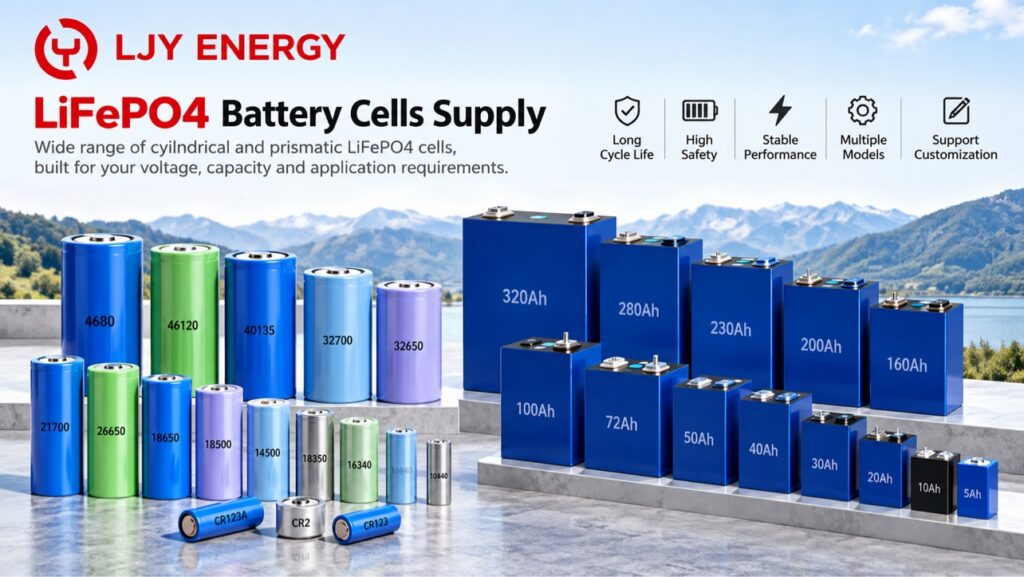
Korea’s cell inquiries to us are unusually precise — buyers name the format, the voltage and the document they want first. Supply covers prismatic cells (각형셀) for ESS and pack assembly and cylindrical 32650/32700 cells for assembled packs; see the prismatic cell supply page and the prismatic cell wholesale page for the two ranges. What to confirm before any cell order:
- Document pack first: datasheet, MSDS and UN38.3 transport documentation available for the exact cell model — Korean buyers in our records request the MSDS before discussing volume, and so should you.
- Grade in writing: what “Grade A” means for this lot — capacity and internal-resistance sampling data per lot, not a label.
- Lot traceability: cell codes and production-lot identification that let your incoming inspection tie delivered cells to the quoted specification.
- Format honesty: a 3.2V 5Ah cylindrical cell and a 3.2V 280Ah prismatic cell are different supply chains; confirm format, not just chemistry.
For Industrial OEMs: Custom Packs to a Written Specification
The industrial pattern in our Korean records — telecom base-station packs, e-scooter packs, mobility batteries, instrument packs — runs on a fixed sequence: requirements first, then a written specification confirmation covering voltage, capacity, dimensions, BMS functions and communication, agreed inspection checkpoints, samples where the project calls for them, and production against the confirmed specification. That coordination work is what we do; the manufacturing partners build, test and assemble. The framework is described on our OEM/ODM page, and board-level buyers can start from the standalone BMS boards page. Nothing in this sequence is promised generically: MOQ, sampling and lead time are outputs of your specification, confirmed per project.
How to Compare Quotes per Usable kWh
Korean buyers are disciplined comparers; this is the comparison method we recommend, and the one our own quotations are structured to survive:
- Normalize to usable kWh: divide the quote by warranted usable energy (nameplate kWh × the depth-of-discharge window the supplier will stand behind), not by nameplate capacity.
- Identify the cell: brand, model and grade documents for the exact cell inside — a quote that cannot name its cell is not comparable to one that can.
- Price the document pack: datasheet, MSDS, UN38.3 and test reports included, or chased later at your cost in time?
- Fix the BMS scope: protection only, or communication (CAN/RS485) matched to your PCS or host equipment — confirmed in the specification, not assumed.
- Compare landed terms: Incoterms to Busan or Incheon including dangerous-goods handling, plus warranty terms in writing. The cheapest EXW line often loses on this step.
FAQ
Do your batteries hold KC certification?
KC applicability depends on the product type and its use in Korea, so there is no honest blanket answer. For any model you are considering, we confirm applicability per model and destination before shipment and state the result in writing. We never claim a certification a model does not hold.
Can we buy cells only, without finished packs?
Yes — cell-only supply is one of the documented Korean buying patterns in our records, from a sales agency sourcing 3.2V 5Ah cells to assemblers ordering 32650 cells with their MSDS. Grade definition, lot documentation and quantities are confirmed per order.
Which documents can you provide for our approval process?
Datasheets, MSDS and UN38.3 documentation are issued by the cell and pack makers in English. Tell us which documents your internal approval or your customer’s qualification process requires, and we confirm what can be supplied for the specific model before you place an order.
What are your MOQ and lead time for Korea?
Both are confirmed per project — they are functions of the specification, not catalogue numbers. Documented Korean orders in our records range from 500-set pack runs to a 1MWh ESS station; send the specification and we answer against it.
Send Your Specification
Tell us the application, the voltage and capacity window, the cell or pack format, and the documents your approval process needs. We reply against the written specification — with what can be supplied, what must be confirmed, and a quote structured per usable kWh. Contact us for a South Korea quotation.
Share This Article