
Critical-load panel vs whole-home backup — choosing the low-voltage home ESS job
Homeowners and installers often ask for a “whole-home battery” when what they need is still undefined. A low-voltage LiFePO4 pack can store energy. It does not, by itself, decide which circuits stay on, how those circuits are transferred, or whether a large motor will start. Those are system questions: the inverter’s continuous and surge ratings, the transfer equipment, and the panel that is actually backed up.
This page is a procurement checklist for residential fixed storage only — a house, apartment plant room, or garage energy storage system, not a vehicle, boat, or commercial site. It explains the difference between a critical-loads (essential-loads) subpanel and an attempt to back up the whole house, what to measure before you request a quote, and where a pack supplier’s responsibility ends. LJY Energy supplies low-voltage LiFePO4 packs in the 48V class used by many home hybrid and battery inverters. We do not, on this page, certify a backup scheme, an inverter rating, or an interconnection approval.
Short answer
- Battery energy (kilowatt-hours) decides how long a defined set of loads can run. Inverter power (kilowatts and surge) and the transfer path decide which loads can be on at once, and whether they survive the switch from the grid.
- A critical-loads or essential-loads subpanel is a deliberate backup boundary: only the circuits you list are transferred to the inverter output. It is not “the same job as whole-home backup with a smaller battery.”
- Whole-home backup is a power and transfer design, not a pack size. Adding a second 5.12kWh module extends runtime for the loads that are already on the backup path. It does not raise the inverter’s continuous or surge rating.
- The live home energy storage solutions page already gives starting points in energy — about 5.12kWh nominal (51.2V 100Ah) for overnight essentials, and about 10.24kWh (one 200Ah or two 100Ah modules) for a longer evening or a higher self-consumption target. Those figures are energy starting points. They do not tell you whether the house’s main panel can be backed up.
- Usable energy is less than the nameplate. The same solutions page states that, at an 80% depth of discharge design point, a 5.12kWh nominal module delivers about 4.1kWh usable. Treat that as a published design convention, not as a factory test result for a named order.
- This page does not give wiring, breaker, or transfer-switch instructions, and it does not claim that a LJY pack is approved as a whole-home backup system or as a listed energy storage system in any market. Installer and interconnection documents belong on the existing home battery permit pack page.
What buyers are actually asking
Search phrases overlap; the jobs do not. Keep each job on the page that already owns it.
| Buyer wording | The actual job | Where it already lives, or this page |
|---|---|---|
| Critical loads panel, essential loads, backup subpanel, what to put on the backup panel | Define the AC boundary that the inverter is allowed to carry | This page |
| Whole-home backup, whole-house battery, backup every circuit | Decide whether the main panel, the starting surges, and the inverter rating can support that claim — not only whether the battery is “big enough” | This page, then the inverter manual and a measured or listed load schedule |
| How many kWh for a night or a day of outage | Energy sizing and usable vs nameplate capacity | Live home energy storage hub; do not open a second sizing slug |
| Wall, rack, or stackable home battery | Form factor and indoor footprint | Home hub, stackable buying guide |
| Already have solar, want to add a battery | Hybrid replacement, AC-coupling, or a separate backup path | Companion checklist Adding a battery to existing solar (offline, not live when this page was written) |
| On-grid, weak grid, or off-grid house | Choose the system job before the SKU | Companion checklist On-grid, weak-grid, or off-grid (offline, not live when this page was written) |
Energy is not power, and a pack is not a transfer scheme
Three numbers have to be written down separately. Mixing them is how “whole-home” quotes go wrong.
- Energy, in kilowatt-hours. This is what the pack stores. A 51.2V 100Ah module is published on the live hub as 5.12kWh nominal; a 200Ah module or two 100Ah modules in parallel as 10.24kWh nominal. Size on usable energy, and confirm the depth-of-discharge assumption in the order — not only the nameplate.
- Power, in kilowatts, including surge. This is what the inverter (or the backed-up output of a hybrid inverter) can supply at once, and what it can start. Compressors, well pumps, and some HVAC indoor units ask for a short starting current that can be several times their running current. That figure comes from the inverter manual and the load nameplates or a measured start, not from the battery brochure.
- Transfer and the panel boundary. Something has to move the chosen circuits from the grid to the inverter output, and back, in a way the inverter maker and the local installer rules accept. A pack sitting on a wall does not create that path.
If the inverter cannot start or carry a load, more kilowatt-hours only delay the same trip or the same crash. If the load is not on the backed-up panel, it will not run no matter how large the pack is.
What a critical-loads panel actually is
A critical-loads panel — also called an essential-loads panel or a backup subpanel — is a second distribution point that holds only the circuits you intend to keep during an outage. Those circuits are fed from the inverter’s backup output (or from a listed transfer arrangement the inverter maker documents). The rest of the house stays on the main panel and goes dark if the grid is gone, unless a different path is designed and approved.
Typical candidates, offered here as an RFQ list rather than as a universal recipe, include lighting in occupied rooms, the refrigerator, networking and a work-from-home desk, a medical device the household actually depends on, a well or booster pump if that is how the house gets water, and a heating circulation pump or a defined heating appliance if winter outages are the reason for the system. Air conditioning, electric cooking, electric clothes drying, and vehicle charging are usually the loads that change the answer from “critical panel” to “this may not fit,” or that force a much larger inverter and a different transfer design.
Write the list as circuits, not as a feeling. For each circuit you want on the backup panel, record the running load you can measure or read from the nameplate, whether it has a motor start, and whether it must run at the same time as the others. A refrigerator that shares the backup output with a well pump and a microwave is a different job from a refrigerator that shares it only with lights and a router.
The live hub’s “overnight essentials” starting point of one 5.12kWh nominal module is useful only after that list exists. About 4.1kWh usable at the published 80% DoD design point will not cover a night if the “essentials” still include a large heater or a pump that runs often. Conversely, a 10.24kWh bank does not justify calling the job whole-home backup if only a handful of circuits are transferred.
What has to be true for whole-home backup
“Whole-home” means the backed-up boundary is the house’s normal set of circuits — usually the main panel — or a transfer scheme that feeds those circuits during an outage. That is a strong claim. It is only honest if all of the following are checked against documents, not against a pack photo:
- The inverter’s continuous output is large enough for the loads that can reasonably run together, with a margin the designer records. Diversity (not every appliance at once) may be part of that design, but it must be stated, not hoped for.
- The inverter’s surge or time-limited output can start the largest motor or combination of motors that may start while other loads are already on.
- The transfer equipment is a type the inverter manufacturer documents for that model, and the installer can install it under the rules that apply to that house.
- The battery bank can support the inverter at that power for the intended time, including the current, the voltage window, and the BMS discharge limit — not only the kilowatt-hour nameplate.
- Anyone who will use the house during an outage understands which loads must still be managed. An undocumented whole-home promise that trips on the first oven-plus-dryer coincidence is not a finished design.
LJY can quote low-voltage packs — wall-mounted, rack, or stackable — in the energy class the designer asks for, including the published 51.2V 150Ah and 200Ah wall formats when a larger module is the right way to reach the energy target. A quote for those modules is not a confirmation that the house can be backed up as a whole. If the inverter, the transfer path, or the load schedule is missing, the honest answer is that the job is not yet specified.
Form factor and voltage class are not the backup panel
A wall-mounted 51.2V pack, a 19-inch rack module, and a floor-standing stack can all store energy for the same home job. They do not change the AC boundary. Choose form factor for space, access, and the site conditions the installer can actually meet; then keep the panel question separate. Outdoor-rated enclosures, where needed, are a product choice of their own — see the live IP65 wall-mounted pack page — and are not a backup-panel design.
The same discipline applies to voltage naming. Most packs sold in the “48V” class for homes are 16S LiFePO4 at 51.2V nominal; true 15S packs are 48.0V nominal. Both may be used with 48V-class inverters, but they need different charge settings. That distinction is already explained on the live home hub and on 48V vs 51.2V vs −48V. It does not tell you whether the backup panel is a subpanel or the main panel.
What to record before you treat the design as complete
Write the following down. If a line is unknown, say so; do not fill it with a brochure number.
- Whether the goal is a critical-loads subpanel or a whole-home (main-panel) backup, in those words.
- A circuit list for the backed-up panel, with running load and any motor start, and which loads may run at the same time.
- The inverter or hybrid inverter make, exact model, and the continuous and surge figures in its manual for the backup output — not a marketing “whole-home” line on a retail box.
- How transfer will be done, if already chosen: a documented backup output, a listed automatic transfer switch, or another arrangement the inverter maker describes. If it is not yet chosen, say that.
- The intended outage duration or the kilowatt-hours you want after usable-energy and reserve assumptions. Point at the live hub’s energy starting points only as a first sketch.
- Whether solar, a generator, or the grid will recharge the pack, and whether the house is on-grid, on a weak or unreliable grid, or truly off-grid — a job that belongs in the companion architecture checklist, not in a second energy calculator.
- Site constraints that affect the pack: indoor versus a documented outdoor enclosure, available wall or floor space, and any permit or listing documents the installer already knows they must file. Use the permit-pack page for document names; do not assume a LJY pack carries a given listing.
Acceptance follows the same split. A capacity or discharge check of the pack is not a test that the backup panel stayed up. Agree, in the project, what will be witnessed: which loads ran, whether transfer occurred as the inverter manual describes, and whether anything tripped or had to be switched off by hand. This page does not prescribe a wiring test or a universal commissioning script.
Compatibility boundaries — no modification steps
- A low-voltage LiFePO4 pack is not a transfer switch, a critical-loads panel, or a listed hybrid inverter.
- LJY does not, here, publish a whole-home kilowatt rating, an anti-islanding claim, or a matrix of approved transfer switches.
- Closed-loop communication (CAN or RS485) is preferred where the inverter supports it, as the live hub already states. That preference is not a guarantee that a named inverter will accept a named pack without a project check.
- Do not add unofficial DC wiring, adapter pin-outs, or charger “tunes” to make a pack look like a backup system. If the missing piece is an inverter or a panel design, that is an inverter-and-installer job.
- Interconnection, islanding, and permit listings are not solved by the pack format. Send those questions to the installer and, for document names, to the existing permit pack page.
What to send with an enquiry
Use the existing contact page. If you have them, include: the country and whether the house is a dwelling (not a commercial site); whether you want a critical-loads panel or whole-home backup; the circuit list and simultaneous-load note above; the inverter model and the backup-output ratings from its manual; the energy target and the usable-energy assumption; and whether you are asking for a pack only or for help matching a published 48V-class module to a designer’s already written scheme.
If the inverter and the panel boundary are not yet known, say that plainly. A pack quote can still be scoped as an energy bank in the 51.2V or 48.0V class. It should not be labelled a whole-home backup system until the AC side is specified.
What this page does not decide
- It does not size a named house in kilowatts or invent a typical household load.
- It does not choose wall, rack, or stackable for you, and it does not price a 10 kWh system — those pages already exist.
- It does not claim that LJY is listed to UL 9540, AS/NZS 5139, or any other system standard, or that a pack is a drop-in whole-home kit.
- It does not give wiring, breaker schedules, or transfer-switch installation steps.
- It does not replace the off-grid or solar solution hubs, or the capacity-planning work a designer still has to do from measured loads.
Frequently asked questions
If I buy a 10 kWh battery, is that whole-home backup?
Not by itself. 10.24kWh nominal is an energy starting point published for two 100Ah modules or one 200Ah module. Whole-home backup still depends on the inverter, the transfer path, and the loads that can run together.
Can I start with a critical-loads panel and “upgrade to whole-home” later?
You can plan a path, but only if the inverter, the transfer equipment, and the panel design can grow into that path. Adding parallel pack capacity later extends runtime; it does not automatically enlarge the backup output. Expansion of the battery bank is a separate procurement job and is not redesigned on this page.
Which loads must be on a critical-loads panel?
There is no single list. Write the circuits the household actually needs during an outage, with running and starting loads, and compare the simultaneous total with the inverter manual. This page will not publish a universal essentials recipe.
Does LJY supply the critical-loads panel or the transfer switch?
This page does not sell those accessories and does not add them to a pack quote as if they were included. They are specified with the inverter and the installer.
Is a larger wall pack enough to cover air conditioning?
Only if the inverter can start and carry that load, the circuit is on the backup path, and the energy target still holds after the running watts are included. Energy alone does not answer it. Send the air-conditioning nameplate or a measured start with the enquiry if that load is in scope.
Sources
- LJY Energy, “Home Energy Storage Battery Solutions,” including the wall-versus-rack table, the 5 / 10 / 15 kWh-class starting points, the published 80% DoD usable-energy design point (5.12kWh nominal ≈ 4.1kWh usable), and the 51.2V (16S) versus 48.0V (15S) naming note. https://ljyenergy.com/solutions/home-energy-storage/ (HTTP 200, 2026-11-17 21:44 Asia/Shanghai).
- LJY Energy, “48V vs 51.2V vs −48V.” https://ljyenergy.com/48v-vs-51-2v-vs-minus-48v-lifepo4/ (HTTP 200, 2026-11-17 21:46 Asia/Shanghai).
- LJY Energy, “Home Battery Permit Pack for Installers.” Used only as the live document-pack page, not as evidence that a LJY pack carries a named listing. https://ljyenergy.com/home-battery-permit-pack-installers/ (HTTP 200, 2026-11-17 21:44 Asia/Shanghai).
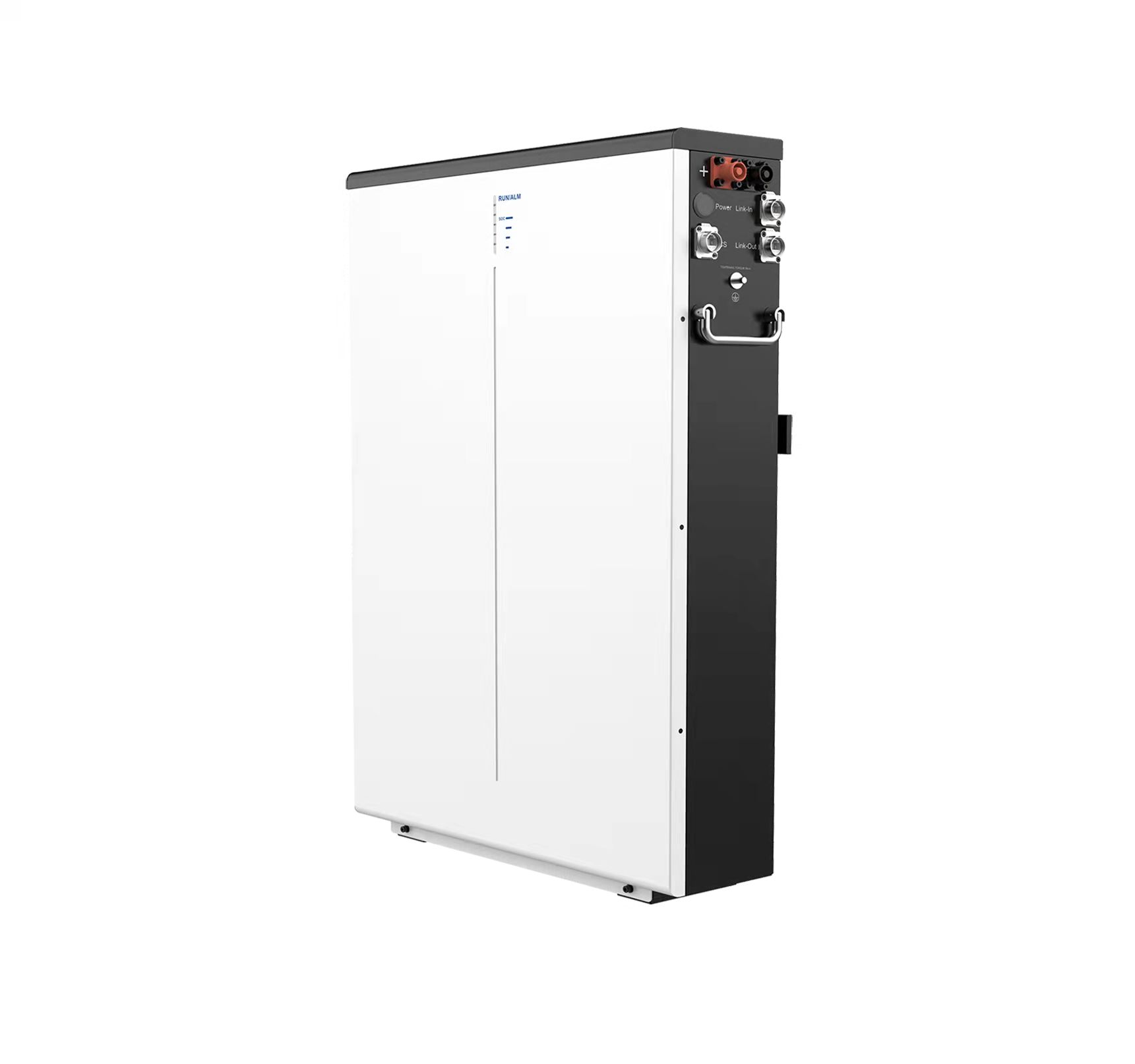
- Product photographs and module classes reused from the same home hub and related product pages; the image on this page is the existing live file wall-1.jpg (HTTP 200, 2026-11-17 21:46 Asia/Shanghai).
No household kilowatt, surge multiple, or transfer time is stated as a LJY or typical-house figure, because this pack has no first-party measurement of a named dwelling and no inverter data sheet of our own to quote. Those numbers must come from the equipment and loads in the project.
Related guides
- Home energy storage solutions — pack formats and energy starting points
- Solar energy storage — pairing batteries with photovoltaic generation
- Off-grid energy storage — product hub for off-grid systems
- Stackable home battery buying guide — form factor, not panel architecture
- Home battery permit pack — listing and submittal documents
- What a 10 kWh LiFePO4 system can cost — market snapshots, not a LJY quotation
- Send the backup-panel plan and the inverter model on the contact page
Send the backup-panel plan and the inverter model on the contact page · WhatsApp +86 159 8945 0735