
Share This Article
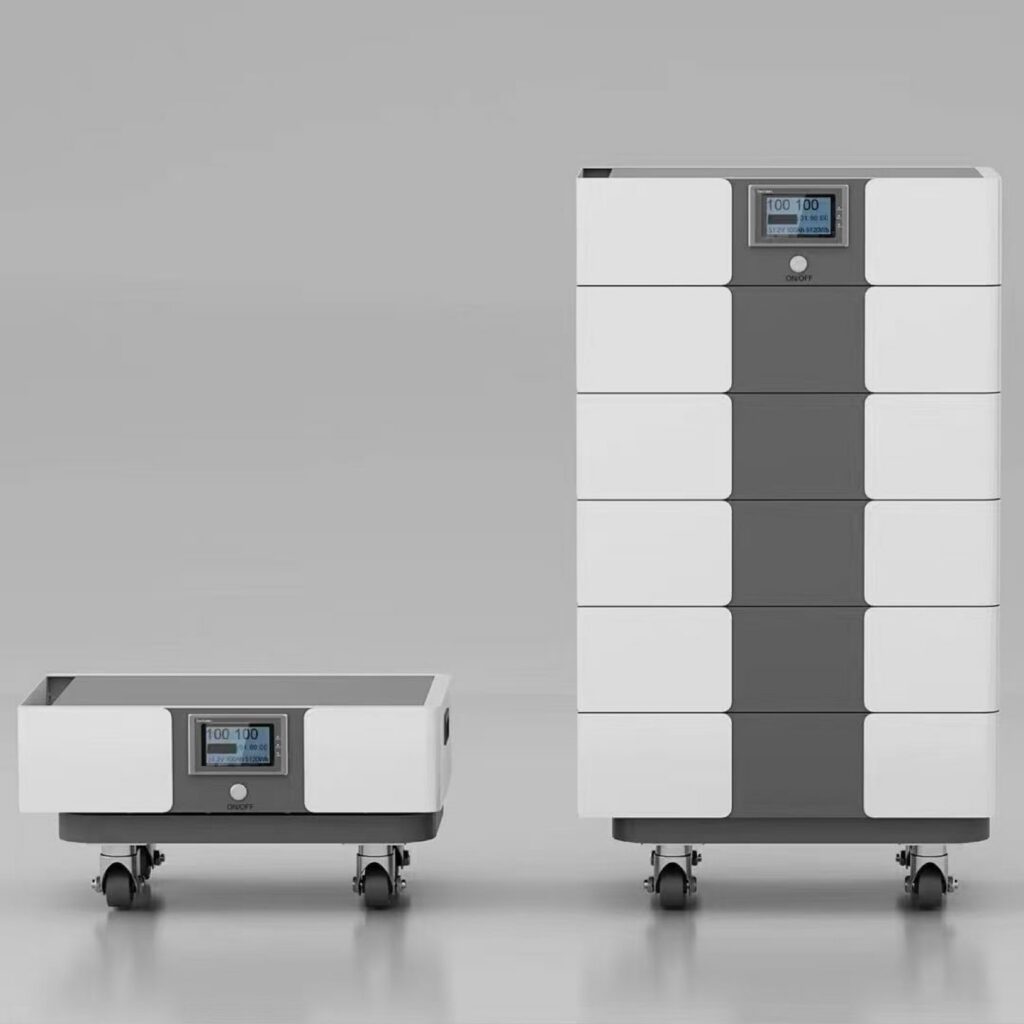
Stackable home ESS lets a site start with one module and grow on the same base. That only works if the first RFQ states inverter model, target kWh, indoor/outdoor constraint, and whether the homeowner expects a display. Use this page before you open a catalogue. Product pages: stackable LiFePO4 home storage · LED touchscreen geometric design.
1. Decide the job, not the brochure photo
Ask the homeowner / EPCs:
- Backup-only vs solar self-consumption vs both
- Critical loads panel size (W) and desired backup hours
- Single-phase vs three-phase site
- Indoor utility room vs garage vs outdoor pad
Write answers into the RFQ; do not skip to “how many modules” first.
2. Stack architecture checklist
Without quoting unverified module kWh:
- Confirm one battery family / one BMS domain per stack (do not mix unrelated OEM generations)
- Confirm max modules per base with the supplier for that design (classic stackable vs new LED touchscreen may differ — ask)
- Plan cable / breaker sizing for the final stack, not only day-one
- Leave service clearance for adding a module later
3. Inverter pairing questions (always ask)
- Exact inverter brand + model + firmware notes if known
- Required battery protocol (CAN/RS485/…)
- Whether hybrid already installed or greenfield
- Grid-tie rules / permit path in the destination market (installer-owned)
If protocol is unknown, say so — a supplier that answers “works with everything” without a list is a yellow flag.
4. Two LJY stackable design entry points
| Design | Live page | RFQ tag |
|---|---|---|
| Stackable home storage (existing design) | /stackable-lifepo4-home-energy-storage/ | Stackable-Home-Storage |
| New geometric LED touchscreen design | /stackable-home-ess-led-touchscreen-geometric/ | Stackable-ESS-NewDesign |
Also available in: Deutsch · Español · Français · Indonesia · Italiano · Polski · Português · Română · Tiếng Việt · Türkçe · Čeština · Ελληνικά · Русский · Українська · العربية · ไทย · 한국어
Appearance and UI differ; treat them as separate RFQ lines until datasheets confirm shared electrical limits.
5. RFQ skeleton for installers
Installer company / country:
Inverter brand + model:
Target usable kWh (day-one / future):
Indoor / outdoor:
Single- or three-phase:
Display / UI preference:
Permit / docs your AHJ asks for:
Preferred design (classic stackable / new LED / either):
6. What this page will not claim
Module Ah, stack kWh, weight, IP rating, and certification marks belong on verified datasheets or the quote. If a product page shows “OEM-typical class” figures, treat them as orientation only until confirmed for your order.
Related commercial pages
- 51.2V 200Ah LiFePO4 (10.24kWh) wholesale & OEM — single-pack capacity reference when a stack is not required
- 48V / 51.2V LiFePO4 product hub — browse related low-voltage ESS and rack options
FAQ
Can homeowners RFQ directly?
Yes, but include installer or electrician contact if installation is local-code constrained.
Do you ship closed-loop inverter lists here?
Lists change; request the current pairing note in the RFQ.
Share This Article