
Adding a low-voltage LiFePO4 battery to a home that already has solar
Many households already have a grid-tied photovoltaic system and now want a battery. The usual hope is that a 48V-class LiFePO4 pack can be connected to the inverter that is already on the wall. That is only true when that inverter has a documented battery interface and the pack is confirmed against that interface. A grid-tied solar inverter without a battery port does not become a hybrid inverter because the voltages look similar.
This page is a procurement checklist for residential fixed storage: how to add a low-voltage pack to a house that already has solar, which architectural paths exist, and what to send with a quote request. It is not a wiring guide, not an anti-islanding design, and not a claim that LJY Energy supplies a certified retrofit kit. LJY supplies low-voltage LiFePO4 packs in the 48V class used by many home hybrid and battery inverters. Pairing, interconnection, and islanding rules belong to the inverter, the installer, and the local authority.
Short answer
- Start from the inverter that is already installed: make, exact model, and whether its manual describes a battery port, a supported battery list, or a closed-loop protocol. If that information is missing, do not assume a pack can be added on the DC or AC side.
- Three architectural paths are common. Path A: replace or add a hybrid or battery inverter that is documented for a 48V-class pack (often called DC-coupled or hybrid). Path B: add a battery inverter on the AC side of the existing solar system (AC-coupled), using a method the battery-inverter maker documents. Path C: leave the existing solar inverter as it is and add a separate backup path for defined loads, which may or may not use the solar array during an outage.
- None of those paths is a LJY standard kit. The pack still has to match the battery inverter’s voltage window, charge settings, current limits, and, where required, communication. 51.2V (16S) is not the same as 48.0V (15S), even though both are sold in the “48V” class.
- Anti-islanding, export limits, and utility or permit approvals are properties of the AC system and the installer file, not of a wall-mounted pack. For document names, use the live home battery permit pack. This page does not claim that a LJY pack is listed to those standards.
- Energy starting points on the live home energy storage and solar energy storage hubs still apply after the architecture is chosen: a 51.2V 100Ah module is 5.12kWh nominal; one 200Ah or two 100Ah modules are 10.24kWh nominal; usable energy is less than the nameplate (about 4.1kWh at the published 80% DoD design point for a 5.12kWh module). Architecture first, kilowatt-hours second.
What buyers are actually asking
| Buyer wording | The actual job | Where it lives |
|---|---|---|
| Add a battery to existing solar, retrofit storage, my inverter has no battery port | Choose an architecture that the installed PV equipment can actually support | This page |
| AC-coupled vs DC-coupled vs hybrid replacement | Same job, with the trade-offs written down | This page |
| Will a 51.2V pack plug into my grid-tie inverter? | Only if that inverter documents a compatible battery interface — “48V” on a label is not enough | This page, then the PV or hybrid inverter manual |
| Solar self-consumption and overnight coverage | Energy pairing after the architecture is chosen | Live solar energy storage hub |
| Critical-loads panel vs whole-home backup once the battery exists | AC backup boundary, inverter power and transfer | Companion checklist Critical-load panel vs whole-home backup (offline, not live when this page was written) |
| Weak grid or going off-grid later | System job, not a coupling method | Companion checklist On-grid, weak-grid, or off-grid (offline, not live when this page was written) |
What is usually already on the wall
A common existing system is a grid-tied string inverter or a set of microinverters. Its job is to convert photovoltaic DC (or module-level AC) and export or use that power while the grid is present, under the interconnection rules that applied when it was installed. Many of those inverters have no battery terminals, no battery management communication port, and no documented mode for charging or discharging a pack.
Some newer hybrid inverters do have a documented 48V-class battery port. That is a different product. You cannot tell which one you have from a photograph of the solar panels. You need the inverter model and its manual, and, if a battery list exists, that list.
Self-consumption without a battery — using solar first when the sun is up — is not the same job as storing midday generation for the evening, and it is not the same job as keeping selected loads on during an outage. A pack only helps with the jobs the inverter and the transfer path can actually perform.
Path A — hybrid or battery inverter documented for a 48V-class pack
In this path, a hybrid or off-grid-capable battery inverter that the manufacturer documents for a low-voltage pack becomes the battery’s partner. Sometimes the existing grid-tied inverter is replaced. Sometimes a hybrid inverter is added and the array is re-terminated in a way that installer and inverter documents allow. This page does not tell you which of those is legal or practical on a given roof; that is an installer decision.
What the pack enquiry must still confirm:
- The inverter’s permitted battery voltage window versus the pack’s nominal and charge voltages. A 16S 51.2V pack and a 15S 48.0V pack are not interchangeable by default. Charge settings must match the cell count. See the live 48V vs 51.2V page and the home hub’s naming note.
- Charge and discharge current limits on both sides, and whether the inverter expects closed-loop communication (CAN or RS485) with a named protocol or profile. The live home hub prefers closed-loop where the inverter supports it. That is not a published LJY compatibility matrix for every brand.
- How many modules may be paralleled, and whether the inverter or the BMS sets that limit. Confirm the count in the order; do not copy a marketing maximum from a different model.
- Whether the hybrid inverter’s backup output, if you need outage cover, is sized for the loads you intend to keep — a question owned by the critical-loads checklist, not by the solar-coupling method.
Path B — AC-coupled battery inverter beside the existing solar inverter
In this path, the existing grid-tied inverter stays, and a separate battery inverter (or a hybrid used in an AC-coupled arrangement) is connected on the AC side, using a topology the battery-inverter manufacturer documents. Charging may come from surplus solar as seen on the AC bus, from the grid, or from both, according to that inverter’s modes and the export or import rules that apply to the site.
Two boundaries matter immediately:
- Coupling is an inverter feature. Frequency-shift, relay, or other methods that some battery inverters use to manage an existing PV inverter during an outage are described in those inverter manuals. They are not a function of a LiFePO4 pack, and this page will not invent a method or a setting.
- Islanding and interconnection stay with the AC system. Whether the combined system may run during a grid outage, and what it may export, is decided by the inverter documentation, the installer, and the applicable rules — not by the pack’s enclosure or its CAN port. LJY does not state, here, that a pack makes an AC-coupled system approved.
A pack quote for an AC-coupled job is still a quote for a 48V-class energy bank that matches the battery inverter, not a quote for the AC-coupling control scheme.
Path C — a separate backup path, with solar left as it is
If the existing inverter cannot take a battery and the household’s main goal is backup rather than storing every surplus kilowatt-hour, a documented backup system can be added for a critical-loads panel (or, if fully designed, a wider backup boundary) without pretending that the old solar inverter is now a hybrid. During a grid outage, the existing grid-tied inverter will often shut down, as many grid-tied units are required to do. The backup path then runs from the pack and its own inverter, until the grid returns or another documented charge source is available.
This path is honest when the buyer’s first need is resilience, and it is a poor surprise when the buyer expected the solar array to keep charging the battery in every outage. If that charging during an outage is required, the architecture has to be Path A or a documented Path B arrangement — not a hope attached to Path C.
What not to do — no unofficial connections
- Do not land a pack on PV string terminals, on a grid-tie inverter’s DC bus, or on an undocumented “48V” point because the numbers look close.
- Do not treat 51.2V as “close enough” to a different battery window, and do not use a lead-acid charge profile on a LiFePO4 pack.
- Do not add unofficial adapters, pin-outs, or charger modifications so that a pack appears on a bus the inverter maker did not document.
- Do not describe a LJY pack as a certified AC-coupled or anti-islanding device.
Energy and form factor after the architecture is chosen
Once the path is chosen, energy sizing follows the live hubs: start from the evening or outage loads you actually intend to cover, size on usable energy, and pick a published module class — 5.12kWh nominal for one 100Ah module, 10.24kWh for one 200Ah or two 100Ah modules, or the 150Ah and 200Ah wall formats when a larger single module is preferred. Form factor (wall, rack, or stack) is a site choice and is already covered by the home hub and the stackable buying guide. It does not decide Path A, B, or C.
Cost ranges for a 10 kWh-class system are already collected on the live 10 kWh cost page as market snapshots, not as a LJY quotation. This page does not repeat those figures.
What to send with an enquiry
Use the existing contact page. Include, if you have them: the existing PV inverter or microinverter make and exact model, and a statement of whether its manual shows a battery port or a supported battery list; array size only if you already know it from the installation documents (do not invent a number); whether the first goal is evening self-consumption, backup, or both; the intended backup boundary if outage cover is required; the preferred path if an installer has already named one (A, B, or C); and the energy target with a usable-energy assumption. Photographs of inverter nameplates help. Wiring advice is not what this enquiry is for.
If the existing inverter cannot be identified, say that. The honest first step is to identify it, not to select a pack as if the architecture were already known.
What this page does not decide
- It does not declare a named grid-tie inverter compatible or incompatible with a LJY pack unless that inverter’s own documents — which we are not quoting as a matrix — already say so. We will not invent a list here.
- It does not claim LJY on-grid, off-grid, hybrid, or anti-islanding certification, and it does not sell coupling accessories, frequency-shift controllers, or meter kits.
- It does not provide reconnection diagrams or charge-setting tables beyond the already published 15S / 16S naming distinction.
- It does not replace the solar or home solution hubs, the permit pack, or the critical-loads checklist.
Frequently asked questions
My solar inverter says 48V on a label. Can I connect a 51.2V pack?
Only if that 48V marking is a documented battery window that includes the pack’s charge and discharge voltages, and the rest of the interface is also documented. Many labels refer to something else, or to a different 48V convention. Read the battery chapter of the manual. 51.2V nominal is a 16S LiFePO4 nameplate, not a synonym for every “48V” mark.
Will my existing solar still work during a grid outage if I add a battery?
Only in an architecture that the inverter makers document for islanded operation with that array. A typical grid-tied inverter, left unchanged, shuts down when the grid is gone. Do not assume Path C will keep the array charging the pack during an outage.
Is AC-coupling better than replacing the inverter?
Neither is universally better. Replacement or a new hybrid (Path A) can give a single documented battery interface. AC-coupling (Path B) can leave a working grid-tie inverter in place when the battery-inverter maker supports that arrangement. The installer has to compare those options against the hardware you already have. LJY will not rank them as a product claim.
Do I need closed-loop CAN or RS485?
The live home hub prefers closed-loop communication where the inverter supports it, because charge and discharge limits can then be coordinated. If the inverter requires a named profile, that profile has to be confirmed in the order. This page does not publish a protocol matrix.
Can LJY supply the hybrid inverter as well?
This article is a pack and architecture checklist, not an inverter catalogue. If a project already names an inverter, send the model so the pack can be quoted against that model’s published battery window. Do not read this page as a promise that LJY will source or certify a named inverter.
Sources
- LJY Energy, “Home Energy Storage Battery Solutions” — module energy classes, usable-energy design point, 15S / 16S naming, CAN/RS485 preference. https://ljyenergy.com/solutions/home-energy-storage/ (HTTP 200, 2026-11-17 21:44 Asia/Shanghai).
- LJY Energy, “Solar Energy Storage Solutions” — pairing overview for solar storage; not a retrofit-architecture checklist. https://ljyenergy.com/solutions/solar-energy-storage/ (HTTP 200, 2026-11-17 21:44 Asia/Shanghai).
- LJY Energy, “48V vs 51.2V vs −48V.” https://ljyenergy.com/48v-vs-51-2v-vs-minus-48v-lifepo4/ (HTTP 200, 2026-11-17 21:46 Asia/Shanghai).
- LJY Energy, “Home Battery Permit Pack for Installers” — document names only. https://ljyenergy.com/home-battery-permit-pack-installers/ (HTTP 200, 2026-11-17 21:44 Asia/Shanghai).
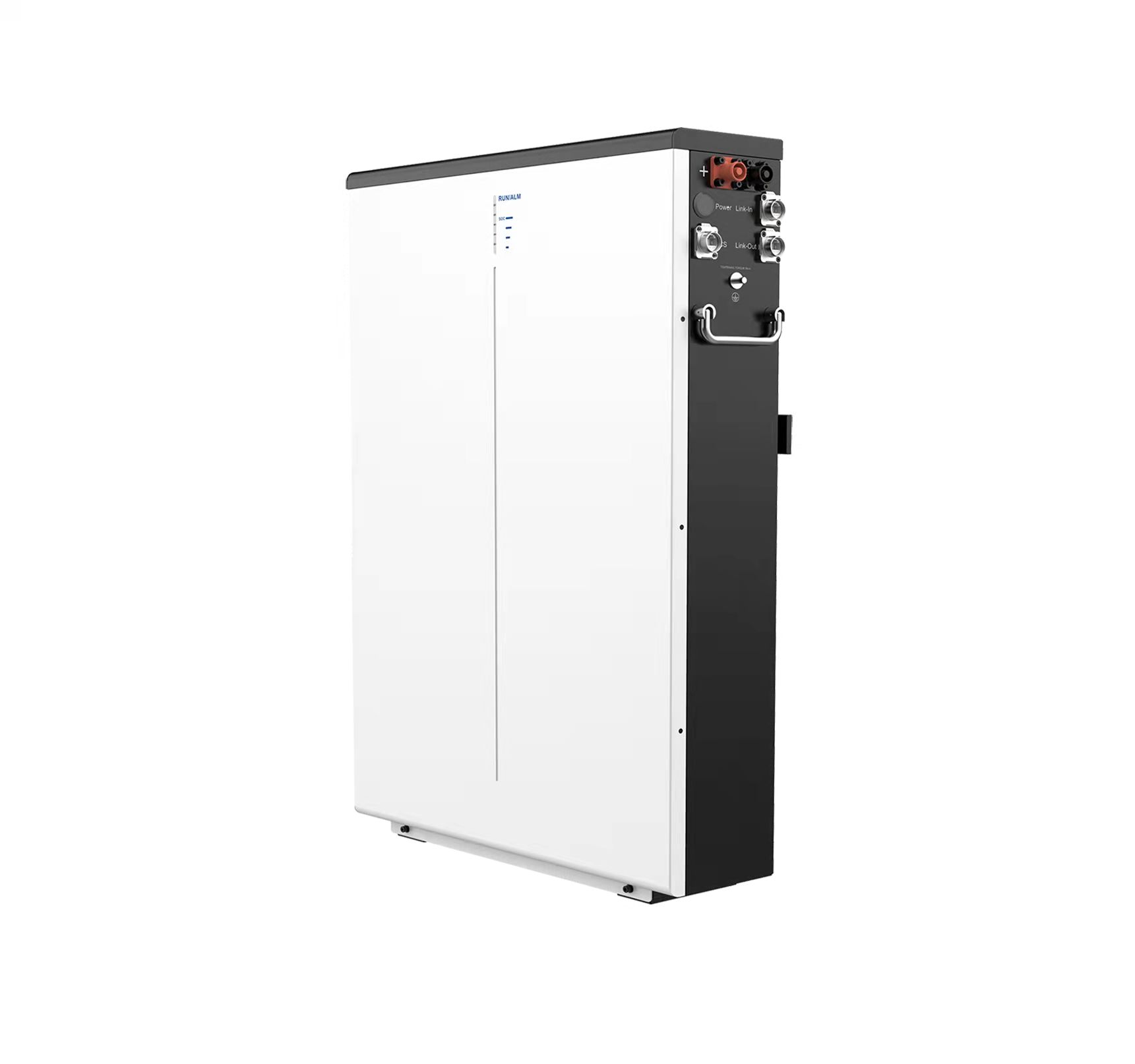
- Existing product photograph wall-1.jpg (HTTP 200, 2026-11-17 21:46 Asia/Shanghai).
No third-party inverter manuals are quoted in this file, and no interconnection rule or anti-islanding test result is attributed to LJY. Path descriptions are architectural, not installation procedures.
Related guides
- Solar energy storage solutions
- Home energy storage solutions
- 48V vs 51.2V vs −48V
- Home battery permit pack
- 10 kWh system cost (market snapshots)
- Send the existing inverter model and the retrofit goal on the contact page
Send the existing inverter model and the retrofit goal on the contact page · WhatsApp +86 159 8945 0735