
If you are sizing a facility or campus battery energy storage system (BESS) to cut a billed demand peak, you are not buying “a storage battery” in the abstract. The first split is between power and energy: the kW you must hold at the point of connection, and the kWh you must actually deliver across the hours when load sits above the cap you can defend. A monthly kWh figure, a cabinet nameplate, or a use-case label such as “peak shaving” does not replace that split.
General information as of 24 November 2026, not engineering, legal, tariff, fire-protection or investment advice. The applicable rate schedule, the meter program, the interconnection agreement and the site codes belong to the project; the utility, the authority having jurisdiction and the parties who will operate the system decide what applies. Numeric examples below are either taken from a named, dated publication or generated from a labeled teaching model. They are not your tariff, not a payback, and not ratings of an LJY catalog product.
Short answer
- Separate demand (kW) from energy (kWh). The power converter has to cover the largest kW gap between site load and the import cap you intend to hold. The battery has to cover the kWh above that cap, after efficiency, after the usable state-of-charge window, and after any reserve you are not allowed to spend on shaving.
- Read the tariff before you size the battery. Billing demand is a measured peak under the applicable rate schedule, usually averaged over a 15-minute, 30-minute or 60-minute interval, and it may be limited to a peak-period window or carried by a ratchet. Those rules change both the kW target and the kWh you need.
- Two sites with the same peak kW do not need the same battery. A short spike and a multi-hour plateau that both reach 400 kW can require the same converter kW and very different energy.
- Backup reserve and aggressive demand-cap energy cannot be spent twice if they come from the same usable window.
- The ability to island, to form a grid, or to work with a generator is a power-conversion, controls and interconnection design. It does not follow from the fact that a battery is present, and it does not follow from a grid-tied peak-shaving quote.
- An inquiry that sends a written specification is a feasibility assessment, not a commitment to supply a complete peak-shaving BESS or a particular chemistry.
What this page is for, and what it is not
This page is for a facilities, energy or procurement reader who already has a real demand-charge or peak-load problem and needs to judge whether a behind-the-meter BESS is even the right next step, and what must be in a written request. It is a medium for that judgment and, if the request is real, for a later inquiry, sample discussion or cooperation. It is not a scorecard of keywords, and it is not a catalog of systems for sale.
Neighboring pages on this site already cover adjacent jobs and should be used when those jobs are the actual purchase:
- The commercial and industrial BESS RFQ checklist is a document checklist. Peak shaving appears there as a use case, not as a kW versus kWh decision method.
- The containerized LiFePO4 ESS page and the 100 kW / 215 kWh cabinet page are product and sourcing pages. They mention peak shaving at a high level; they do not replace the tariff-and-curve method on this page.
- If the real purchase is a UPS battery string, start from the UPS lithium battery backup page, not from a demand-charge model.
- If you need industry context on why a data hall might use both a UPS and a campus BESS, see why AI data centers need battery storage. That essay is not a sizing method, and this page does not reuse any megawatt starting point from it.
- A 51.2 V rack energy-storage module is described on the 51.2V rack mount LiFePO4 battery page. That module family is not, by itself, a facility peak-shaving plant, and it is not a drop-in for every 48V-class converter.
Demand in kW is not energy in kWh
The U.S. Energy Information Administration glossary, as opened for this page, defines a demand charge as that portion of the consumer’s bill for electric service based on the consumer’s maximum electric capacity usage, calculated from the billing demand charges under the applicable rate schedule. A demand interval is the time period during which the flow of electricity is measured, usually in 15-, 30-, or 60-minute increments. A demand-metered account has a meter that measures peak demand in addition to total consumption during a billing period.
In procurement language that means two different quantities, both of which must appear in a written specification:
- Power, in kW (or kVA, if the tariff or the converter is so stated): the height of the peak you are trying to hold down, and therefore the continuous power the inverter or power conversion system (PCS) must be able to deliver at the point of connection.
- Energy, in kWh: the area above the cap during every interval in which the site would otherwise set a new billing demand, including recovery so the battery can be ready for the next peak, and including any reserved energy you will not release for shaving.
A system that can deliver 80 kW for 0.5 hours and a system that can deliver 80 kW for 3 hours may present the same kW on a datasheet and completely different kWh, cabinets, thermal design and cost. If an offer quotes only kWh, or only a duration such as “2 hours,” ask for the missing half of the pair, at the AC point of connection, under the intervals the bill actually uses.
How the bill actually records a peak
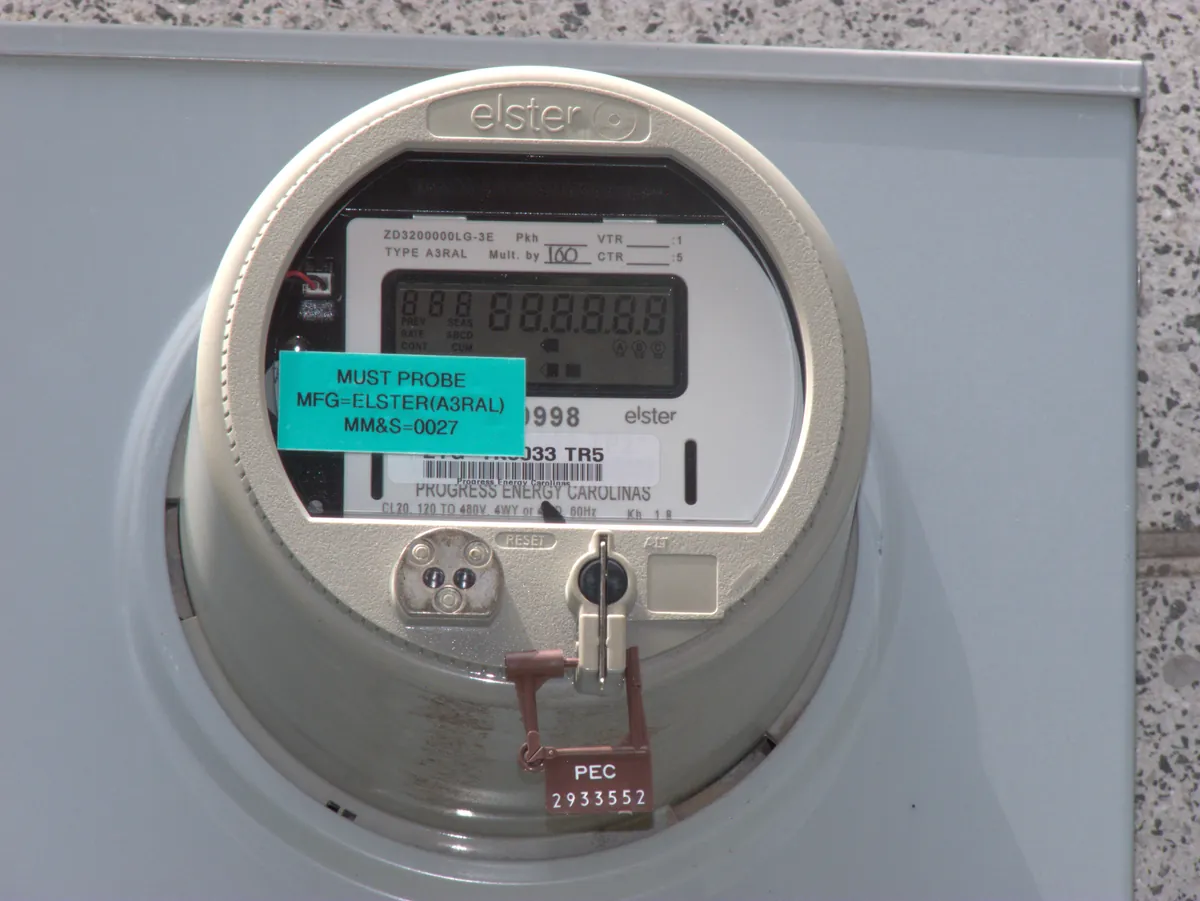
Do not assume a monthly maximum kW is a single instantaneous spike. The billed number is almost always an average over the demand interval in the rate schedule. A 5-minute spike that is real on a logger can be smaller on a 15-minute or 60-minute demand register. The opposite is also true: a load that stays high for a whole interval is fully visible to the bill.
Lawrence Berkeley National Laboratory (LBNL), in Implications of Rate Design for the Customer-Economics of Behind-the-Meter Storage (Naïm R. Darghouth, Galen Barbose and Andrew Mills, August 2019, prepared for the U.S. Department of Energy Office of Electricity, Contract DE-AC02-05CH11231), used a reference demand charge of 7 US dollars/kW, non-coincident, with a 15-minute averaging window and no ratchet. That 7 US dollars/kW figure was the median demand-charge level in the OpenEI Utility Rate Database as reported in that paper, which cites NREL 2017. The same LBNL document states that 80% of all demand-charge rates in that database analysis fall between 2 US dollars/kW and 15 US dollars/kW (the 10th and 90th percentile values), with an overall median of 7 US dollars/kW, and that few utilities have rates as high as 30 US dollars/kW or more. Those figures describe a dated U.S. literature sample. They are not your rate, and they are not a claim about the country in which your facility sits.
The same paper also shows why the fine print matters. In their examples, a peak-period demand charge (demand measured only inside a defined window) and the length of the averaging interval changed the savings from storage; seasonal rates and ratchets had little effect on bill savings in that study. They dispatched storage with a perfect-foresight algorithm in HOMER, and they sized storage power to 20% of each customer’s peak annual load, with durations of 1, 2, and 4 hours. Those modeling choices belong to that study. They are not a sizing rule for your site, and a real controller will not have perfect foresight.
Before any battery kWh is chosen, collect the rate schedule and at least one year of interval data, or a frank statement that the data do not yet exist. Confirm, in writing:
- The demand interval (15, 30 or 60 minutes, or another interval the tariff actually uses).
- Whether billing demand is non-coincident (the site’s own maximum) or coincident with a system or peak-period window, and what those clock hours are in local time.
- Whether a ratchet carries a previous peak into later months, and at what percentage.
- Whether demand is measured in kW or kVA, and how power factor is treated.
- How standby, departing-load or interconnection charges would change if a BESS is added.

Two sites can share a peak kW and still need different storage
LBNL’s 2019 study found, in its own building set, that peaky loads were easier for storage to address than flatter manufacturing loads. The teaching model below is independent of that study. It is a pair of invented 15-minute profiles, written only to make the kW versus kWh split visible. It is not a measured facility, not a quoted system, and not a recommendation of a particular chemistry or cabinet.
Both profiles are a 24-hour day of 96 intervals. The base load is 280 kW. Each profile has one peak of 400 kW, starting at 14:00. On the narrow profile the peak lasts 0.5 hours (30 minutes). On the broad profile the same 400 kW lasts 3 hours. A buyer who only writes “shave 80 kW from a 400 kW peak” has not yet distinguished these two sites.
Labeled assumptions used in the arithmetic, and checked by an independent script against the interval file:
- Discharge-path efficiency 0.90 (converter, battery and auxiliaries on the way out). This is a teaching value, not a quoted product efficiency.
- Usable state-of-charge window from 0.10 to 0.90, so 0.80 of nameplate energy is treated as usable if no other reserve is held.
- A backup reserve, when shown, of 80 kW for 1 hour, which is 80 kWh, held inside that same usable window.
- An illustrative demand-charge column that applies 7 US dollars/kW-month to the kW shaved, solely because 7 US dollars/kW is the LBNL 2019 median cited above. That column is not your bill and not a payback.
Worked results at a 320 kW import cap
If both sites try to hold import to 320 kW, the converter sees an 80 kW gap on both profiles. The energy above the cap is not the same.
| Quantity | Narrow peak (0.5 hours) | Broad peak (3 hours) |
|---|---|---|
| PCS power required | 80 kW | 80 kW |
| Energy above the cap at the AC connection | 40.0 kWh | 240.0 kWh |
| Pack-side discharge at 0.90 efficiency | 44.444 kWh | 266.667 kWh |
| Nameplate energy if 0.80 of the pack is usable and no backup reserve is held | 55.556 kWh | 333.333 kWh |
| Nameplate energy if an 80 kWh backup reserve is also held in the same window | 155.556 kWh | 433.333 kWh |
| Illustrative monthly demand-charge change at 7 US dollars/kW-month, if the 80 kW cap holds for the month | 560 US dollars | 560 US dollars |
The broad profile needs 6 times the AC energy of the narrow profile (240.0 kWh versus 40.0 kWh) to defend the same 80 kW cap. The illustrative 560 US dollars column is identical because it follows the shaved kW, not the kWh. That is the trap: a demand-charge spreadsheet can look the same while the battery, the thermal design and the recharge plan are not.
The same model at a 360 kW cap (a 40 kW shave) requires 20.0 kWh AC on the narrow profile and 120.0 kWh AC on the broad profile; pack-side discharge is 22.222 kWh and 133.333 kWh. At a 280 kW cap (a 120 kW shave, down to the base load) the figures are 60.0 kWh and 360.0 kWh AC, or 66.667 kWh and 400.0 kWh pack-side. Illustrative monthly figures at 7 US dollars/kW-month would be 280 US dollars and 840 US dollars respectively, under the same “if the cap holds” caveat. Full tables are in the topic’s validation files; they are teaching arithmetic, not a design sign-off.
The reserve you cannot spend twice
In the 320 kW case, adding an 80 kWh backup reserve inside the same 0.80 usable window raises nameplate energy from 55.556 kWh to 155.556 kWh on the narrow profile, and from 333.333 kWh to 433.333 kWh on the broad profile. The backup reserve is the same 80 kWh in both rows; it does not shrink because the shave is short, and it does not become available for the next peak if the operating rule says it must remain full for an outage.
If one reserved energy pool is asked to do both jobs, one of the jobs will fail on the day both are needed: either the import cap is missed, or the reserved outage energy is already gone. Write the two energies separately in the specification, including the recharge time and the allowed recharge power. Recharge is limited by the same PCS, by the import cap you are trying to defend, and by any tariff window that would itself set a new peak if you recharge too quickly.
Islanding and generator support are not properties of “having a battery”
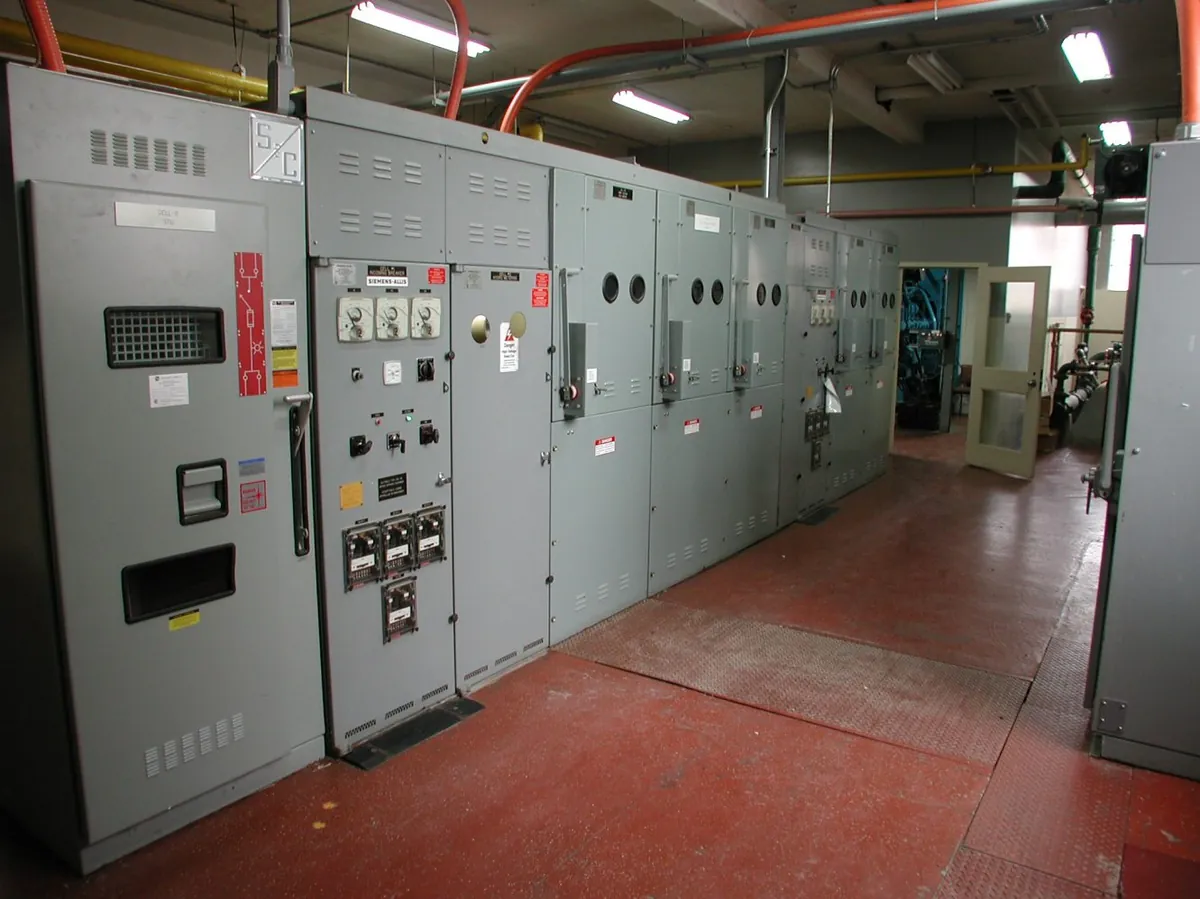
A grid-tied peak-shaving system is usually designed to follow the grid and to stop exporting or to disconnect under the interconnection rules that apply to the site. A system that must keep a critical bus alive when the grid is gone, or that must work in parallel with a generator, needs a power-conversion mode, protection settings, a controls sequence and an interconnection review that a peak-shaving energy quote does not automatically include.
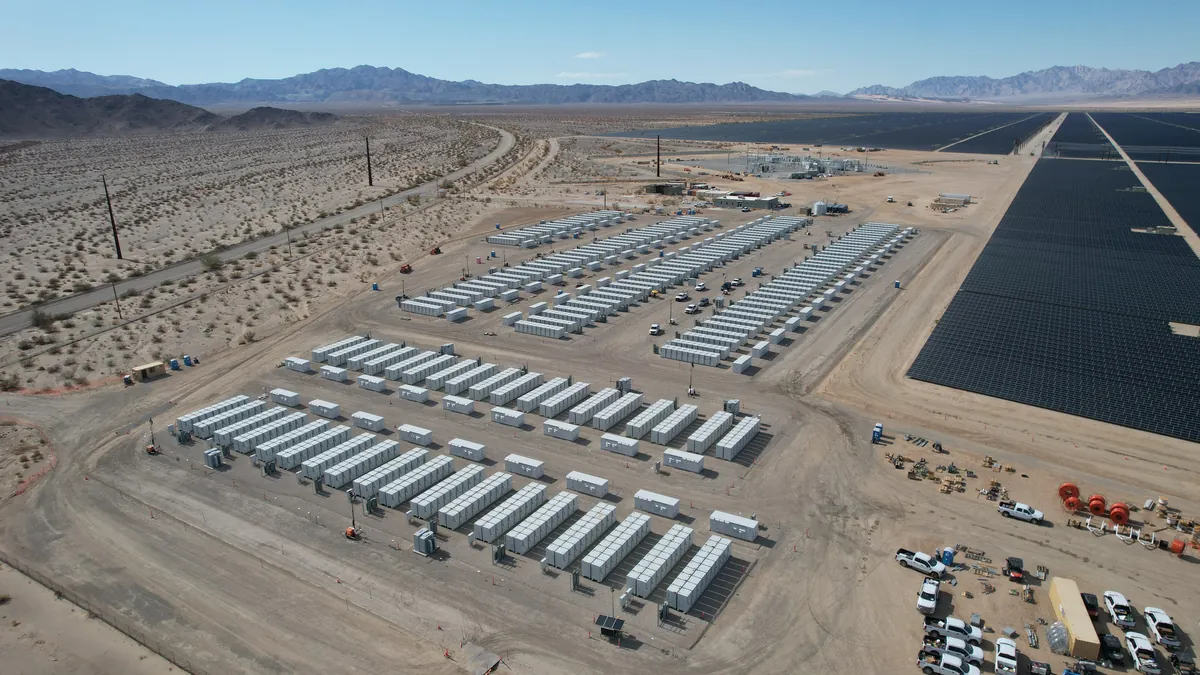
Those capabilities are specified on the PCS, the energy-management system and the protection drawings. They are not inferred from chemistry, from a kWh nameplate, or from the presence of a cabinet in a photograph. If islanding or generator support is a real requirement, say so in the written specification and require the bidder to state the mode, the tested sequence, and the standard or utility rule they will actually meet. This page does not invent trip times or anti-islanding wording from documents that were not opened for this research.

Chemistry, voltage windows, and why packs are not interchangeable
Specify the duty first: the kW, the duration, the number of expected cycles, the temperature range, the reserve, and the converter communication map. Chemistry is then a specification choice that has to fit that duty. This page does not treat “a storage battery” as meaning LiFePO4 by default.
LiFePO4 is commonly specified for frequent-cycle stationary duty, and LJY Energy’s published standard catalog classes are 12V, 24V and 48V (51.2V) LiFePO4, as described on the company’s About Us and 51.2 V product pages. That is the published catalog. It is not a statement that every facility BESS must be LiFePO4, and it is not a new catalog entry for another chemistry.
A ternary nickel-manganese-cobalt (NMC) pack can be relevant when a written specification actually requires that chemistry, for example because of a constrained footprint or a power-to-energy target that the buyer has already calculated. An NMC pack is not a drop-in replacement for a 16S 51.2 V LiFePO4 window. Cell voltage, series count, charge-voltage and discharge-voltage limits, the BMS-to-inverter communication map, continuous and peak current, and the power, thermal and safety verification all have to be confirmed in writing for the exact pack and the exact converter. Do not assume that a “48V” label is a shared operating window.
This page does not discuss nickel-cobalt-aluminum (NCA) packs; no opened, dated source was used here that would support C&I peak-shaving conditions for NCA. This page also does not invent cycle life, calendar life, certificates, fire-test marks, or a supply commitment for LiFePO4 or NMC. Certificates and test reports, when they exist, should name the producing entity for the exact unit to be shipped, as already stated in LJY Energy’s public materials.

What a useful inquiry actually contains
If the demand-charge problem is real, the next useful step is a written specification that another engineer can check, not a request for “a peak-shaving battery.” At minimum, try to include:
- The rate schedule identifier, the demand interval, peak-period hours if any, ratchet rules, and whether demand is in kW or kVA.
- Interval load data, ideally a year, or a clear note that only a few days exist.
- The import cap you want to defend, and whether that cap is a hard operational limit or an economic target.
- PCS power at the point of connection, usable kWh, state-of-charge window, and any backup or other reserved energy that must not be used for shaving.
- Required recharge window and allowed recharge power so the cap is not broken on the way back up.
- Whether the system must be grid-tied only, or must island or support a generator, with the rule or drawing that applies.
- Chemistry if you already require one; if you do not, say so, and still specify the voltage window, series count if known, and the inverter or PCS communication protocol and revision.
- Site conditions, enclosure, applicable codes, and which certificates or reports must name the producing entity.
- Quantity, destination market, and the transport documents required for that shipment (including UN38.3 and SDS where they apply).
What LJY Energy can and cannot assess
LJY Energy is a China-based LiFePO4 supply-chain and OEM/ODM solutions provider based in Shenzhen. It is not a manufacturer; batteries are produced by partner manufacturers. The buyer-facing side can review a written specification, confirm whether a requested voltage class and duty can be assessed against available partner production, and coordinate supply and export when a specification actually matches. The published standard catalog classes remain 12V, 24V and 48V (51.2V) LiFePO4.
This website does not list a certified, catalog peak-shaving BESS, and it does not list a catalog NMC pack for this duty. Sending a specification through the inquiry form is so the request can be assessed. It is not a commitment to supply a complete facility BESS, an islanding controls package, or a chemistry that is not in the written request and the published catalog. If the request is actually for a UPS string, a rack backup unit, or a containerized product already described on this site, say that in the request so it can be routed correctly.
Questions buyers actually ask
Is billed demand the same as the energy I buy in kWh?
No. Demand is a capacity quantity, usually a maximum averaged over a stated interval, and it is billed under the demand charges in the rate schedule. Energy is the kWh consumed or delivered over time. A peak-shaving BESS has to be sized for both.
If two facilities have the same peak kW, can they share one battery specification?
Not until the load curves and the tariffs are compared. In the teaching model, a 400 kW peak that lasts 0.5 hours and a 400 kW peak that lasts 3 hours both need 80 kW of converter power to hold a 320 kW cap, but the AC energy is 40.0 kWh versus 240.0 kWh.
Can the same reserved kWh cover backup and peak shaving?
Only if you accept that the two jobs compete. If the reserved energy must remain available for an outage, it is not also available to defend the import cap. Write the two energies separately.
Does a peak-shaving quote include islanding or generator support?
Not unless the quote and the drawings say so. Those functions are a PCS, controls and interconnection design. They are not implied by a battery nameplate.
Are the 7 US dollars/kW and 560 US dollars figures my payback?
No. The 7 US dollars/kW-month column is a labeled literature assumption from LBNL’s August 2019 median, applied to a teaching profile. Your tariff, ratchet, missed peaks, efficiency and capital cost will differ. This page does not give a payback period.
Can I install an NMC pack on a 51.2 V LiFePO4 inverter map?
Not as a drop-in swap. Confirm the voltage window, series count, charge limits, BMS-to-inverter map, current limits, and power, thermal and safety verification for the exact pair. A shared “48V” label is not enough.
If I send an inquiry, will LJY Energy supply a complete peak-shaving BESS?
An inquiry is a request to assess a written specification. It is not a supply commitment. The published catalog classes are 12V, 24V and 48V (51.2V) LiFePO4. A complete facility system, islanding controls, or another chemistry would have to be assessed against a specification, not assumed from this page.
Sources opened for this page
- U.S. Energy Information Administration, glossary entries for demand charge, demand interval, and demand-metered, eia.gov/tools/glossary, opened 24 November 2026.
- Naïm R. Darghouth, Galen Barbose and Andrew Mills, Implications of Rate Design for the Customer-Economics of Behind-the-Meter Storage, Lawrence Berkeley National Laboratory, August 2019, Contract DE-AC02-05CH11231, PDF. NREL 2017 is cited only as LBNL cites it; the NREL PDF was not opened from this environment.
- LJY Energy public pages linked above, including About Us, for company role and published catalog voltage classes only.
Next step, if the specification is real
If you already have a rate schedule, interval data or a written duty, send them through the inquiry form, or use WhatsApp at +86 159 8945 0735. The purpose of that contact is to assess whether the requested specification is feasible. It is not an offer of a catalog peak-shaving system and not a promise to supply a chemistry or a complete plant that has not been specified.