
On-grid, weak-grid, or off-grid — choose the home ESS job before the pack
A low-voltage LiFePO4 pack for a house can serve more than one job. It can store midday solar for the evening on a stable grid, carry selected loads through a rare outage, sit behind a weak or frequently interrupted grid, or support a home that has no grid at all. Those jobs share the same 48V-class module language. They do not share the same inverter modes, reserve policy, or interconnection rules.
This page is a procurement checklist for residential fixed storage only. It helps you name the job before you choose a SKU. It does not replace the live solar energy storage or off-grid energy storage hubs, which remain the product overviews for those systems. LJY Energy supplies low-voltage packs. We do not, on this page, certify an on-grid, off-grid, or anti-islanding system, and we do not invent a number of autonomy days for a typical house.
Short answer
- Write the job in one of four labels, and keep it visible in the RFQ: on-grid hybrid (self-consumption and/or time-of-use, with or without backup), backup-only (resilience is the reason for the purchase), weak or unreliable grid (the house is still connected, but outages or brownouts are frequent), or true off-grid (no grid, or a deliberate decision not to use one).
- Weak-grid is not off-grid. A house that still has a utility connection usually still has interconnection and islanding rules. Frequent outages change how much reserve you keep and how the pack is recharged; they do not turn a grid-tied inverter into an off-grid inverter by themselves.
- Backup-only and all-day self-consumption are different energy jobs. A backup-only bank can be smaller than a bank meant to absorb most of a day’s solar, or larger if the outages are long — but only after the loads and the recharge path are written down. Use the live home energy storage starting points (5.12kWh or 10.24kWh nominal classes; usable energy is less, about 4.1kWh at the published 80% DoD design point for a 5.12kWh module) as a sketch, not as a verdict.
- True off-grid sizing starts from the worst season you are actually willing to design for, and from the charge sources that exist when the sun is poor — including a generator if one is part of the design. The off-grid hub already says to size for the worst season or to accept another charge source. This page does not add a hidden autonomy formula.
- The pack still has to match a documented 48V-class inverter window. 51.2V (16S) is not 48.0V (15S). Communication, where required, is confirmed per project. A pack quote is not an approval to island, to export, or to drop the utility.
What buyers are actually asking
| Buyer wording | The actual job | Where it lives |
|---|---|---|
| On-grid home battery, time-of-use, self-consumption, hybrid solar storage | Store and use energy while remaining connected to a utility, with optional backup | This page to name the job; live solar storage hub for pairing overview |
| Backup-only, I already have cheap grid power, I just want outages covered | Resilience with a defined backup boundary | This page, then the critical-loads vs whole-home checklist (offline, not live when this page was written) |
| Weak grid, unreliable grid, frequent outages, brownouts, load shedding at home | Still a grid-connected house, with a harsher reserve and recharge story | This page — not a country shop-backup article, and not automatically an off-grid design |
| Off-grid home, no utility, cabin with no grid (fixed dwelling) | True off-grid energy and charge-source design | This page to confirm the job; live off-grid hub for the product overview |
| Add a battery to solar I already have | Retrofit architecture | Adding a battery to existing solar (offline, not live when this page was written) |
Four jobs, and what changes for the pack
| Job | What the system must be able to do | What usually changes in the pack RFQ |
|---|---|---|
| On-grid hybrid | Charge from solar and/or the grid under a documented inverter mode; optionally discharge to the house or, where allowed, under an export rule; optionally support a backup output | Voltage window and charge settings for daily cycling; usable energy for the evening or tariff window you actually care about; communication if the inverter requires it |
| Backup-only | Stand ready, then carry a defined panel for a defined time, and recharge when the grid or another source returns | Reserve policy (how full you keep the pack); backup-output power is an inverter question; energy follows the outage duration you are designing for, not a self-consumption target |
| Weak or unreliable grid | The same interconnection honesty as on-grid, plus a plan for frequent transfer, partial recharge between outages, and loads that may sit on backup more often | Reserve and recharge assumptions stated in the RFQ; whether a generator or solar is expected to finish a charge that the grid did not; not a silent relabel to “off-grid” |
| True off-grid | Carry the house without a utility, including poor-sun periods, with every charge source named | Energy and charge-source design for the worst season you accept; inverter and generation are in the project, not implied by the pack format |
If a quote request says “home battery” without one of these labels, the pack can still be described as a 48V-class energy module. It should not be described as a complete on-grid or off-grid system.
Why weak-grid is not off-grid
A weak or unreliable grid still has a utility interface. Transfer into backup, the conditions under which the inverter may form a local AC supply, and any right to export when the grid returns are still ruled by the inverter documents and the installer file. Calling the project off-grid because “the grid is bad” hides those rules and often hides the recharge plan as well.
What does change is operation. Outages that come several times a week, or that last through the night, mean the pack may be discharged more often than a rare-backup system, and it may not be full when the next outage starts. The RFQ should say so. It should also say whether solar, a generator, or only the utility is expected to recharge the bank, and whether brownouts (low or unstable voltage) are part of the problem — because some grid-tied behaviour is a property of the inverter, not of the battery cells.
This page does not use country load-shedding shop articles as a design template for a dwelling, and it does not invent a number of outage hours for a region. If you already have a log of outage length and frequency for the house, send that. If you do not, say that the duration is an assumption.
Backup-only versus self-consumption
Self-consumption and time-of-use storage try to move energy through the pack on a typical day. Backup-only storage tries to be ready when the grid fails. Those goals can share one bank, but only if the reserve is written down: how much energy is held back for an outage, and how much may be used for the evening tariff or for solar shifting.
A household that wants only a quiet fridge, lights, and a network closet through a short outage is not automatically a 10.24kWh job, and a household that wants to absorb a large midday surplus is not automatically served by a single 5.12kWh module. The live hub’s starting points remain a sketch. The critical-loads checklist remains the place to define which circuits are actually backed up. This page only insists that the two goals are named, so the quote is not written against the wrong one.
True off-grid — what the pack quote cannot hide
If there is no utility, or the project has decided not to use one, the charge sources have to be listed: photovoltaic array, generator, or another documented source. The live off-grid hub already warns that year-round design must face the worst season or accept support from another source. We repeat that as a procurement rule, not as a new calculator.
A wall, rack, or stack pack in the published 51.2V classes can be the energy bank in such a system. It is not a substitute for the inverter, the generation, or a winter load audit. Do not ask a pack supplier to “make the house off-grid” from a module photograph.
Voltage class and communication still have to be confirmed
Across all four jobs, the electrical pairing is the same kind of check. Confirm the inverter’s battery window against the pack’s cell count — 16S at 51.2V nominal or 15S at 48.0V nominal — and confirm charge settings, current limits, and any required CAN or RS485 profile. The live home hub prefers closed-loop communication where the inverter supports it. That preference is not a compatibility certificate for a named off-grid or hybrid inverter.
Form factor remains a site choice (indoor wall, rack, stack, or a documented outdoor enclosure). It does not decide whether the house is on-grid. Outdoor rating, where needed, is a product-page question — see the live IP65 wall-mounted pack — not a grid-architecture result.
What to record in the RFQ
- The job label: on-grid hybrid, backup-only, weak or unreliable grid, or true off-grid.
- Whether backup is required and, if so, whether the boundary is a critical-loads panel or a whole-home design (use the companion checklist).
- Charge sources: solar, grid, generator, or a combination, named rather than implied.
- An energy target expressed as usable kilowatt-hours or as a load-and-duration assumption, with the depth-of-discharge assumption stated. Do not paste a nameplate alone.
- For weak-grid jobs: any outage log or a clearly marked estimate of duration and frequency, and whether brownouts are in scope.
- For off-grid jobs: the worst season you are designing for, and every charge source that will exist in that season.
- Inverter make and model if already chosen, including the battery voltage window from its manual.
- Permit or listing documents the installer already knows they must file — names only, via the live permit pack page. Do not assume the pack carries those listings.
Acceptance should match the job. A self-consumption system is not accepted only because a pack discharged once in a workshop. A backup or weak-grid system is not accepted only because the nameplate energy was confirmed. Agree what will be witnessed: charge sources used, whether transfer occurred as the inverter manual describes, and the energy or duration assumption that was tested. This page does not publish a universal commissioning script or wiring steps.
Compatibility boundaries — no modification steps
- LJY does not, here, claim on-grid, off-grid, hybrid, or anti-islanding certification, and does not publish a generator-integration or export-limit setting.
- A pack is not a utility interconnection, a transfer switch, or a generator controller, and this page does not sell those accessories.
- Do not relabel a grid-tied project as off-grid in order to skip installer or utility questions.
- Do not add unofficial wiring or charger changes to “make it work” on a weak grid.
- Country or shop load-shedding articles on this site are not a specification for a dwelling in another place.
What to send with an enquiry
Use the existing contact page. State the job label first. Then add the charge sources, the backup boundary if any, the energy assumption, the inverter model if known, and, for weak-grid or off-grid jobs, the duration or season assumption you are actually designing to. If the job is still undecided, say which two labels you are choosing between. A pack can be quoted as an energy bank; it should not be labelled as the complete system until the job is named.
What this page does not decide
- It does not calculate a household’s kilowatt-hours or invent regional outage statistics.
- It does not replace the solar or off-grid product hubs, the 10 kWh cost page, or the form-factor guides.
- It does not rank solar brands, tariff structures, or generators, and it does not offer a LJY complete off-grid kit as a certified product.
- It does not give electrical installation steps.
Frequently asked questions
We have a grid, but it fails often. Is that off-grid storage?
No. Treat it as a weak or unreliable grid unless you have decided to disconnect. You still need an honest interconnection and transfer design, plus a reserve and recharge plan that assumes the pack may not be full when the next outage starts.
If I buy a larger pack, can I go off-grid later?
Only if the inverter, the generation, and the transfer arrangement can become a true off-grid system. Pack capacity is one ingredient. Write the later job in the first RFQ if you want the first quote to leave that path open, and still confirm it in a later design. Do not treat a larger nameplate as a planned off-grid conversion.
How many days of autonomy do I need?
This page will not invent a number. For backup-only and weak-grid jobs, use the outage duration you are willing to design for. For true off-grid, use the worst season you accept and the charge sources that will exist then. Convert that into usable kilowatt-hours from your load list.
Can the same 51.2V wall pack be used in all four jobs?
The same published module class can be the energy bank in more than one job, provided the inverter window, the charge settings, and the site conditions match. The job still changes the inverter modes, the reserve policy, and the acceptance test. The pack photograph does not pick the job.
Do I need a special off-grid LiFePO4 chemistry?
This page does not invent a separate off-grid cell chemistry. The project still has to match voltage, current, communication, and environmental limits to the inverter and the site. If a datasheet or an order specification adds constraints, those are confirmed per order, not assumed from the word “off-grid.”
Sources
- LJY Energy, “Home Energy Storage Battery Solutions” — energy starting points, usable-energy design point, 15S / 16S naming, CAN/RS485 preference. https://ljyenergy.com/solutions/home-energy-storage/ (HTTP 200, 2026-11-17 21:44 Asia/Shanghai).
- LJY Energy, “Solar Energy Storage Solutions” — product hub for solar pairing; not a four-way job checklist. https://ljyenergy.com/solutions/solar-energy-storage/ (HTTP 200, 2026-11-17 21:44 Asia/Shanghai).
- LJY Energy, “Off-Grid Energy Storage Solutions” — product hub, including the published need to face worst-season autonomy or accept another charge source. https://ljyenergy.com/solutions/off-grid-energy-storage/ (HTTP 200, 2026-11-17 21:44 Asia/Shanghai).
- LJY Energy, “48V vs 51.2V vs −48V.” https://ljyenergy.com/48v-vs-51-2v-vs-minus-48v-lifepo4/ (HTTP 200, 2026-11-17 21:46 Asia/Shanghai).
- LJY Energy, “Home Battery Permit Pack for Installers” — document names only. https://ljyenergy.com/home-battery-permit-pack-installers/ (HTTP 200, 2026-11-17 21:44 Asia/Shanghai).
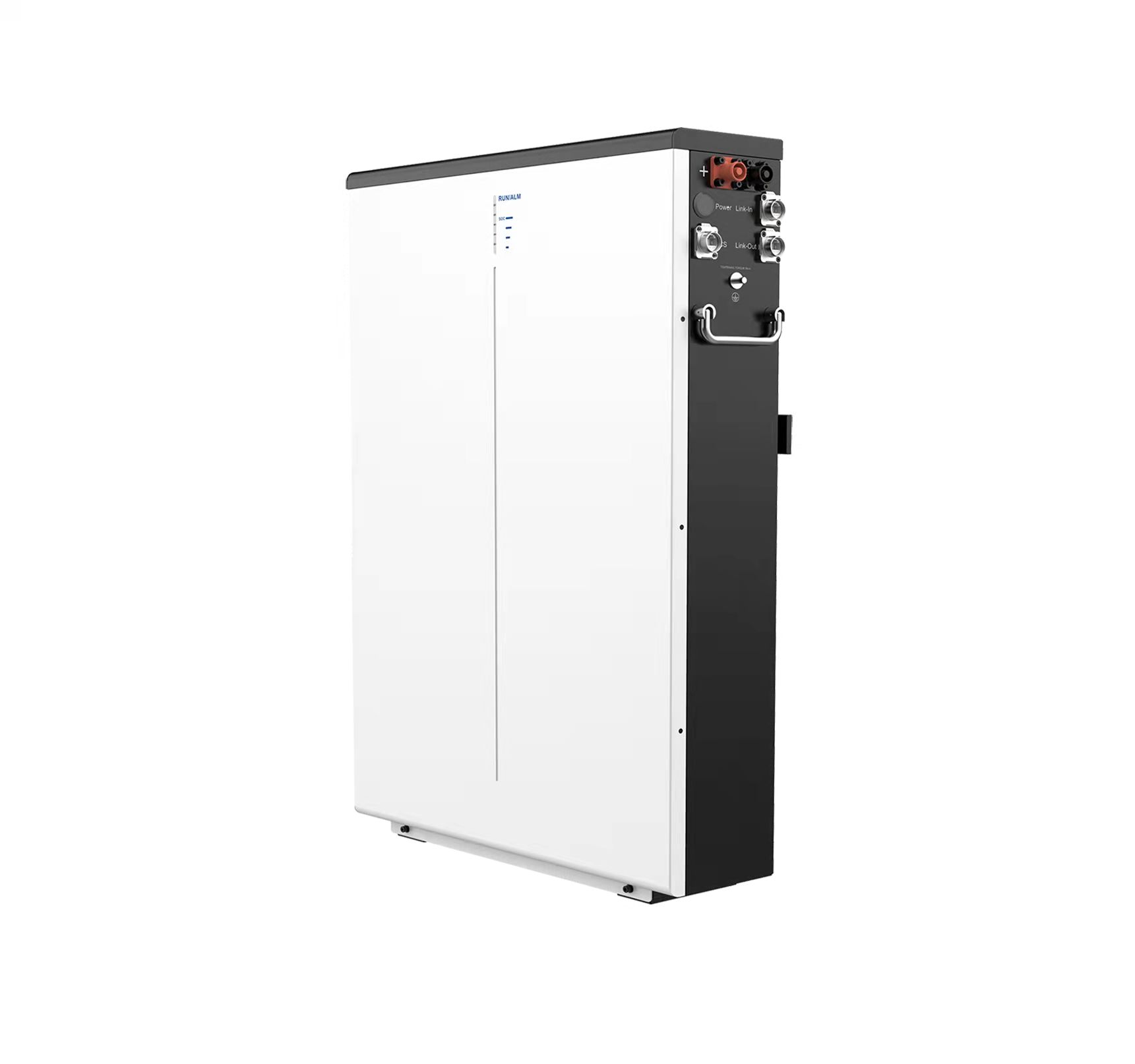
- Existing product photograph wall-1.jpg (HTTP 200, 2026-11-17 21:46 Asia/Shanghai).
No regional outage statistics, tariff figures, or generator sizing numbers are used. Where the off-grid hub speaks of worst-season design, this page treats that as a first-party planning rule, not as a calculated autonomy result for a named house.
Related guides
- Home energy storage solutions
- Solar energy storage solutions
- Off-grid energy storage solutions
- Home battery permit pack
- 10 kWh system cost (market snapshots)
- Send the system job and the inverter model on the contact page
Send the system job and the inverter model on the contact page · WhatsApp +86 159 8945 0735