
Solar electric fence LiFePO4 battery — procurement and acceptance checklist
A fence energizer on a remote paddock, conservancy boundary or farm perimeter is a stationary DC job. The pack sits in a weather-exposed box, charges from a small solar array when the weather allows, and must keep the energizer alive through nights and cloudy stretches. Buyers often order “a 12V lithium for the fence” the way they used to order a lead-acid leisure battery. That shortcut skips the energizer’s voltage window, the pulse and standby current, the charge-temperature limit, and the solar recharge in the worst month.
This page is the generic English procurement and acceptance checklist for a low-voltage LiFePO4 pack used with a solar electric fence. It is not a country landing page, not a tractor or farm-vehicle battery guide, and not an irrigation-pump guide. Irrigation pumping is already covered on LiFePO4 batteries for agricultural machinery and irrigation; that existing page should be used for pumps, not duplicated here.
LJY Energy is a LiFePO4 supplier and OEM/ODM coordinator in Shenzhen; we are not a factory. We supply battery packs. We do not sell fence energizers, wire, posts or solar modules as a complete fence kit on this page, and we do not claim compatibility with named energizer brands. This page does not install a fence and does not state the legal rules that apply to electric fences in any country — follow the energizer maker and the rules that apply at the site. Nothing here is a wiring or modification procedure. Typical figures are from published LJY product pages and must be confirmed on the order datasheet.
Short answer
- Read the energizer datasheet first: DC input window, running or average current, and any peak current when the fence pulses. Do not assume every energizer is a drop-in 12V lead-acid replacement, and do not assume a 12.8V LiFePO4 pack is accepted by every “12V” energizer.
- Size energy from the days of autonomy you must cover at that real current, then check whether the solar charge in the worst season can put that energy back. Panel wattage alone is not a specification.
- A storage pack is not automatically compatible with a named energizer or with the solar charge controller already in the box. LJY does not certify those combinations on this page.
- Climate is a charge boundary. Published typical 12V-class pages say not to charge below 0°C unless low-temperature charge protection or heating is part of the ordered configuration. A fence box that sits below freezing at sunrise is a charge problem, not only a capacity problem.
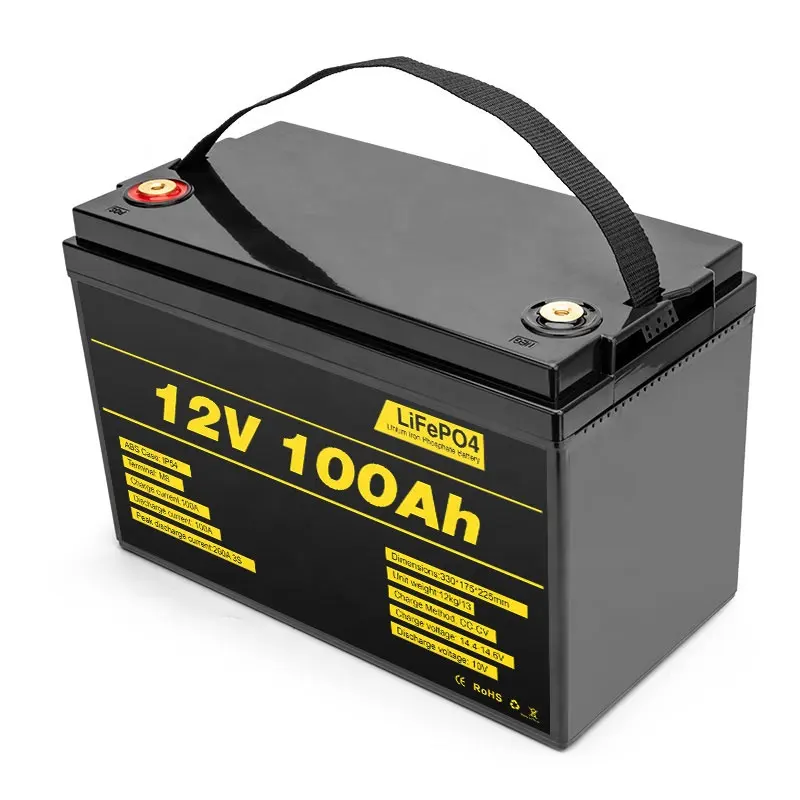
- Standby between pulses, and long quiet periods on a seasonal fence, belong in the RFQ. Confirm BMS standby behaviour on the datasheet. A typical self-discharge figure published for the 12V 100Ah deep-cycle page is <3% per month at 25°C — typical for that page, not a universal fence rating.
What this page covers, and what it does not
This page covers pack selection and acceptance for a stationary solar fence energizer: load, startup or pulse current, the solar charge path, climate, enclosure, and standby. It does not cover traction batteries for agricultural machines, sprayer robots, or irrigation pumps. It does not cover RV, marine, home storage, or telecom −48V plants. It does not claim industrial or medical grade.
English geo pages already exist for fence energizers in some countries. Those are location landings. Use this checklist for the electrical and acceptance questions, regardless of the site country.
Load and pulse current, not a guess from voltage class
An energizer is usually a small continuous or regularly pulsed DC load, not a pump motor and not a shop inverter. The running or average current can look modest, but the specification still has to come from the maker’s datasheet:
- Permitted input voltage window (often described as a 12V system; the actual min/max may or may not include a 12.8V nominal LiFePO4 rest voltage and its charge voltage).
- Average current or daily amp-hours at the fence load the buyer actually has, if the maker publishes it. If they publish only a range, the RFQ should say which figure you are using.
- Any short peak when the unit pulses, if published. The pack’s continuous and peak discharge ratings must sit above that peak. A typical published peak on the 12V 100Ah deep-cycle page is 200A for ≤3 s at a typical continuous rating of 100A. That is far above most energizer draws; it is not a reason to skip the datasheet check, and it is not a claim that this SKU is the correct fence pack.
If the energizer is 24V-class, do not series-connect packs as a casual workaround unless the quotation and the pack documentation allow that configuration. The 24V 100Ah page lists a typical nominal of 25.6V (8S) and a typical charge voltage of 28.4–29.2V. Series use of 12V packs, where mentioned on product pages, is subject to configuration.
Inverter, charger and solar path
Most fence jobs should stay DC. Introducing an inverter to feed an AC energizer adds conversion loss, startup behaviour that the pack and inverter must both support, and another compatibility surface. If the energizer is AC-only, the inverter’s continuous and surge ratings and its battery voltage window must be taken from the inverter datasheet. LJY does not certify a named inverter plus energizer pair.
The usual architecture is: solar module → charge controller with a documented LiFePO4 or user-defined profile → pack → energizer. The controller must be set inside the pack’s charge window. A typical absorption range on the 12V 100Ah deep-cycle page is 14.2–14.6V. A lead-acid “12V solar kit” profile is not automatically correct. We do not publish a default MPPT model or a default array size on this page.
Do not use a 48V / 51.2V energy-storage module, and do not use a telecom −48V rack module, as a generic 12V fence battery. Those are different voltage classes and, for telecom plants, a different polarity. See 48V vs 51.2V vs −48V.
Climate, enclosure and cold charge
Fence boxes bake in summer and sit below freezing on winter mornings, often far from a building. Two climate bounds must be in the RFQ:
- Charge. Typical 12V-class pages state a charge range from 0°C to 45°C and say not to charge below 0°C unless low-temperature protection is fitted. The 12V 100Ah heated page states that charging LiFePO4 cells below 0°C risks permanent lithium plating, and that a standard pack’s BMS will block charge until the cells are warm. Heating engagement temperature and power are confirmed per configuration, not guessed from the marketing title. If the box can be below 0°C while the array is trying to charge, the RFQ should ask for low-temperature charge protection or a heated configuration.
- Discharge and enclosure. Typical discharge on the 12V 100Ah deep-cycle page is −20°C to 60°C. Enclosure ingress ratings are not assumed from a photograph. An outdoor 51.2V wall-mounted format exists on a separate page as an IP65-class option whose rating is confirmed per project — that format is the wrong voltage class for a typical 12V energizer and is cited here only to make the point that ingress ratings are project-confirmed.
Standby, autonomy and acceptance
A fence pack is a standby-plus-cycling product. Agree the following in writing:
- Autonomy days at the energizer current you put in the RFQ, including nights and a cloudy-stretch assumption you are willing to own. This page does not invent a standard number of days.
- How the array is expected to restore that energy in the worst month you care about. If you cannot describe the array and the controller, say so; a quotation built only on “12V 100Ah” is incomplete.
- Seasonal idle: a fence that is switched off for months still has BMS draw. Storage state of charge and a check interval should be agreed if the pack will sit unused. Do not copy off-season tractor advice from the agricultural machinery page as if it were a fence test method.
- Acceptance: a discharge at the agreed energizer current (or a recorded current if you can measure it), or another method written in the quotation. Documents such as UN38.3 and MSDS are coordinated per order on the published 12V page — not a blanket certification claim.
What to send when you enquire
- Energizer make and model, plus the datasheet pages that show the DC input window and current (average and peak if given).
- Whether the energizer is DC-native or AC, and whether an inverter is already proposed.
- Autonomy days you need, and a description of the solar module and charge controller if they already exist.
- Site climate: expected minimum and maximum temperatures in the box, and whether charge may be required below 0°C.
- Mounting: fence-box size, indoor shed, or outdoor cabinet, and any ingress requirement you need confirmed in the datasheet.
- Whether Bluetooth or other monitoring is desired; on published 12V and 24V pages this is typically optional and confirmed per order.
Send the energizer datasheet, autonomy target and site temperature range on the contact page.
What this page does not decide
- It does not approve a named energizer, solar controller or enclosure combination.
- It does not set legal fence height, warning signs, animal-welfare or public-safety rules for any country.
- It does not size irrigation pumps or farm traction batteries.
- It does not claim that a LiFePO4 pack is a drop-in equivalent of the lead-acid battery that came in a solar fence kit.
Frequently asked questions
Is a 12.8V LiFePO4 pack the same as the 12V battery the energizer manual mentions?
Not automatically. 12.8V is the typical nominal of a 4S LiFePO4 pack sold in the 12V class; rest and charge voltages differ from lead-acid. The energizer’s input window and the controller’s charge profile have to be checked against the pack datasheet.
Can I use a 51.2V rack or wall-mounted storage module on a fence?
Not as a generic 12V fence battery. 51.2V is a 16S storage class. It is also not a telecom −48V module. If a project truly uses a 48V-class energizer or inverter, that must be explicit in the RFQ and confirmed against datasheets.
Do I always need a heated pack?
No. You need a documented way to avoid charging below 0°C if the box can be that cold while the array is charging. That may be a heated pack, a low-temperature charge cut-off plus a design that only charges when the cells are warm, or a placement that stays above the limit — all confirmed in the quotation, not assumed.
Sources
- LJY Energy, 12V 100Ah deep-cycle LiFePO4 battery (typical 12.8V, 100Ah, 1,280Wh; charge 14.2–14.6V; charge 0°C to 45°C; discharge −20°C to 60°C typical; peak 200A for ≤3 s typical; self-discharge <3% per month at 25°C typical): https://ljyenergy.com/12v-100ah-deep-cycle-lifepo4-battery/
- LJY Energy, 12V 100Ah heated LiFePO4 battery: https://ljyenergy.com/12v-100ah-heated-lifepo4-battery/
- LJY Energy, 24V 100Ah LiFePO4 battery (typical 25.6V, charge 28.4–29.2V): https://ljyenergy.com/24v-100ah-lifepo4-battery/
- LJY Energy, 48V vs 51.2V vs −48V: https://ljyenergy.com/48v-vs-51-2v-vs-minus-48v-lifepo4/
- LJY Energy, agricultural machinery and irrigation (existing pump / vehicle page; not duplicated here): https://ljyenergy.com/lifepo4-batteries-agricultural-machinery-irrigation/
- LJY Energy, outdoor IP65-class wall-mounted 51.2V format (rating confirmed per project): https://ljyenergy.com/outdoor-ip65-wall-mounted-lifepo4-battery-51-2v/
- LJY Energy, contact: https://ljyenergy.com/contact/
Source limitation: typical and optional values are not treated as guarantees or as a compatibility list for named energizers. No fence regulation or certification was invented.
Related guides
- LiFePO4 batteries for agricultural machinery and irrigation — use this for solar pumps; do not treat this fence checklist as a pump synonym
- 12V 100Ah deep-cycle LiFePO4 battery
- 12V 100Ah heated LiFePO4 battery
- 48V vs 51.2V vs −48V
Send the energizer datasheet, autonomy target and site temperature range on the contact page