
An RV lithium battery and a lead-acid battery want opposite things for winter. A lead-acid battery stores fully charged — left part-charged it sulfates, and a discharged one can freeze and crack. A lithium iron phosphate battery stores part-charged, and the exact level depends on the maker: Renogy Core Mini asks for 30–50%, Epoch about 50%, Lithionics 50–80% for storage over a month, Battle Born 100%, and Victron (almost) full and then disconnected. Most makers land near 50%, but that is a summary of the range, not an instruction — the number in your own battery’s manual is the one that counts. Never store it empty, and never charge it below 0 °C: charging a frozen lithium battery plates lithium metal onto the anode and costs capacity for good. Some makers set the floor at +5 °C, so check your manual. Before you put the RV away, disconnect the battery from every load — the propane and carbon-monoxide alarms, the stereo clock memory, the fridge control board, the USB sockets and the wireless trackers all draw a little current all winter, and a small forgotten load drains far more than the battery’s own self-discharge of about 2–3% a month. Take the negative cable off first. Store the battery between about −10 °C and 45 °C, ideally 15–25 °C, and check it every 3–6 months; top it back to the manual’s level if it has drifted down. If the RV stays in use through winter, a battery with a heating pad can charge below freezing — that is a different question from storage, and it is covered on the heated battery page.
LJY Energy is a LiFePO4 battery supplier and OEM/ODM coordinator in Shenzhen; we are not a factory. This guide covers the battery side of RV winter storage only — low-voltage 12V, 24V and 48V packs, how the storage charge differs by maker, and what to disconnect before the RV sits for months. A bank of two packs in parallel stores as one bank: bring both packs to the same charge level before disconnecting, and check both when you check one — start with one pack and add packs in parallel as the need grows, with the parallel limit confirmed per project in the quotation. Specifications, pricing, MOQ and lead times are confirmed per project — we do not publish inventory claims or promise certifications not yet obtained.
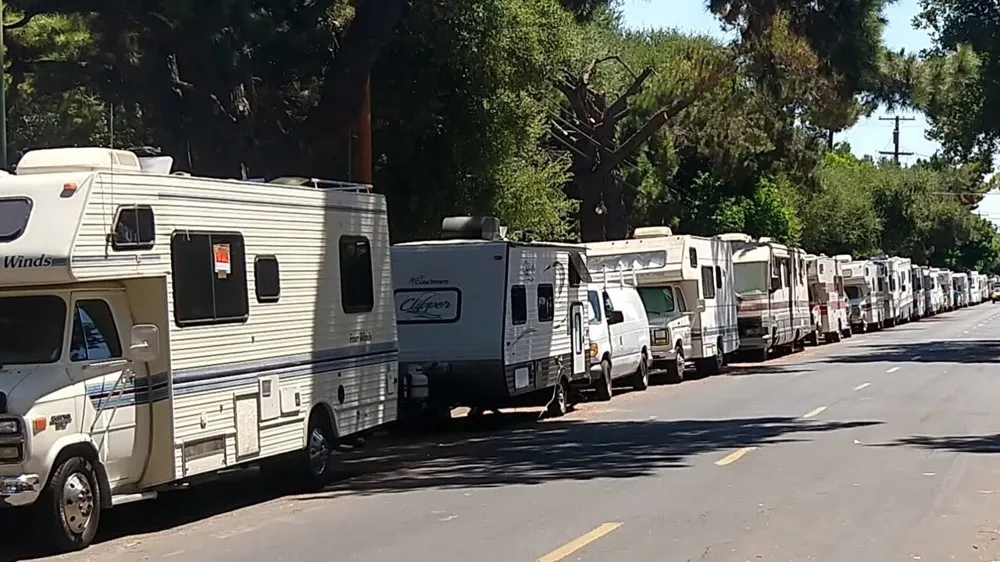

Winter storage at a glance
| Storage charge, Renogy Core Mini | 30–50% |
| Storage charge, Epoch | 50% |
| Storage charge, Lithionics, over one month | 50–80% |
| Storage charge, Battle Born | 100% |
| Never charge below | 0 °C |
| Discharge temperature range | −20–60 °C |
| Storage temperature range, typical | −10–45 °C |
| Self-discharge per month | 2–3% |
| Check every, months | 3–6 |
Cold-weather charging is a separate question — see the 12V 100Ah heated LiFePO4 battery page for a battery with a heating pad that can charge below freezing.
Worked example: six months in storage
Example: a 12V 100Ah battery holds 1280Wh. Store it at 50% and the bank holds 640Wh. Self-discharge of about 3% a month takes about 6 months to bring it to about 32% — check it before spring. A forgotten 10 mA load drains 7.2Ah a month, about 7% of a 100Ah battery — more than double the self-discharge — so disconnect everything.
What to send before a proposal
- Your battery model and the storage charge its manual asks for — makers range from 30% to 100%, so the manual decides, not a single number.
- The bank layout: how many packs, in parallel or in series, and whether they store together or come out of the RV.
- The storage spot and climate: indoors or outdoors, the coldest month, and whether any charger or solar stays connected.
- What you want next spring: a heated battery that charges below freezing, a second pack in parallel, or a straight replacement — with the RV model and the compartment size.
Request a sizing
Send your battery model, the storage charge its manual asks for, the bank layout and the storage climate, and LJY Energy will confirm the right pack — heated or standard — and the parallel limit for your RV, then quote the project with delivery terms. Start with one pack and add packs in parallel as the need grows. We coordinate OEM/ODM battery supply from Shenzhen; we are not a factory, and every order is confirmed in writing before production begins.


Request an RV lithium battery quote · WhatsApp +86 159 8945 0735