
If you are specifying a low-voltage ternary (NMC) energy-storage battery pack, you are not buying «a 48V lithium battery» in the abstract. The first split is between four different voltage ideas that buyers often collapse into one label: the cell’s nominal voltage, the charge upper limit, the discharge cutoff, and the inverter or charger’s allowed operating window. Series count, protection trip points, and the BMS communication map sit on top of that split. A shared «48V» class name does not make an NMC pack a drop-in replacement for a 16S 51.2 V LiFePO4 window.
Public information as of 24 November 2026, not engineering, legal, fire-safety or investment advice. The pack datasheet, the named inverter or charger manual, and the site rules belong to the project; the using facility, the competent authority and the parties who operate the system decide what applies. The numbers below are taken from named, dated publications that were opened for this page, or from marked worked examples that use those publications. They are not a tariff, a payback, a stock position, or the ratings of a listed LJY product.
LJY Energy’s published catalog classes, as stated on the live About Us page opened for this research, remain 12V, 24V and 48V (51.2V) LiFePO4. This page still covers NMC, because a buyer may already need that chemistry in a written specification. Coverage is not a catalog entry, a certified model, a cycle-life claim, or a promise that a pack is in inventory.
Short answer
- Write five figures, not one: cell nominal voltage, charge upper limit, discharge cutoff, pack series count, and the inverter or charger minimum and maximum. Protection trips and communication come next. «48V» is a class name, not that list.
- Series count is read from the pack datasheet. It is not a universal NMC rule. Using one opened NMC cell product data sheet (nominal 3.6 V, charge 4.2 V, discharge 2.5 V) as a worked example, 13S, 14S, 15S and 16S land at different pack limits and do not all fit the same inverter window.
- A 16S 51.2 V LiFePO4 platform is a different chemistry window. Default «48V» charger setpoints can sit above one NMC configuration’s charge limit and below another’s.
- Opened inverter documents already disagree with each other: one 48V inverter/charger lists a 38–66 V DC input range and a default absorption charge of 57.6 V; one hybrid inverter lists a 40–60 V battery range and Li-ion charging by adaptation to the BMS, with RS485 and CAN. Always use the manual for the named unit.
- CAN or RS485 on both sides is not the same as a matching protocol and version. The inquiry should name the map the inverter actually uses.
- A written specification sent through the inquiry form is a feasibility assessment, not a commitment to supply a listed NMC pack or to declare a converter compatible.
What this page is for, and what it is not
This page is for a procurement or engineering reader who already has a low-voltage energy-storage duty, and who needs to decide whether an NMC pack can be specified against a named converter or against a 16S 51.2 V LiFePO4 window, and what belongs in a written inquiry. It is a medium for that judgment, and for a later assessment, model discussion or cooperation if the inquiry is real. It is not a keyword scorecard, and it is not a list of NMC systems for sale.
Neighboring pages on this site already cover adjacent jobs, and should be used when those jobs are the real purchase:
- LiFePO4 vs NMC battery comparison is a chemistry selection essay. It is not this page’s procurement and compatibility method. This page does not reuse that essay’s 14S «48V» NMC arithmetic as a market rule; series count is taken from the pack datasheet, and the worked examples below use an opened cell product data sheet.
- 48V vs 51.2V vs −48V LiFePO4 explains LiFePO4 class names, including 16S at 51.2 V nominal. It is a LiFePO4 labeling page, not an NMC pack specification.
- Battery chemistry comparison is the chemistry hub. It does not specify pack-to-inverter windows.
- 51.2V rack-mount LiFePO4 battery describes a published LiFePO4 module family. That family is not itself an NMC pack, and it is not a drop-in map for every 48V-class converter.
- The company role and the published LiFePO4 voltage classes are on About Us.
Four voltages that are not the same number
In procurement language, a useful written specification names each of these, and does not treat the class name as a substitute:
- Nominal voltage: the cell or pack figure used for energy arithmetic and for nameplates. On the opened NMC cell product data sheet used below, this is 3.6 V per cell.
- Charge upper limit: the constant-voltage limit in a CC-CV charge. On that same sheet, this is 4.2 V per cell. Pack charge voltage is this limit times the series count, unless the pack maker publishes a lower operating cap.
- Discharge cutoff: the cell voltage at which discharge is specified to stop. On that sheet, this is 2.5 V. A BMS or an inverter may stop earlier.
- Inverter or charger operating window: the minimum and maximum voltages at which the named unit will invert, charge, or remain connected. This comes from that unit’s manual, not from the pack’s class name.
Protection strategy is a fifth layer: the BMS over-voltage, under-voltage, over-current and temperature trips, and the delays, must be written for the exact pack. They are often close to, but not identical to, the cell charge and discharge figures. Do not assume that a charger setpoint and a protection trip are the same point. A shared 48V class name does not tell you the series count, the charge limit, or whether a named inverter can use that pack.

The cell window opened for the worked examples
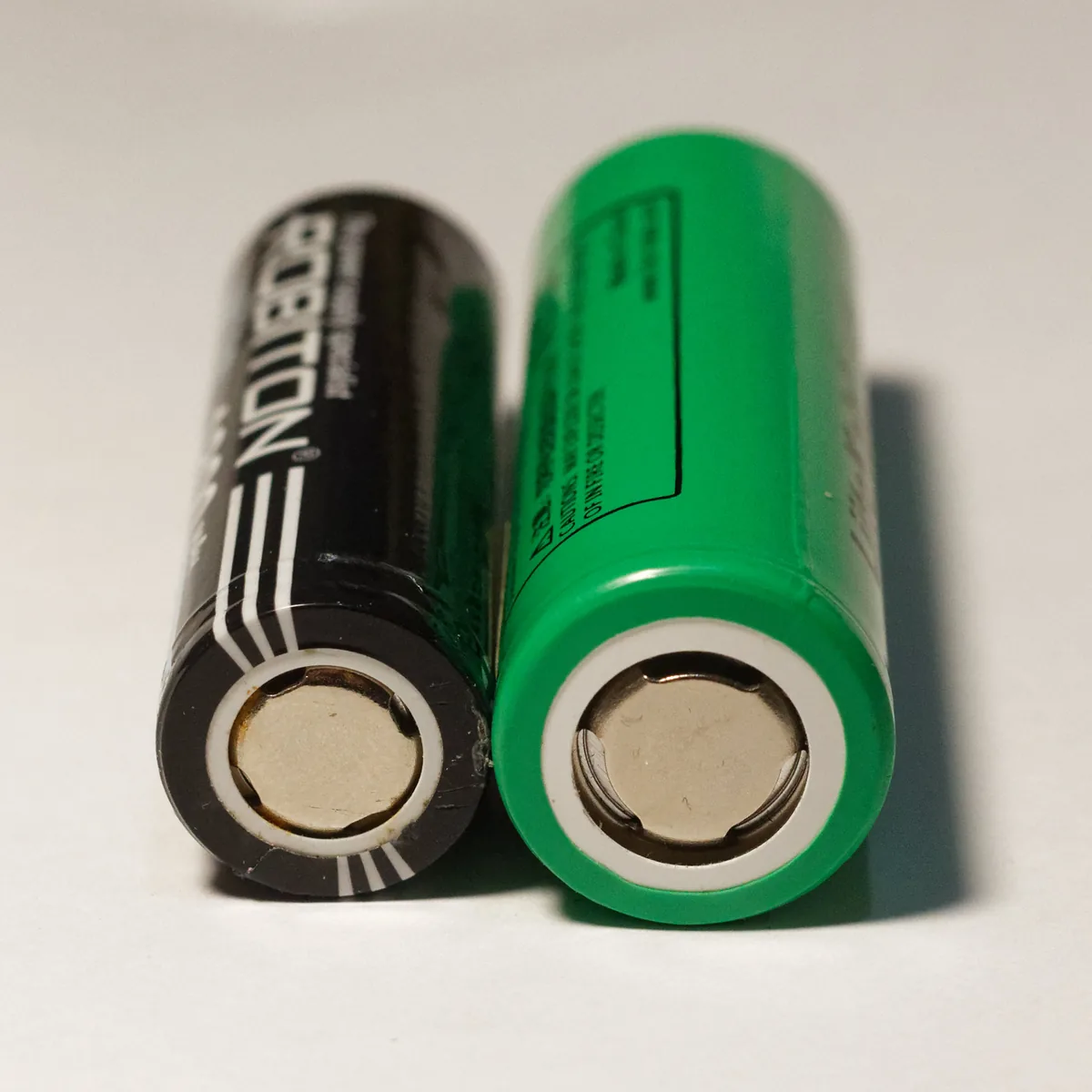
The worked examples on this page use one opened manufacturer product data sheet: Molicel INR-21700-P42A, version 1.7 (PDF metadata 14 June 2023). That sheet states a nominal cell voltage of 3.6 V, a charge voltage of 4.2 V, and a discharge voltage of 2.5 V. Charge is specified as CC-CV to 4.2 V. Charge temperature is 0°C to 45°C; discharge temperature is −40°C to 60°C. Those limits belong to that cell model. Another NMC cell can publish a different nominal, a different charge cap, or a different cutoff. The pack you buy must follow its own cell and pack datasheets.
This page does not treat those cell figures as a cycle-life, calendar-life, or certification claim, and it does not say that LJY Energy supplies that cell.
Series count is a design choice, not one «48V NMC» rule
Once the cell limits are known, pack voltage is series count times those limits. The table below is locked arithmetic from 3.6 V, 4.2 V and 2.5 V. It is a teaching model, independently checked in this workdir. It is not a measured installation, not a quoted system, and not a recommendation of one series count.
| Series count | Nominal (3.6 V × S) | Charge limit (4.2 V × S) | Discharge cutoff (2.5 V × S) |
|---|---|---|---|
| 13S | 46.8 V | 54.6 V | 32.5 V |
| 14S | 50.4 V | 58.8 V | 35.0 V |
| 15S | 54.0 V | 63.0 V | 37.5 V |
| 16S | 57.6 V | 67.2 V | 40.0 V |
Several public pack documents use 13S for a «48V» NMC class, because 13 × 3.6 V = 46.8 V nominal and 13 × 4.2 V = 54.6 V at the charge limit. 14S is a different configuration: 50.4 V nominal and 58.8 V at the charge limit from the same cell figures. An arithmetic example that starts from 3.7 V nominal instead of 3.6 V will print a different 14S nominal; that is why this page does not copy a 51.8 V figure as a fact. Read the series count and the limits from the pack in front of you.
For comparison only, the live LiFePO4 labeling page on this site treats 16S LiFePO4 as 16 × 3.2 V = 51.2 V nominal, and gives 16 × 3.65 V = 58.4 V as a common charge-ceiling example. That is LiFePO4 chemistry math from that opened page, not an NMC nameplate.
Why a 16S 51.2 V LiFePO4 window is not a drop-in target
A converter commissioned for 16S LiFePO4 is usually set around that chemistry’s charge ceiling and around a 51.2 V nominal nameplate. The NMC rows above do not share that pair. 13S NMC reaches 54.6 V at the cell charge limit, below a 58.4 V LiFePO4 example ceiling, but its nominal 46.8 V and its empty-end cutoff are also different. 14S NMC reaches 58.8 V, which is already 0.4 V above the 58.4 V LiFePO4 example. 15S and 16S NMC go higher still. Cell balancing, low-voltage cutoffs, and the charge profile have to be re-specified. Sharing the word «48V» is not a shared operating window.
Two opened inverter windows, used as worked checks
Inverter and charger limits are model-specific. This page opened two manufacturer documents so the teaching model can be checked against real windows, not against a guessed industry average.
The Victron Energy MultiPlus-II 230 V inverter/charger datasheet opened for this page (PDF metadata 23 June 2026) lists, for 48 V models, a DC input voltage range of 38–66 V. The same sheet lists default charge voltages of 57.6 V absorption and 55.2 V float (and 52.8 V storage). Those defaults are factory charge figures on that sheet. They are not an NMC setpoint. The sheet also lists protection against battery voltage too high and battery voltage too low.
The Deye SUN-3.6K / SUN-5K / SUN-6K-SG03/05LP1-EU hybrid inverter datasheet opened for this page (PDF dated 31 December 2021) lists a battery type of lead-acid or Li-ion, a battery voltage range of 40–60 V, maximum charge and discharge currents of 90 A, 120 A and 135 A by model, a charging strategy for Li-ion of self-adaption to the BMS, and communication with the BMS by RS485 and CAN. The 40–60 V range is narrower than the 38–66 V range above. Those two opened windows are examples, not a list of every 48V inverter, and they already disagree with each other.

| Worked pack (from the 3.6 / 4.2 / 2.5 V cell figures) | Charge limit versus Victron 38–66 V input and 57.6 V default absorption | Charge limit versus Deye 40–60 V |
|---|---|---|
| 13S, 54.6 V charge, 32.5 V cutoff | 54.6 V sits inside 38–66 V, but the 57.6 V default absorption is 3.0 V above the 54.6 V charge limit. The 32.5 V cutoff is below the 38 V inverter minimum, so the inverter may stop first. | 54.6 V sits inside 40–60 V. The 32.5 V cutoff is below the 40 V minimum, so usable discharge may be limited by the inverter, not by the cell cutoff. |
| 14S, 58.8 V charge, 35.0 V cutoff | 58.8 V sits inside 38–66 V. The 57.6 V default absorption is 1.2 V below 58.8 V, so a default charge may not reach the cell charge limit. The 35.0 V cutoff is below 38 V. | 58.8 V sits inside 40–60 V, but only 1.2 V under 60 V. Imbalance, sensor error or a brief overshoot can consume that margin. The 35.0 V cutoff is below 40 V. |
| 15S, 63.0 V charge, 37.5 V cutoff | 63.0 V sits inside 38–66 V, 3.0 V under 66 V. It is 5.4 V above the 57.6 V default absorption, so the charger must be re-specified; this page does not assert a hidden official maximum above the figures printed on the opened sheet. | 63.0 V is 3.0 V above the 60 V maximum. On this opened Deye window, 15S at a 4.2 V cell charge limit does not fit. |
| 16S, 67.2 V charge, 40.0 V cutoff | 67.2 V is 1.2 V above the 66 V maximum. On this opened Victron window, 16S NMC at a 4.2 V cell charge limit does not fit. | 67.2 V is 7.2 V above the 60 V maximum. It does not fit this opened Deye window. |
The teaching point is practical: if a 13S NMC pack is placed on a charger still set to a 57.6 V default, the charger is aiming 3.0 V above the 54.6 V cell-limit arithmetic. That is a specification error, not a small rounding difference. If a 16S NMC pack is placed on a unit whose maximum is 66 V or 60 V, the 67.2 V charge limit is outside the opened window. If you already own a 16S 51.2 V LiFePO4 converter, ask for the pack series count and both windows in writing before anyone treats the swap as routine.
Protection, temperature and communication still have to be written down
The BMS, not the class name, enforces cell over-voltage, under-voltage, over-current, short-circuit and temperature trips. Those trips must be confirmed for the exact pack, including release points and delays. A charger should be set at or below the pack’s allowed charge voltage, with the BMS as a backstop, not as the everyday regulator of a setpoint that is already too high.
The opened Molicel sheet allows charge only from 0°C to 45°C for that cell. A low-voltage storage pack in a cold room still needs a written charge-temperature policy. This page does not invent a pack-level thermal test mark.
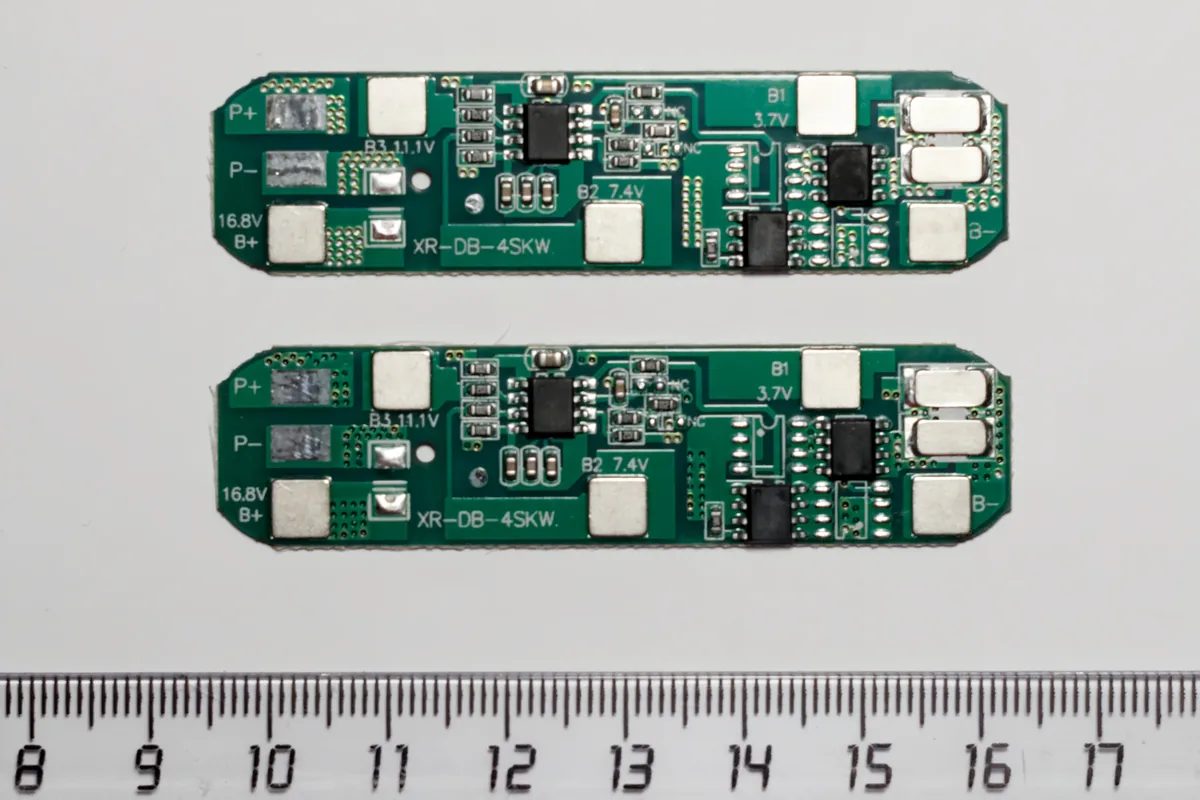
Closed-loop control, where the inverter follows the BMS, only works when the map matches. The opened Deye sheet lists RS485 and CAN, and says Li-ion charging is self-adapted to the BMS. That is a capability on that datasheet, not proof that a given pack speaks the same protocol, register set or termination. A matching bus name is not a matching map; the inquiry should name the protocol and version the inverter actually uses.

What a useful inquiry actually contains
If the duty is real, the next useful step is not to ask for «a 48V NMC battery». It is a written specification another engineer can check. Try to include at least:
- The named inverter or charger, including firmware or settings if known, and its published battery minimum, maximum and charge setpoints.
- Whether the converter today is commissioned for 16S 51.2 V LiFePO4, for lead-acid, or for another window.
- Required chemistry if you already require NMC; if you do not, say so, and still describe the voltage window you must hit.
- Pack series count if known, or a request that the pack maker state series count, nominal, charge limit, discharge cutoff and protection trips in writing.
- Continuous and peak current, usable energy, and the state-of-charge window you will actually use.
- BMS-to-inverter protocol and version, or a clear statement that only voltage/current (no closed loop) is required.
- Charge and discharge temperature range, enclosure, and site rules.
- Quantity, destination market, and transport documents required for that shipment (including UN38.3 and SDS where they apply).
- Certificates or test reports, if required, must name the producing manufacturer for the exact unit to be shipped. That condition is already stated in LJY Energy’s public materials; this page does not invent a certificate for an unlisted NMC pack.
What LJY Energy can assess, and what it cannot do
LJY Energy is a China-based LiFePO4 battery supply-chain and OEM/ODM solutions provider, based in Shenzhen, as stated on the live About Us page. It is not itself a factory; batteries are produced by partner manufacturers. The buyer-facing side can review a written specification, confirm whether the requested voltage class and duty can be assessed against available partner production, and coordinate supply and export when the specification actually fits. The published standard catalog classes remain 12V, 24V and 48V (51.2V) LiFePO4.
This website does not list a certified, catalog NMC energy-storage pack for this duty. Sending a specification through the inquiry form is so that the inquiry can be assessed. It is not a commitment to supply an NMC pack, a closed-loop protocol package, or a chemistry that is in neither the written request nor the published list. If NMC is required, say so in the inquiry, and include the converter window and series-count evidence above. If the inquiry is actually for a listed LiFePO4 rack, cabinet or UPS string, say that, so it can be routed correctly.
Questions buyers actually ask
Is every «48V» NMC pack 14S at 51.8 V?
No. Series count is a pack design choice. From the opened 3.6 V / 4.2 V cell figures, 13S is 46.8 V nominal and 54.6 V at the charge limit, and 14S is 50.4 V nominal and 58.8 V at the charge limit. A 51.8 V figure is arithmetic from a different nominal assumption, not a fact copied onto this page. Read the pack datasheet.
Can I drop an NMC pack into a 16S 51.2 V LiFePO4 inverter map?
Not as a drop-in. Confirm the pack series count, charge limit, discharge cutoff, protection trips, thermal policy, and the BMS-to-inverter map against that exact inverter. A shared «48V» label is not enough.
Does a default 57.6 V absorption charge work for NMC?
Not as a blanket rule. On the opened Victron sheet, 57.6 V is the printed default absorption figure. Against the worked 13S charge limit of 54.6 V, that default is 3.0 V too high. Against the worked 14S charge limit of 58.8 V, it is 1.2 V too low to reach the cell charge limit. Set the charger from the pack datasheet.
Will a 40–60 V hybrid inverter accept every low-voltage NMC pack?
No. On the opened Deye window, the worked 13S charge limit of 54.6 V fits, the worked 14S limit of 58.8 V sits only 1.2 V under 60 V, and the worked 15S and 16S charge limits of 63.0 V and 67.2 V are outside 60 V. The 40 V minimum can also stop discharge before a 2.5 V-per-cell cutoff is reached.
If the inverter lists CAN or RS485, is the pack compatible?
Not by itself. The physical bus is only the first check. Ask for the protocol, version and termination the inverter uses, and for a written statement that the pack BMS implements that map.
If I send an inquiry, will LJY Energy supply a listed NMC pack?
The inquiry is a request to assess a written specification. It is not a supply commitment. Published catalog classes are 12V, 24V and 48V (51.2V) LiFePO4. An NMC pack, or any other chemistry not on that list, has to be assessed against the specification, not inferred from this page.
Sources opened for this page
- Molicel, Product Data Sheet, lithium-ion rechargeable battery model INR-21700-P42A, version 1.7, PDF, opened 24 November 2026 (PDF metadata 14 June 2023). Used for the 3.6 V / 4.2 V / 2.5 V cell figures and the 0°C–45°C charge / −40°C–60°C discharge temperatures.
- Victron Energy, MultiPlus-II Inverter/Charger 230 V datasheet, PDF, opened 24 November 2026 (PDF metadata 23 June 2026). Used for the 38–66 V DC input range and the default 57.6 V / 55.2 V / 52.8 V charge figures.
- Deye, SUN-3.6K / SUN-5K / SUN-6K-SG03/05LP1-EU datasheet, PDF, opened 24 November 2026 (PDF dated 31 December 2021). Used for the 40–60 V battery range, 90 / 120 / 135 A model currents, Li-ion charging by adaptation to the BMS, and RS485 / CAN.
- Live LJY Energy pages opened 24 November 2026 by public GET or public REST: About Us (company role and 12V, 24V, 48V (51.2V) LiFePO4 catalog classes); 48V vs 51.2V vs −48V LiFePO4 (16S 51.2 V and the 58.4 V charge example); LiFePO4 vs NMC comparison, battery chemistry comparison, 51.2V rack-mount LiFePO4, and contact. NREL, cycle-life tables and pack certificates were not opened as primary sources for this page and are not cited as facts here.
Next step, if the specification is real
If you already have a pack datasheet, a named inverter manual, or a written duty, send them through the inquiry form, or use WhatsApp at +86 159 8945 0735. The purpose of that contact is to assess whether the requested specification is feasible. It is not an offer of a listed NMC energy-storage pack, and it is not a promise to supply a chemistry or a compatible converter map that has not been described.