
How Marine Dealers Should Size a 12V, 24V or 36V LiFePO4 Trolling-Motor Battery
Marine dealers and boat builders who search for a 24V trolling motor lithium battery size or a 36V trolling motor LiFePO4 pack are often given a generic amp-hour number, a golf-cart SKU, or a house-bank module that happens to share a voltage label. Voltage labels overlap. The trolling-motor job is still a documented motor load: the motor maker’s voltage class, the current at the speeds you actually sell, and the hours at those currents, checked against a pack datasheet issued for the same duty.
This page is a procurement and enquiry checklist for that sizing job. It is not a wiring procedure, a “drop-in lead-acid swap” guide, or a runtime table for a named Minn Kota, MotorGuide or other motor. This writing session did not retrieve a usable first-party motor-maker battery page, so this article does not invent model-by-model current or runtime figures. Confirm the motor’s current manual before you treat any capacity as a fit. LJY Energy supplies LiFePO4 packs used in trolling-motor enquiries; a quotation is not an approval to connect a pack to a named motor or charger.
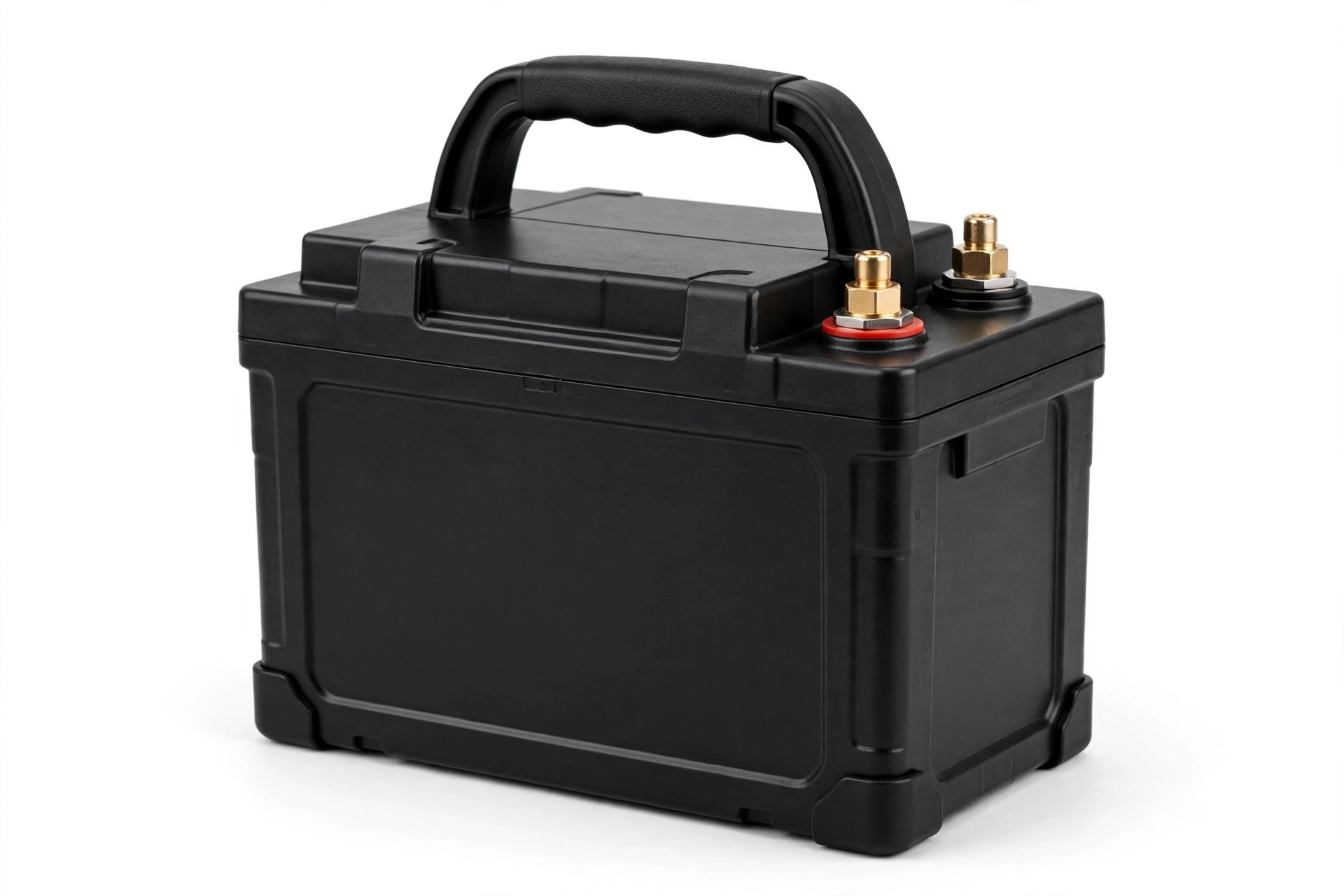
Short answer
- Take the motor voltage class from the motor nameplate and the current manual — 12 V, 24 V or 36 V — not from a house-bank datasheet, a golf-cart listing, or a pack that merely “also comes in 24V.”
- Size capacity from current and hours you can evidence: the current the motor draws at the speeds your customer actually uses, the hours at those currents, and the usable capacity the pack datasheet states at that current and temperature. A catalog amp-hour number is not a runtime guarantee.
- A single 24V or 36V pack and a string of 12V packs in series are different architectures. Series strings add interconnects and more than one BMS. Do not treat them as the same SKU or the same charger pairing.
- This is a trolling-motor enquiry. House banks, starter / cranking batteries and electric-outboard or inboard propulsion batteries are separate jobs; see the marine house vs trolling vs starter vs propulsion checklist.
Voltage class comes from the motor, not from a nearby SKU
A 12 V, 24 V or 36 V trolling motor is a voltage-class product. The pack must be the same class, or a documented series arrangement that the motor maker and the pack datasheet both allow. “Lithium,” “Group 31,” or a case that looks like a trolling battery does not change that.
On LJY Energy’s own site, the live 24V 100Ah trolling-motor product page (fetched 2026-11-18) describes a 25.6 V (8S) 100 Ah pack as a single-unit alternative to two 12 V lead-acid batteries wired in series for a 24 V motor. The live 36V trolling-motor product page (same date) describes a 38.4 V (12S) platform and contrasts a single 36 V pack with three 12 V packs in series. Those pages are enquiry entries. They are not a substitute for the motor manual, and they are not a claim that every 24 V or 36 V motor is pre-approved for a named LJY build.
Capacity is a current-and-hours check, not a catalog Ah guess
Amp-hour ratings are stated at a test current and a cutoff. A trolling motor does not run at one current all day. A dealer who only multiplies “Ah × 0.8 ÷ mystery amps” is inventing a runtime. Use this sequence instead, and keep the figures on the enquiry:
- Record the motor model and the voltage class from the nameplate and the current manual.
- Request, from the motor maker’s current documentation or from a measured boat, the current (or power) at the speeds you actually sell — not only a peak marketing number.
- State the hours at those speeds, including any idle or staging time you want the quote to cover.
- Ask for the pack datasheet of the exact build: continuous and peak discharge current, cutoff, usable capacity at a current comparable to the duty, charge voltage, and temperature limits, including whether charging is allowed below the pack’s stated low-temperature threshold.
- Compare the duty to those datasheet limits. If the datasheet does not state capacity at a current close to the duty, do not fill the gap with a rule of thumb presented as a guarantee. Ask for the missing figure.
Energy in watt-hours is nominal voltage × amp-hours, but usable energy is whatever the datasheet allows under the duty and temperature you named. Cold water, partial charge, and a higher current than the rating current all change the result. This page does not publish a one-line runtime table for a named motor.
Single 24V or 36V pack versus a series of 12V packs
Two architectures appear in dealer quotes for 24 V and 36 V motors:
- One pack in the motor’s voltage class — one BMS, one charge window, one set of interconnects to the motor and charger. The 24V 100Ah product page, as fetched, describes this as one 25.6 V pack in place of two 12 V lead-acid batteries in series, with one built-in BMS (the page states a typical 100 A continuous rating; confirm the datasheet for the build you are quoting).
- Two or three 12V packs in series — more interconnects, more than one BMS, and a charger pairing that must be correct for the series string. The 36V product page, as fetched, states this contrast for 36 V motors. A series string is not automatically “the same as” a single 36 V pack, and 12 V modules bought for other jobs are not, by that fact, a trolling string.
If you quote a series arrangement, say so on the enquiry, and do not assume a 12 V charger, a house-bank charger, or a single-pack 24 V / 36 V charger is interchangeable without the pack and charger documentation.
Existing enquiry pages — use them as entries, not as a hidden catalog guarantee
These live pages can be used as enquiry entries. Values marked on those pages as typical, industry reference, optional, or confirmed per project remain in those categories. This article does not convert them into stock promises or certified-for-every-motor claims.
- 24V 100Ah trolling-motor pack — the page (fetched 2026-11-18) states a typical 25.6 V, 100 Ah, 2.56 kWh configuration and a typical 100 A continuous BMS rating. Enquiry code on that page:
24V-100Ah-Trolling. - 24V 60Ah trolling-motor pack — the page states a 25.6 V, 60 Ah, 1.54 kWh class figure, and marks continuous and peak discharge current, dimensions and weight as confirmed per project. Enquiry code:
24V-60Ah-Trolling. - 36V trolling-motor platform page — the page describes a 38.4 V (12S) platform and a single-pack versus three-12 V-in-series decision. It also lists common market capacities; those are not, in this article, treated as a guaranteed in-stock SKU matrix. Enquiry code on that page:
36V-Trolling-Motor.
A 2026-10-29 topic note said a 36 V SKU was not in the then-current ledger and should not be implied. The 36V trolling-motor page is now live as an enquiry entry; this article cites only what that page itself states, and still does not invent a certified 36 V capacity matrix.
What to send when you enquire
Use the contact form and name the trolling-motor job. The primary enquiry tag for this page is the existing 24V 100Ah trolling code; if your enquiry is clearly a 24V 60Ah or 36V platform request, say so in the message so it is not treated as a house or propulsion pack.
- Motor make, model, and nameplate voltage class (12 V, 24 V or 36 V), plus a copy or excerpt of the current manual pages that state battery type, voltage, and any current, fuse or approved-battery notes.
- The currents or speeds you want the quote to cover, and the hours at those speeds. If you only have a peak marketing number, say so.
- Ambient and water-temperature range, and whether overnight charging in the cold is in scope.
- Preferred architecture: a single pack in the motor’s voltage class, or a documented series of 12 V packs — and the charger you intend to sell with it.
- Mounting limits you already know (tray, group size, weight, terminals), if any. If you do not know them, leave them open for the datasheet rather than guessing.
- Documents you need with a quotation (for example a UN38.3 test summary, SDS, or a project short-circuit current figure for fuse selection). Request them for the exact build; do not assume a marketing page has already certified the boat.
Send the motor model, voltage class, currents and hours on the contact page · WhatsApp +86 159 8945 0735
What this page does not decide
- It does not publish a runtime chart for a named trolling motor.
- It does not approve a pack for a house bank, a starter motor, or an electric outboard or inboard propulsion drive.
- It does not give wiring, bonding, alternator or charger-modification steps.
- It does not invent prices, lead times, MOQ, or a claim that LJY Energy is a factory, or that a pack is classification-society certified for every marine survey.
- It does not treat “typical,” “industry reference,” or “common capacities” language on a product page as a guaranteed stocked build.
Frequently asked questions
Can I size a 24V motor from a 12V Ah label by doubling it?
No. A 24 V motor is a 24 V-class load. Two 12 V packs in series are a different architecture, with their own BMS and charger questions. Capacity still has to be checked at the current and temperature of the duty, on the datasheet of the arrangement you are actually quoting.
Does a higher amp-hour pack always run longer?
Only if the datasheet supports the current, cutoff and temperature of that duty, and if the motor is not already limited by voltage sag, a BMS current limit, or a charger mismatch. Ask for the figure; do not assume it.
Is this the same as sizing a house bank or an electric outboard?
No. Those are different jobs. Use the marine job-separation checklist and open a separate enquiry if you also need those packs.
Sources
- Live LJY Energy page 24V 100Ah trolling-motor product page, ordinary public GET, 2026-11-18 Asia/Shanghai — typical 25.6 V / 100 Ah / 2.56 kWh figures and typical 100 A continuous BMS rating as labelled on that page; enquiry code
24V-100Ah-Trolling. - Live LJY Energy page 24V 60Ah trolling-motor product page, same date — 25.6 V / 60 Ah / 1.54 kWh class figures; discharge current, dimensions and weight marked confirmed per project; enquiry code
24V-60Ah-Trolling. - Live LJY Energy page 36V trolling-motor product page, same date — 38.4 V (12S) platform description and single-pack versus three-12 V-in-series contrast; enquiry code
36V-Trolling-Motor. - Live LJY Energy page Marine house vs trolling vs starter vs propulsion checklist, same date — four-job separation used here by reference.
- Topic backlog T14 in
ljy-knowledge/products-tech/research/content-topics-20261029/topics.csv(2026-10-29) — dealer intent examples “24v trolling motor lithium battery size” and “36v trolling motor lifepo4”; existing enquiry tag24V-100Ah-Trolling. The note that a 36 V SKU was then absent from the ledger is recorded; the 36V enquiry page is now live and is cited only for what it states. - Minn Kota and MotorGuide first-party battery or manual pages were requested this session and were not retrieved in a usable form (bot-blocked or empty responses). No model-specific current or runtime figures from those makers are stated here.
Related guides
- House vs trolling vs starter vs propulsion — do not treat them as one SKU
- 24V 100Ah trolling-motor product page
- 24V 60Ah trolling-motor product page
- 36V trolling-motor platform page
- Alternator and DC-DC charging for LiFePO4 in RV, van and marine builds — a different charging job, not a trolling-motor runtime method
Send the motor model, voltage class, currents and hours on the contact page · WhatsApp +86 159 8945 0735