
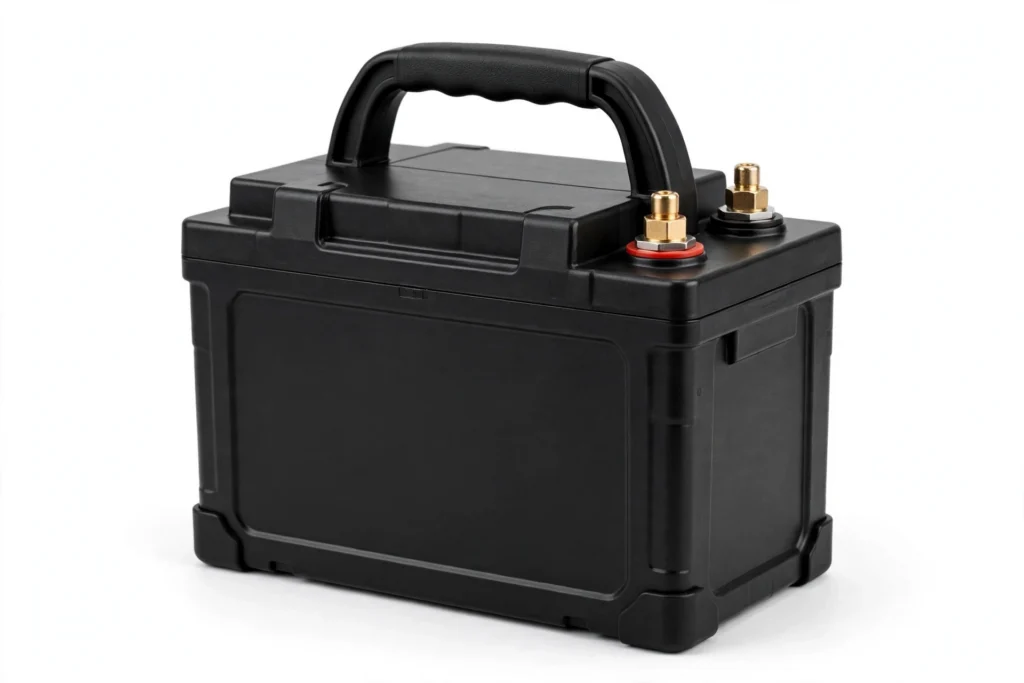
24V 100Ah LiFePO4 Battery for Trolling Motors
Product Images
Product Overview
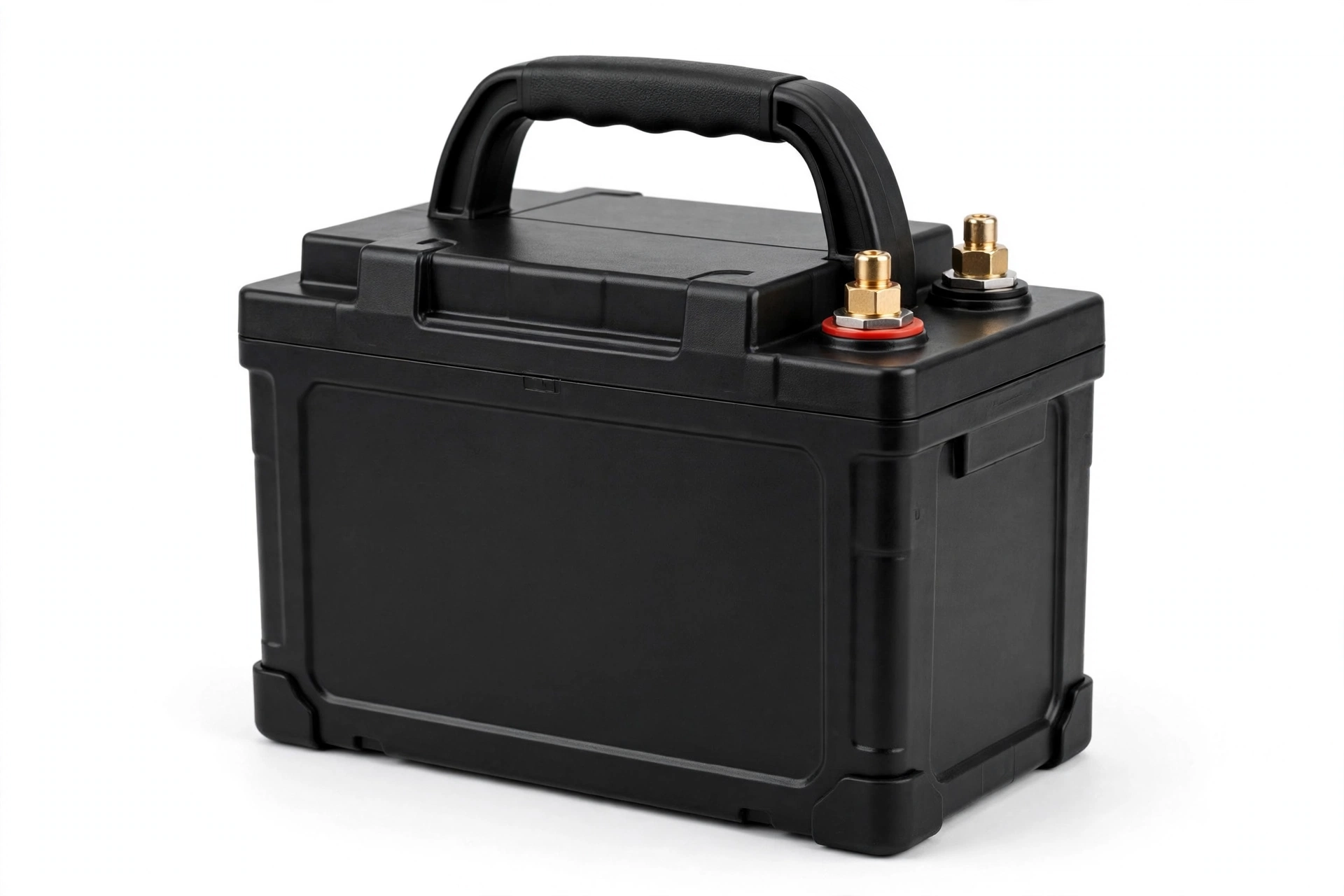
A 2.56kWh LiFePO4 battery (25.6V 100Ah) built as a single-unit replacement for the two 12V lead-acid batteries traditionally wired in series to run a 24V trolling motor. One pack means one built-in 100A BMS managing every cell, no series interconnect cables, and no mismatched battery pair drifting out of balance — and at roughly 50% lighter than the lead-acid equivalent, it improves boat trim, frees deck space and makes handling on kayaks and small boats noticeably easier.
For marine dealers, kayak outfitters and electric-boat builders, 24V is the working standard for mid-thrust trolling motors, and the same pack serves small 24V off-grid solar systems where a 2.56kWh store is enough. As a China-based LiFePO4 battery supplier and OEM/ODM solutions provider, LJY Energy configures BMS features, monitoring and branding to your market requirements. (Propulsion plus house loads? See our Marine & Boat Battery Solutions page.)
Typical Specifications
Values below are typical configurations. “Optional” items can be specified per order; “To be confirmed” items depend on the final configuration and order — contact us for the datasheet of the exact build you need.
| Parameter | Value | Status |
|---|---|---|
| Battery chemistry | LiFePO4 (lithium iron phosphate) | Typical |
| Nominal voltage | 25.6V (8S) | Typical |
| Rated capacity | 100Ah | Typical |
| Energy | 2.56kWh | Typical |
| Built-in BMS | 100A continuous; over-charge / over-discharge / over-current / short-circuit / temperature protection | Typical |
| Weight | Approx. 50% lighter than the lead-acid equivalent | Typical |
| Charge voltage (bulk/absorption) | 28.4–29.2V | Typical |
| Bluetooth / app monitoring | Cell voltages, SOC, temperature on mobile app | Optional |
| Low-temperature charging protection | Charging cut-off below 0°C; self-heating pad available | Optional |
| Series / parallel expansion | Parallel for larger banks; series subject to configuration | Optional — subject to configuration |
| Enclosure protection | Sealed enclosure; ingress rating per final configuration | To be confirmed per order |
| Certifications | UN38.3 / MSDS / CE and others per target market | To be confirmed per order |
| Warranty terms | Subject to configuration and order agreement | To be confirmed |
| Dimensions & weight | Per final enclosure design | To be confirmed — datasheet on request |
| Lead time | Subject to order quantity and configuration | To be confirmed |
Why 24V 100Ah for Trolling Motors
The case for a single 24V pack starts with how series lead-acid pairs actually age: two batteries wired in series never discharge perfectly evenly, the weaker unit limits the whole string, and voltage sag under load steadily erodes thrust through the day. A single LiFePO4 pack removes the pairing problem, and its flat discharge curve holds voltage — and therefore thrust — almost constant until the pack is nearly empty. The usable-energy maths favour lithium too: at a sensible 80% depth of discharge, this 100Ah pack returns about 80Ah of working capacity, against roughly 50Ah from a 100Ah lead-acid pair kept above 50%. That is around 60% more usable energy at about half the weight. The 100A BMS covers the full-throttle draw of typical 24V trolling motors with headroom to spare. Our LiFePO4 vs lead-acid comparison covers the chemistry economics behind the switch.
Charging & Compatibility
Typical charge profile: bulk/absorption at 28.4–29.2V, then termination — LiFePO4 needs no float stage and no equalization. Those figures are the 24V row of our charging voltage reference; see the complete charging guide for CC/CV operation.
- Onboard and marine chargers: select the 24V lithium (LiFePO4) profile. If the charger only offers a custom profile, set absorption to 28.4–29.2V and disable float boost and equalization.
- Solar / MPPT: this pack suits small 24V off-grid systems; program the controller to the same 28.4–29.2V absorption setpoint.
- Motor compatibility: any 24V trolling or kayak motor whose maximum current draw stays within the 100A BMS continuous rating — check the motor maker’s full-throttle figure at the selection stage.
- Upgrading from lead-acid: the two series batteries and their interconnect cable come out; this single pack connects directly to the motor leads. Verify polarity and fuse sizing.
If the battery ever refuses to charge, work through our troubleshooting guide before assuming a fault.
Battery Lifespan
Cycle aging and calendar aging together determine real life. Typical reference for quality LiFePO4 cells: around 6,000 cycles at 80% depth of discharge (25°C, to 80% capacity retention) at cell level — pack results depend on BMS, thermal design and usage. Running at 80% DoD roughly doubles cycle life versus 100% DoD while sacrificing only 20% of per-cycle capacity. In marine duty — seasonal use, partial discharges, long storage periods — storage practice matters as much as cycle count: keep the pack partially charged and out of extreme heat between trips. Our DoD vs cycle life guide explains the throughput economics, and should you charge to 100% covers the practical charge strategy.
Evaluating supplier cycle-life claims? Our procurement checklist shows how to read datasheet curves and spot inflated marketing.
Sizing & Selection
Start from current draw, not from the thrust label alone. Usable capacity is about 80Ah (100Ah at 80% DoD), and runtime is simply usable amp-hours divided by average draw. Worked example: a 55 lb-thrust 24V motor at half speed typically draws around 20–25A, which returns roughly 4–5 hours of trolling per charge; slow-speed finesse work at ~10A stretches the same pack across most of a day, while sustained full throttle at 40–50A is a 1.5–2 hour proposition. Plan the pack around how you actually fish, not the headline setting. Kayak motors draw far less and stretch it further. Second check: the motor’s maximum draw must stay under the 100A BMS continuous rating, which holds for the great majority of 24V trolling motors.
Applications
- Trolling motors, kayak motors and small electric boats
- Small 24V off-grid solar systems
- 24V mobile and utility power
See our Marine & Boat Battery Solutions page (linked above) for house-bank sizing and runtime planning.
Wholesale, OEM & ODM
We support distributors, wholesalers, marine dealers and electric-boat brands with flexible cooperation models. New to battery importing? Start with our MOQ and sample order guide, then see the wholesale buyer’s guide for sourcing from China step by step.
- Wholesale: volume pricing for distributors and resellers; terms vary by configuration and order size.
- OEM branding: custom enclosure, logo, labeling and packaging for your brand.
- ODM configuration: voltage, capacity, BMS features, communication protocols and heating options matched to your application.
- Samples: sample and trial orders welcome for evaluation before volume commitment.
- Documentation support: datasheets, UN38.3/MSDS and market-specific files coordinated per order.
Frequently Asked Questions
How long will it run my trolling motor per charge?
It depends on the motor’s draw at the speed you actually use. Estimate it this way: usable capacity is about 80Ah (100Ah at 80% DoD), and runtime hours = 80 ÷ average draw in amps. A 55 lb-thrust 24V motor at half speed typically draws around 20–25A, giving roughly 4–5 hours; at full throttle (40–50A) expect about 1.5–2 hours. Treat these as planning estimates, not guarantees — wind, current, load and hull all move the real figure.
Can it replace two 12V lead-acid batteries in series?
Yes — that is exactly what it is built for. One 25.6V pack replaces the series pair directly: no interconnect cable, no pair-balancing problem, and roughly half the weight. Connect it to the motor leads, verify polarity and fuse sizing, and use a 24V LiFePO4-profile charger.
What charger do I need?
A 24V charger with a LiFePO4 profile: bulk/absorption at 28.4–29.2V, no equalization stage. An onboard marine charger with a lithium mode, or an MPPT solar controller programmed to the same setpoints, both work. See our charging guide for details.
Is it waterproof?
The pack uses a sealed construction that resists splashes and the damp environment of a boat, but we do not publish a generic ingress rating for every build — the enclosure rating depends on the final configuration and is confirmed per order. Tell us where the battery will be mounted, and we will confirm the rating of the exact build before you commit.
Can I get this with my own brand?
Yes. We support OEM branding (enclosure, logo, labeling, packaging) and ODM configuration, confirmed per project. Contact us with your target specs.
Specifications are typical configurations and subject to the final order specification. Certifications, warranty, dimensions, lead time and pricing are confirmed per inquiry. Content as of October 2026.