
Marine LiFePO4 Battery Jobs — House Bank, Trolling Motor, Starter and Propulsion Are Not Interchangeable
Boatyards, dealers and owners who search for a marine house battery, a trolling-motor battery, a marine starter battery, or an electric-outboard battery are often offered the same 12 V, 24 V or 36 V LiFePO4 pack. The voltages overlap. The jobs do not. A pack that is the right chemistry for a house bank is not, by that fact, a cranking battery, a trolling-motor battery, or a replacement for a propulsion battery the drive maker has specified.
This page is a procurement and enquiry checklist for that separation. It is not a wiring, bonding, alternator-rework or “drop-in lead-acid swap” procedure. LJY Energy supplies LiFePO4 packs, including deep-cycle modules used in marine house and trolling enquiries, and a starter-series line described on its own product page. We do not claim marine classification-society certification, we do not sell a universal marine pack, and a quotation is not an approval to connect a pack to a named charger, alternator, trolling motor or electric drive. Confirm the vessel or motor maker’s current manual, and any standard a surveyor or builder has named, before you treat two jobs as one SKU.
Short answer
- Treat four marine jobs as four enquiries: a house bank (service loads at rest or at anchor), a trolling-motor battery (the motor’s documented voltage and discharge duty), a starter / cranking battery (engine start), and a propulsion battery for an electric outboard, inboard or saildrive. A pack sold for one job is not a substitute for the others unless the equipment maker documents that exact use.
- Do not describe LiFePO4 as a universal replacement for marine lead-acid. Case size, nominal voltage and a “12 V” or “24 V” label do not settle chemistry, charge profile, cranking ability, communication, or the motor maker’s approved list.
- Trolling-motor voltage and battery type come from the motor manufacturer’s current manual, not from a golf-cart SKU and not from a house-bank datasheet. This writing session did not retrieve a live first-party Minn Kota or MotorGuide battery page, so this article does not invent thrust-versus-amp-hour tables or name those brands as approved against a LJY pack. Ask for the manual page that states voltage, battery type and charger, and attach it to the enquiry.
- Propulsion batteries for many electric outboards and inboard systems are specified, and often supplied, by the drive maker. A house or trolling pack is not an electric-propulsion pack because it happens to share a voltage class.
- Starter and deep-cycle duties are different. The live 12V / 24V LiFePO4 starter series is a separate product family from house and trolling pages on this site. Do not assume a deep-cycle house module will crank an engine, or that a starter pack will cycle a house bank.
- The American Boat & Yacht Council publishes standard E-13, Lithium Ion Batteries. The full standard was not retrieved here (the public standards list returned HTTP 403 from this environment). If a builder, surveyor or yard has named E-13, obtain the current ABYC text and use the existing ABYC E-13 data-sheet page for boat builders for the document set that page already describes. This article does not invent E-13 clauses, and LJY does not claim ABYC certification for a catalogue pack.
- The existing marine battery solutions hub covers house-system context, shore and alternator charging cautions at a solutions level, and links to standard products. This page does not replace that hub. It exists so the four jobs are not collapsed into one “drop-in marine battery” story.
Four jobs, not one SKU
Keep synonyms on the page that belongs to the job. Do not open a second house-bank URL for a trolling enquiry, and do not use a trolling product page as a propulsion-approval certificate.
| Buyer phrasing | The actual job | Where this site already covers part of it |
|---|---|---|
| Marine house bank, house battery, service battery, fridge and lights at anchor | Deep-cycle energy for hotel and service loads, charged by a documented lithium-capable charger, solar controller or DC-DC path | Marine battery solutions and the 12V / 24V deep-cycle product pages linked from it |
| Trolling-motor battery, 24V or 36V trolling pack, kayak or bass-boat trolling battery | A pack that matches the trolling motor’s documented voltage, connector and discharge duty, plus the charger the motor or pack maker specifies | 24V 60Ah, 24V 100Ah, and the 36V trolling-motor page — as product and enquiry pages, not as universal motor approvals |
| Marine starter, cranking battery, engine-start lithium | A pack specified for engine start, not merely a deep-cycle module in the same voltage class | 12V / 24V starter series |
| Electric outboard battery, inboard electric-drive pack, saildrive traction battery, “replace the lead-acid with lithium and keep the same motor” | Propulsion energy as specified by the drive manufacturer, often a closed battery system. Not a house or trolling catalogue pack by default | This page, for the distinction. There is no LJY “universal propulsion pack” page, and this article does not create one |
| ABYC E-13 lithium data sheet, surveyor pack file | The document set a builder or surveyor has asked for, against the current ABYC text | ABYC E-13 data-sheet page |
| RV house versus starter, leisure battery | A road-vehicle job, not this marine checklist | Out of scope here. Do not use this page for RV house or starter procurement |
Why they are not interchangeable
The overlaps that mislead buyers are mechanical and nominal, not functional.
- Voltage class is not duty. 12 V, 24 V and 36 V appear on house banks, trolling motors, starters and some small electric drives. The motor or charger manual still has to name the pack type. A 36 V trolling motor is not a reason to requisition a 36 V golf-cart pack, and the live 36 V trolling page already treats that as a question to confirm, not a yes.
- Deep-cycle capacity is not cranking performance. House buyers care about usable energy and recharge path. Starter buyers care about the engine maker’s starting requirement. Those figures are not converted by a rule of thumb on this page. If you need both jobs on one vessel, treat them as two lines — which is already how many boats keep a separate starting battery — rather than as one “dual-purpose” claim from a catalogue photograph.
- A trolling motor is not vessel propulsion in the electric-drive sense, and neither is a house bank. Trolling is a documented accessory motor with its own voltage and battery instructions. An electric outboard or inboard used to move the vessel is a propulsion system. If the drive maker specifies its own battery, charger and software, a third-party house or trolling pack is not a drop-in unless that maker says so in the current manual.
- Charge sources are part of the job. Shore chargers, alternators, solar controllers and DC-DC chargers each have to be compatible with the chemistry and with the job they serve. The marine solutions hub already cautions that a lead-acid charger profile and a direct unregulated alternator feed are not assumed to be correct for a lithium house bank. This page does not add a wiring method. It requires the charger or regulator to be named in the enquiry and documented for lithium in the equipment maker’s instructions.
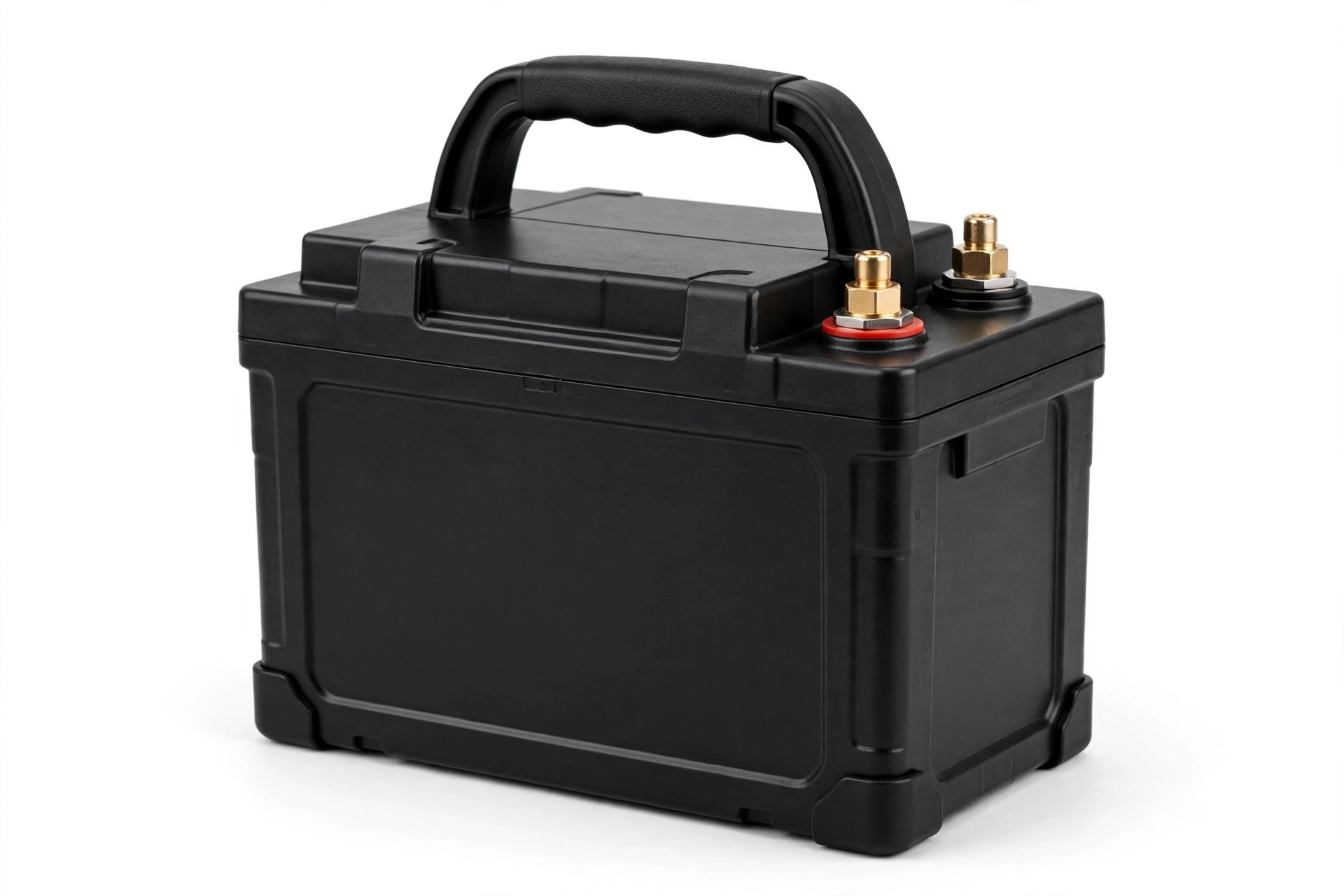
- Appearance is not approval. A group-size case, a handle, or a “marine” label on a photograph does not place the pack on a motor maker’s list, does not satisfy a surveyor’s standard, and does not make LJY a classification-society holder.
What makers and standards bound — and what we did not invent
Procurement stops at documents you can attach to an RFQ.
- Trolling-motor makers. Use the current owner’s manual or battery-requirements page from the motor manufacturer for voltage (commonly published as 12 V, 24 V or 36 V systems, but only the manual for your exact model is authoritative), battery type, and charger. Because first-party brand pages were not retrieved in this session, this article does not publish a thrust table, a minimum amp-hour figure, or a “Brand X approved” line against any LJY SKU.
- Electric-drive makers. If the outboard or inboard is sold as a system with a dedicated battery, treat that battery as part of the drive. A quote from LJY, if any, would be a custom or alternative pack only when the drive maker or the system designer has written that path. This page does not offer a generic propulsion replacement.
- Engine and starter-motor requirements. Cranking claims belong on a starter datasheet that matches the engine documentation. They are not inferred from a house-bank amp-hour rating.
- ABYC E-13 Lithium Ion Batteries. Named here as a standard that exists and that buyers should obtain when it has been invoked. The existing LJY data-sheet page is the on-site place to discuss builder documentation. No clause-level requirements are restated from memory.
Safer procurement paths — no modification steps
- Write the job on the first line of the enquiry: house, trolling, starter, propulsion, or a split system with more than one of those. If you want one pack to do two jobs, say so explicitly so the answer can be no.
- For a house bank, start with the marine solutions hub and the deep-cycle product pages it lists. Send inverter or load information, charger or alternator make, and whether a separate starter battery will remain in place. Do not parallel chemistries or invent a combiner scheme from this page.
- For a trolling motor, send the motor make, exact model, the manual’s voltage and battery-type statement, and the charger you will use. Use the trolling product pages as a place to start a quote, not as a certificate for that motor.
- For engine start, use the starter series and the engine’s starting documentation. Do not recast a house or trolling module as a starter on the strength of nominal voltage.
- For electric propulsion, ask the drive maker first. If they do not list a third-party pack, LJY cannot honestly sell an “approved propulsion battery” for that drive from a house or trolling catalogue line.
- If a yard or surveyor has named ABYC E-13 or another standard, say so and use the data-sheet page plus the current official text. Do not treat a product brochure as the standard.
LJY Energy can quote a LiFePO4 pack in a stated voltage class when the enquiry names the marine job and the equipment it must support. A quote is not a drop-in approval, not a propulsion certificate, and not an ABYC or classification-society mark.
What to send when you enquire
Use the existing contact page. Attach, if you already have them:
- the job: house, trolling, starter, propulsion, or a combination listed as separate lines
- vessel type and, if relevant, whether this is a new build, a refit, or a dealer stock order
- for trolling or propulsion: motor or drive make, exact model, and the manual pages that state voltage, battery type and charger
- for house loads: typical and peak loads you already know, inverter make if fitted, and the shore, solar or alternator chargers in use
- for starter: engine make and the starting requirement the engine documents, if you have it
- any standard or surveyor request (for example ABYC E-13), named as a request
- space envelope, quantity, and destination market
If the real hope was “one pack to replace every lead-acid battery on the boat,” say that clearly. The honest answer may be that the jobs must stay split, or that a propulsion battery has to come from the drive maker. That is still a useful enquiry.
What this page does not decide
- It does not publish a LJY compatibility matrix for Minn Kota, MotorGuide, Torqeedo, ePropulsion, or any other motor or drive brand.
- It does not claim that any LJY pack is ABYC certified, classification-society approved, or a universal lead-acid replacement.
- It is not a wiring, bonding, alternator, or charger-conversion procedure, and it does not tell you to parallel lithium with lead-acid.
- It does not introduce a new LJY marine propulsion product line.
- It does not estimate market size, search volume, or how many boats will convert.
- It does not cover RV house or starter batteries, golf carts, LSVs, or warehouse traction packs.
Frequently asked questions
Can I use one LiFePO4 pack as house battery and trolling-motor battery?
Only if the motor manual and the house charging system both document that arrangement for the same pack. Voltage overlap is not enough. Ask it as a split-duty question; do not assume a yes from a product photograph.
Can I use a 36V golf-cart pack on a 36V trolling motor?
Not on the strength of the voltage nickname. The live trolling page already flags this as a confirmation question. Send the motor manual and treat golf-cart and trolling packs as different jobs until the documents say otherwise.
Can a house or trolling pack replace the battery that came with my electric outboard?
Not unless the drive manufacturer documents that replacement. Many electric-propulsion systems are sold as a matched battery and charger. This site does not offer a generic propulsion substitute.
Can I replace the engine starter and the house bank with one “dual-purpose” lithium pack?
This page does not recommend that as a default. Starter and deep-cycle duties differ, and the starter series is published separately from house products. If you want a single pack to do both, state the engine’s starting requirement and the house loads so the answer can be scoped honestly, including a no.
Does buying a pack from LJY mean it meets ABYC E-13?
No. E-13 is an ABYC standard you must obtain if it has been invoked. LJY does not claim ABYC certification on this page. Use the data-sheet page for the builder documents that page already discusses, and confirm the current official text.
Sources
- American Boat & Yacht Council, standard E-13, Lithium Ion Batteries — cited as a published ABYC electrical standard. The official standards catalogue is at https://abycinc.org/standards-list/. The full text was not retrieved in this session.
- LJY Energy, “Marine Battery Solutions: LiFePO4 for Boats & Yachts,” live solutions hub (retrieved HTTP 200 in this session). https://ljyenergy.com/solutions/marine-battery/
- LJY Energy, “ABYC E-13 Lithium Battery Data Sheet for Boat Builders,” live guide (retrieved HTTP 200). https://ljyenergy.com/abyc-e13-lithium-battery-data-sheet-boat-builders/
- LJY Energy, “12V / 24V LiFePO4 Starter (Cranking) Battery Series” and the 24V / 36V trolling product pages listed above, retrieved HTTP 200, used as internal product references, not as motor-maker approvals.
Source limitation: first-party trolling-motor manufacturer battery pages were not retrieved in this session, so no brand-specific amp-hour, chemistry or charger figures are stated as facts. The ABYC standards list and a related ABYC article returned HTTP 403 from this writing environment; E-13 is named but not quoted clause by clause. Confirm motor manuals and the current ABYC text before an order is placed. Official documents can change.
Related guides
- Marine battery solutions — house-system hub, charging context and standard deep-cycle products
- ABYC E-13 data sheet for boat builders — document set when a builder has named the standard
- 36V LiFePO4 for trolling motors — 36V trolling enquiry page
- 24V 100Ah trolling-motor pack — 24V trolling product page
- 12V / 24V starter series — cranking product family, separate from house and trolling
Send the marine job, motor or engine model, and charger details on the contact page