
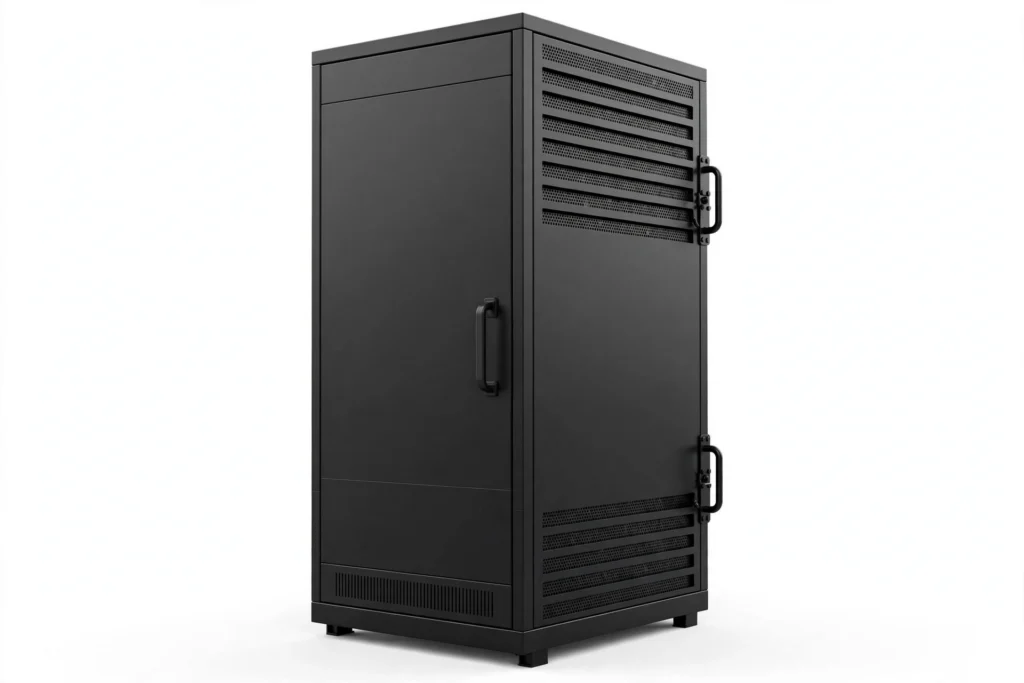
48V 200Ah LiFePO4 Energy Storage Battery
Product Overview
A 10.24kWh LiFePO4 energy storage module (51.2V 200Ah, 16S) — the standard building block for residential and light-commercial solar storage, backup power and off-grid systems. One module covers a typical home’s evening consumption; multiple modules in parallel scale to whole-home backup and small commercial peak-shaving.
For distributors, installers and energy storage brands, this is the highest-volume ESS form factor in the market: 51.2V (16S LiFePO4) is the voltage the mainstream 48V-class hybrid-inverter ecosystem is designed around. As a China-based LiFePO4 battery supplier and OEM/ODM coordination partner, LJY Energy works with qualified manufacturing partners to configure capacity, enclosure, BMS, communication protocols and branding to your market requirements.
48V vs 51.2V: What Buyers Must Know
The terms “48V” and “51.2V” are used loosely in the market and cause real procurement confusion. The distinction is the cell count:
| Configuration | Nominal Voltage | Cell Count | Typical Absorption Voltage | Energy at 200Ah |
|---|---|---|---|---|
| 15S LiFePO4 | 48.0V (15 × 3.2V) | 15 cells in series | ~54.0–54.75V | 9.6kWh |
| 16S LiFePO4 (typical) | 51.2V (16 × 3.2V) | 16 cells in series | ~57.6–58.4V | 10.24kWh |
Market reality: most products sold as “48V LiFePO4” in residential energy storage are actually 16S (51.2V nominal) — the voltage that 48V-class hybrid inverters expect. True 15S (48.0V) systems exist but are less common in the ESS channel. The page below describes the typical 16S 51.2V configuration. If your project specifies 15S, contact us — cell count is configurable per order. Using the wrong charge voltage for the wrong cell count is the single most common ESS commissioning error; our charging voltage reference lists both.
Typical Specifications
Values below describe the typical 16S (51.2V) configuration. “Optional” items can be specified per order; “To be confirmed” items depend on the final configuration and order — contact us for the datasheet of the exact build you need.
| Parameter | Value | Status |
|---|---|---|
| Battery chemistry | LiFePO4 (lithium iron phosphate) | Typical |
| Nominal voltage | 51.2V (16S) — sold in the 48V ESS class | Typical |
| Alternative configuration | 48.0V (15S) available per order | Optional — specify at inquiry |
| Rated capacity | 200Ah | Typical |
| Energy | 10.24kWh (16S) / 9.6kWh (15S) | Typical |
| Charge voltage (bulk/absorption) | 57.6–58.4V (16S); 54.0–54.75V (15S) | Typical — match to cell count |
| Built-in BMS | Over-charge / over-discharge / over-current / short-circuit / temperature protection | Typical |
| Communication | CAN / RS485 for inverter closed-loop communication | Optional |
| Bluetooth / app monitoring | Cell voltages, SOC, temperature on mobile app | Optional |
| Low-temperature heating | Self-heating pad for sub-zero charging environments | Optional |
| Parallel expansion | Multiple modules in parallel for larger systems | Optional — subject to configuration |
| Mounting | Rack / floor-standing / wall-mounted per enclosure option | Optional — OEM/ODM |
| Enclosure / branding | Custom enclosure color, logo and labeling | Optional — OEM/ODM |
| Certifications | UN38.3 / MSDS / CE and others per target market | To be confirmed per order |
| Warranty terms | Subject to configuration and order agreement | To be confirmed |
| Dimensions & weight | Per final enclosure design | To be confirmed — datasheet on request |
| Lead time | Subject to order quantity and configuration | To be confirmed |
Why LiFePO4 for Energy Storage
Stationary storage is LiFePO4’s home territory: the olivine cathode’s thermal stability (no oxygen release during decomposition, unlike nickel-rich chemistries), thousands of deep cycles, and a flat discharge curve that keeps 48V-class inverters in their optimal window. Compared with lead-acid at this scale, one 10.24kWh LFP module replaces roughly four 200Ah AGM batteries while delivering deeper usable capacity and a fraction of the lifetime cost. See our LiFePO4 vs lead-acid comparison and the battery safety guide for the full technical picture.
Charging & Compatibility
First confirm your cell count, then set the voltage. For the typical 16S configuration: bulk/absorption at 57.6–58.4V, then termination — LiFePO4 needs no float stage. For 15S: 54.0–54.75V. Our charging voltage reference lists both, and the complete charging guide covers CC/CV operation step by step.
- Hybrid inverters: the 51.2V nominal matches mainstream 48V-class hybrid inverters; CAN/RS485 closed-loop communication is available as an option for compatible inverter brands. Confirm the inverter’s battery voltage window in its datasheet.
- Solar / MPPT: program absorption to the correct voltage for your cell count; disable equalization (a lead-acid routine incompatible with lithium).
- AC / generator charging: use a LiFePO4-profile charger matched to 16S (or 15S) — a charger set for the wrong cell count will undercharge or trip BMS protection.
- Multi-module systems: parallel wiring, fusing and communication addressing must be designed as a system — see OEM/ODM charging solutions for project-level design.
If a module ever refuses to charge, work through our troubleshooting guide before assuming a fault.
Battery Lifespan
Lifespan is governed by cycle aging and calendar aging together. Typical reference for quality LiFePO4 cells: around 6,000 cycles at 80% depth of discharge (25°C, to 80% capacity retention) at cell level — pack-level results are lower and depend on BMS, thermal design and usage. For daily-cycled solar storage, designing around 80% DoD roughly doubles cycle life versus 100% DoD while giving up only 20% of per-cycle capacity. Our DoD vs cycle life guide explains the throughput economics, and should you charge to 100% covers the practical charge-limit strategy.
For procurement teams evaluating supplier claims, our cycle-life verification checklist shows how to read datasheet curves and spot inflated marketing. Calendar aging matters for backup-oriented installations — see our calendar aging guide.
Sizing & Selection
One 10.24kWh module covers a typical home’s evening consumption and essential backup; two to four modules serve whole-home backup, meaningful solar self-consumption and small commercial loads. Size from daily kWh throughput and desired autonomy days rather than from the inverter rating alone. Installers: confirm the inverter’s battery voltage window, decide between open-loop voltage control and CAN/RS485 closed-loop communication at the quoting stage, and verify parallel-module limits before committing to the design. Our wholesale buyer’s guide covers sourcing these systems from China.
Applications
- Residential solar self-consumption and time-of-use arbitrage
- Home backup power (essential-loads and whole-home)
- Off-grid homes and rural electrification
- Small commercial peak-shaving and backup
- Telecom base stations and remote monitoring
- Microgrids and community energy projects
Wholesale, OEM & ODM
We support distributors, installers, EPC contractors and energy storage brands with flexible cooperation models. New to battery importing? Start with our MOQ and sample order guide, then see the wholesale buyer’s guide for sourcing from China step by step.
- Sample / trial orders: evaluate quality before committing to volume.
- OEM branding: custom enclosure, logo, labeling and packaging for your brand.
- ODM configuration: 15S/16S cell count, capacity, BMS features, communication protocols and heating options matched to your application.
- Documentation support: datasheets, UN38.3/MSDS and market-specific files coordinated per order — request the current document package.
Frequently Asked Questions
Is this a “48V” or “51.2V” battery?
Both terms describe the same typical product: a 16S LiFePO4 module with 51.2V nominal voltage, sold in the 48V energy-storage class because it pairs with 48V-class inverters. True 15S (48.0V nominal) is a different configuration — available on request. Always confirm cell count before setting charge voltages.
What charging voltage should I set?
For the typical 16S configuration: 57.6–58.4V bulk/absorption, no float stage. For 15S: 54.0–54.75V. See our charging voltage chart for the full reference.
What inverter works with this battery?
Most 48V-class hybrid inverters accept the 51.2V nominal window. Confirm the inverter’s battery voltage range in its datasheet, and choose CAN/RS485 closed-loop communication where the inverter brand supports it.
Can I parallel multiple modules?
Yes — parallel expansion is supported subject to configuration. Confirm the maximum parallel count, wiring and communication addressing for your order before designing the system.
How long will it last?
Lifespan depends on depth of discharge, temperature and usage pattern. Quality LiFePO4 cells are typically rated around 6,000 cycles at 80% DoD (cell level); real pack life varies. Our lifespan guide explains the key variables.
Can I get this with my own brand?
Yes. We coordinate OEM branding (enclosure, logo, labeling, packaging) and ODM configuration — including 15S/16S cell count — through our manufacturing partners. Contact us with your target specs.
Specifications are typical configurations and subject to the final order specification. Certifications, warranty, dimensions, lead time and pricing are confirmed per inquiry. Content as of October 2026.