
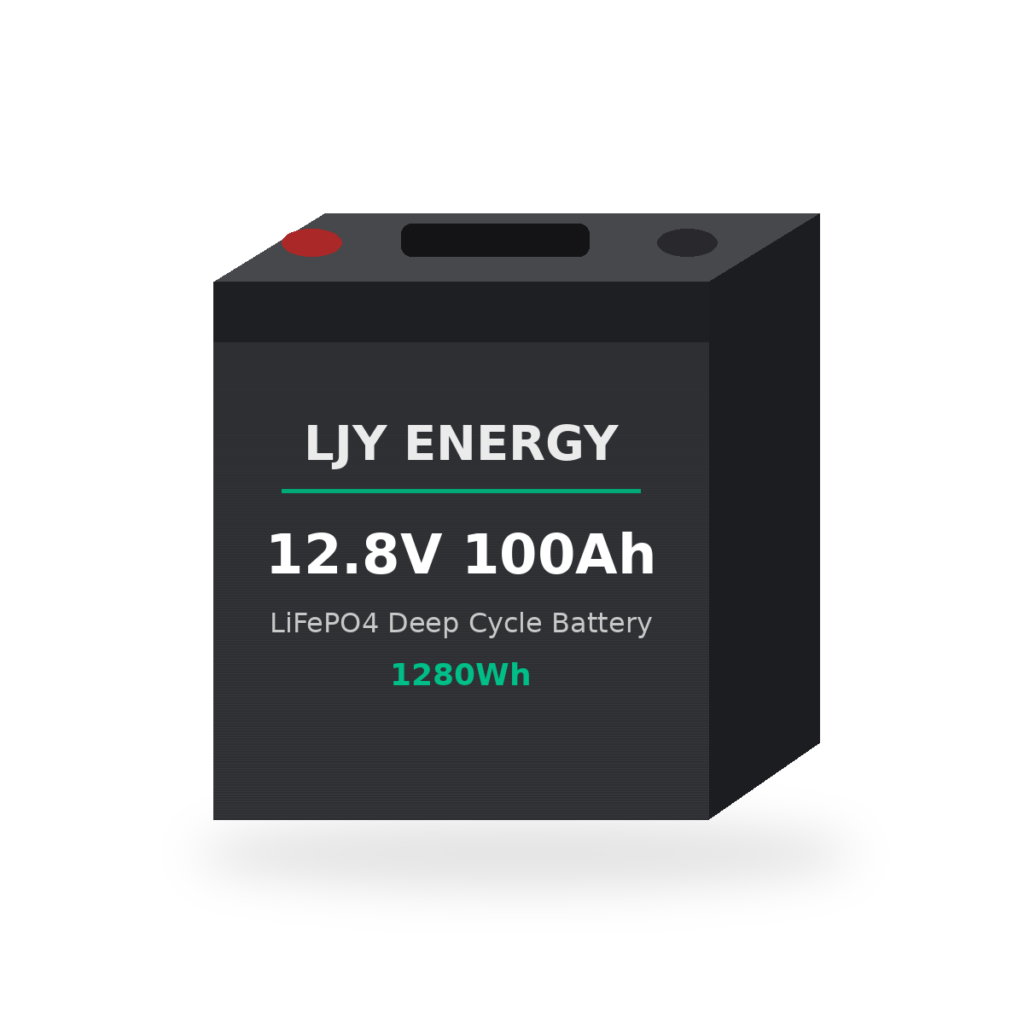
A standard 12V battery rarely fits a branded product exactly — the capacity step is wrong, the case does not match your enclosure, or the BMS talks the wrong protocol. The LJY Energy 12V OEM battery block is a 12.8V LiFePO4 building block configured around your product instead: capacity, case, BMS functions, label and packaging are set per project for brands and integrators in solar, backup power, mobility and equipment markets. Specifications, pricing, MOQ and lead times are confirmed per project, in writing, before production.
Specification at a Glance
| Parameter | Value |
|---|---|
| Chemistry | LiFePO4 (lithium iron phosphate) |
| Configuration | 4S (4 × 3.2V prismatic cells) = 12.8V nominal |
| Capacity | Configurable per project. The block is built on the same 12.8V platform as our published 12V range, whose standard models run from 7Ah to 460Ah; the capacity steps offered for an OEM project are confirmed against your size and cost targets. |
| Nominal energy (calculated) | 12.8V × capacity — for example, a 100Ah block = 1,280Wh nominal |
| Charge voltage | Typically 14.2–14.6V; the exact profile is set in the project specification |
| Discharge cut-off | Typically ~10.0–10.8V, set by the BMS configuration |
| Continuous / peak current | Depending on configuration — the BMS is selected for your load profile, and the ratings are stated in the project specification |
| Cells | Cell brand and grade are confirmed per project, in writing |
| BMS functions | Configurable. Options that can be specified per project include Bluetooth monitoring, low-temperature charge cut-off and CAN/RS485 communication; the final function list is fixed in the project specification before production |
| Case and rating | Case format, dimensions and ingress rating are configured per project and confirmed in the specification |
| Label, colour, packaging | Your label and packaging design; the customisation scope is confirmed per project |
| Cycle life | 12V LiFePO4 blocks in this class are commonly marketed at 4,000–6,000 cycles at 80% depth of discharge. That is a market-typical range, not a blanket figure for every build — the rated cycle life for your configuration is confirmed in the project specification. |
| Certificates and shipping documents | Confirmed per model and project before the order is placed (including UN38.3 and SDS where applicable to the final configuration) |
| MOQ, lead time, warranty | Confirmed in the quotation, per project |
What You Configure — and What Each Choice Changes
Capacity step
Capacity sets your product’s runtime claim and its price point. Because the block is built to order, you are not forced into a catalogue step that oversizes the battery (and your cost) or undersizes it (and your reviews). Size from the load side: daily energy use in watt-hours, divided by 12.8V, divided by the usable depth of discharge you plan to offer — then confirm the step with us against the case size you can accept.
BMS rating and functions
The BMS current rating must cover your product’s peak draw, not just its average — a block that trips under a legitimate load peak becomes a warranty problem under your brand. Communication options (Bluetooth for end-user apps, CAN/RS485 for equipment integration) and low-temperature charge protection are configuration decisions: each adds cost, so specify the ones your product genuinely needs and leave the rest out.
Case, terminals and label
Case dimensions and terminal layout decide whether the block drops into your existing product or forces a redesign; send your enclosure limits with the inquiry. Label and packaging carry your brand — artwork approval is a defined step in the project process below, before any production run.
Typical Applications
- Solar and off-grid kits: branded storage blocks sold with panel kits and small off-grid systems.
- UPS and telecom backup: 12V backup blocks for small UPS products, network and security equipment.
- Mobility products: battery blocks for mobility equipment and powered trolleys.
- Golf trolleys and small electric equipment: compact 12V blocks for trolley and equipment brands.
- Fish finders and small marine electronics: small-capacity blocks for electronics brands (for vessel house-battery programs, see the pointer below).
Building a drop-in house battery line for RV or marine end users instead? That is a different product program: see our 12.8V RV & marine private label LiFePO4 battery program. And if you need a standard model rather than a configured block, the 12V LiFePO4 battery series lists the published range. The wider capability overview is on our OEM/ODM page, and configured packs at other voltages are on custom battery solutions.
How an OEM Project Runs
- Brief: you send the application, target voltage and capacity, size limits and target market.
- Proposal: we return a specification proposal — cells, BMS, case, label scope — with a sample plan and quotation, including MOQ and lead time.
- Sample and approval: you test the sample and approve the label artwork against the written specification.
- Order: production terms, warranty and documents are confirmed in writing before the production run starts.
Frequently Asked Questions
Can I put my own logo on the battery?
Yes — label customisation is the point of this program. The scope (label, case colour where configured, packaging and documentation inserts) is confirmed per project, and artwork is approved by you at the sample stage, before production.
Is the block a drop-in replacement for a 12V lead-acid battery?
A 12.8V LiFePO4 block fits most 12V systems electrically, but the charging profile must suit LiFePO4 — a lead-acid charger without a lithium profile can undercharge the block or miss the correct termination voltage. If your product includes the charger, we align the charge profile in the project specification; if your customers use their own chargers, the specification states the required profile for your product documentation.
Can the block communicate with our equipment or inverter?
Depending on configuration. CAN and RS485 communication can be specified where your equipment requires it, and Bluetooth monitoring where an end-user app is part of your product. Tell us the protocol and the host device in your brief — communication compatibility is verified at sample stage, not assumed.
What is the minimum order quantity?
MOQ is set per project — it depends on the capacity step, case and label scope — and is stated in the quotation together with the sample terms. A configured block is not priced like a catalogue SKU; the inquiry form below is how you get the real number for your configuration.
How long will the battery last in our product?
Cycle-life figures for this class are commonly marketed at 4,000–6,000 cycles at 80% depth of discharge, but the honest number depends on your configuration, the cells selected and the duty cycle your product imposes. The rated figure for your build is confirmed in the project specification, so the lifetime claim you print under your brand rests on the document, not on a generic range.
Request an OEM Proposal
Send your application, target capacity, size limits and target market through the OEM block inquiry form. You will receive a specification proposal and sample plan with pricing, MOQ, lead time and warranty terms stated in writing — the complete basis for deciding whether the block fits your product line.
Browse the full range in our product catalog, see the block in RV battery systems, or reach us directly on WhatsApp.