
A balcony solar system is the smallest way into home solar: one or two panels on a railing, a microinverter, and a plug that goes into a household socket — no electrician, no fixed wiring, no roof needed. That is why it took off first among renters and flat owners, and why Germany passed one million registered balcony systems in June 2025, with the real installed base estimated at two to three times the registered figure. The panels make their power at midday, when most flats are empty; a battery moves that power to the evening, when the lights, the cooking and the screens actually run. Sizing guides commonly put the balcony-storage sweet spot at 1.5 to 2.5 kWh of usable capacity — enough to time-shift a sunny day’s surplus, not to run a flat off-grid. Size the battery from two numbers: the evening load it must cover, and the midday surplus the panels actually produce — a battery larger than the surplus sits half-empty on cloudy weeks, and one smaller than the evening load runs dry before bedtime. In Germany the inverter feed-in is capped at 800 watts of alternating current and the simplified registration route covers panels up to 2,000 watts peak, and the battery must be entered in the Marktstammdatenregister; adding storage currently means extra paperwork beyond the one-step plug-in registration, so check your local rules before ordering. Start with one module and add modules in parallel as the need grows — the expansion model is fixed from day one, so a second module next year is a swap-in, not a redesign.
LJY Energy is a LiFePO4 battery supplier and OEM/ODM coordinator in Shenzhen; we are not a factory. This guide covers the battery side of balcony solar only — low-voltage home systems, 12 V, 24 V and 48 V packs, and how the pack size matches the evening load and the midday surplus. Start with one module and add modules in parallel as the need grows; the parallel limit for a bank is confirmed per project in the quotation, because it depends on the BMS configuration of the batteries you order. One honest boundary: a balcony battery time-shifts solar power to the evening — it does not make a flat independent of the grid, and on short winter days the panels produce a fraction of their summer yield, so the battery charges slowly and covers less. The pack size, the inverter pairing and the parallel limit for your system are all confirmed per project in the quotation, in writing, before production.
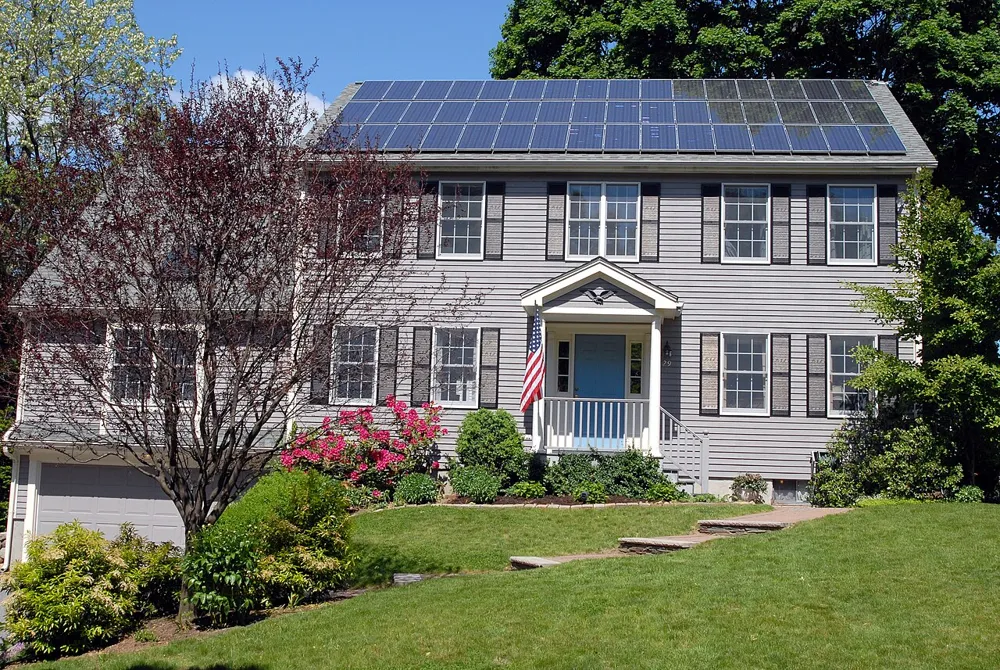

Balcony storage at a glance
| Inverter feed-in limit, Germany | 800 W |
| Smallest balcony module | 640 Wh |
| Standard balcony module | 1.28 kWh |
| Larger balcony module | 3.84 kWh |
| Home storage module | 5.12 kWh |
| Common balcony sizing range | 1.5–2.5 kWh |
| Usable share at typical depth of discharge | 80% |
| Midday surplus on a sunny day, worked example | 2.2 kWh |
| Two modules in parallel, worked example | 2.56 kWh |
Battery specifications live on the 12V 100Ah deep-cycle LiFePO4 battery page; confirm values on the product page and in the written quotation for your project.
Worked example
Evening loads of 200 W over 8 hours add up to about 1600 Wh. One 1.28 kWh module holds about 1.0 kWh usable at 80% depth of discharge, which covers roughly 5 hours of that load — most of the evening. Two modules in parallel hold 2.56 kWh, about 2.0 kWh usable, which covers the full evening — and a sunny day’s surplus of about 2.2 kWh is roughly what fills them. Size from the evening load and the midday surplus, not from the panel wattage — and confirm the pack size and parallel limit per project in the quotation.
What to send before a proposal
- The panel wattage and the inverter model, if one is already installed
- The evening loads to cover and how many hours they run — fridge, lights, cooking, screens
- How many modules the system already has, if any, and whether this is a first install or an add-on
Request a sizing
Send the panel wattage, the inverter model if one is installed, the evening loads and the hours they run. LJY Energy will work out the pack size and answer it in the quotation itself — which is where it belongs, confirmed per project in writing. Start with one module and add modules in parallel later; the expansion model is fixed from day one, so a second module next year is a swap-in, not a redesign. Check your local rules before ordering — registration and grid-connection requirements differ by country, and in Germany the battery needs its own register entry. We coordinate OEM/ODM battery supply from Shenzhen; we are not a factory, and every order is confirmed in writing before production begins.

Request a balcony solar battery quote · WhatsApp +86 159 8945 0735