
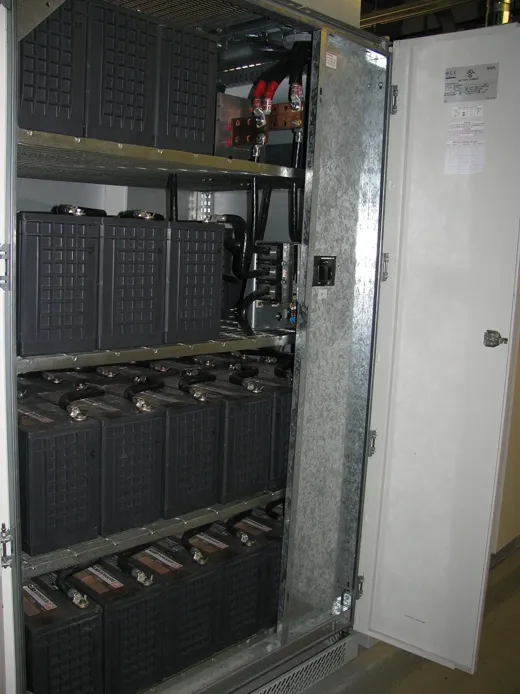
An AI data centre does not lose power the way an office does: when the mains drops, the battery bank has minutes to hold GPU racks that draw 40 kW, 120 kW or more each, until the generators take over. Size the bank too small and the racks drop before the generator starts; size it from the UPS nameplate alone and you pay for capacity you never use. Battery banks for this job are modular: buyers often start with the bridge minutes they need today and add modules in parallel as racks are added, instead of replacing the bank. This guide explains how to size the battery side of a megawatt-scale AI data centre UPS: how many bridge minutes to plan for, how N+1 and 2N redundancy change the battery count, and what discharge rate the battery must sustain. The power figures use the IEA Key Questions on Energy and AI (2026 edition): data centres used about 485 TWh in 2025, and AI-focused data centre power is set to roughly triple by 2030, from 155 TWh to 465 TWh.
LJY Energy is a LiFePO4 battery supplier and OEM/ODM coordinator in Shenzhen; we are not a factory. This guide covers the battery side of the UPS only — bridge minutes, redundancy and discharge rate — so you can ask for a written sizing proposal with the right numbers in hand. Sizing is confirmed per project in writing, from the load and bridge time you send.
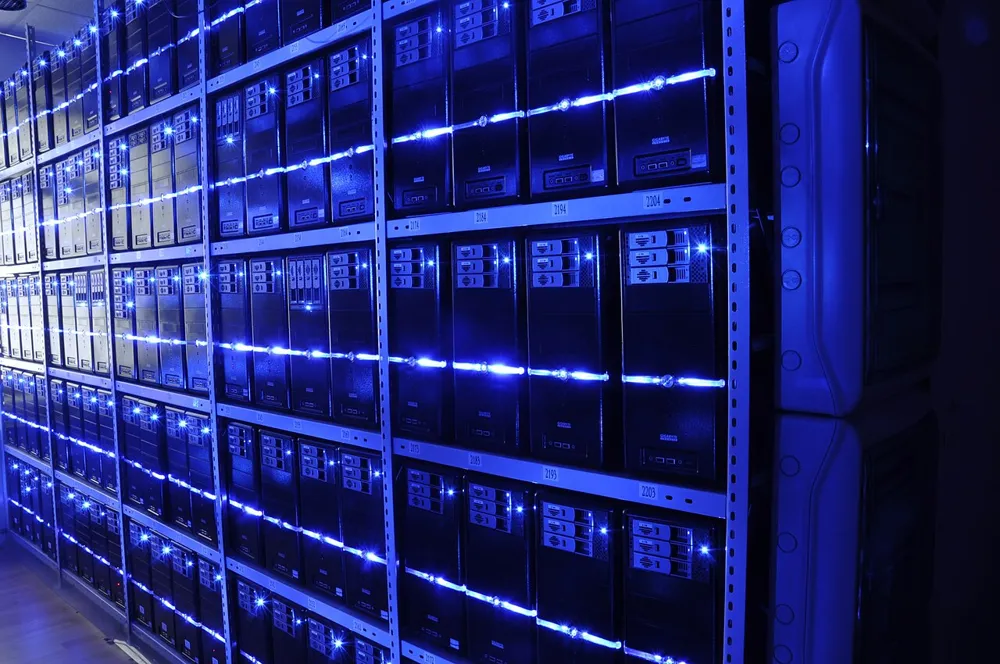

Sizing reference
| Typical enterprise rack | 7–12 kW |
| Hopper GPU rack (4× DGX H100) | ≈40 kW |
| Blackwell GB200 NVL72 rack | ≈120 kW |
| GB300 NVL72 rack | 142 kW |
| Average rack, AFCOM 2026 | 27 kW |
| Air cooling, practical range per rack | 15–20 kW |
| AI-focused data centre power, 2025 → 2030 (IEA 2026) | 155 → 465 TWh |
| Redundancy, common schemes | N+1, 2N |
| Data centre power, traditional | 10–25 MW |
Power figures: IEA (2026), Nvidia DGX guides and AFCOM 2026. See also AI GPU server rack LiFePO4 battery.
Sizing example
A 1000 kW AI load needs about 83.3 kWh of usable energy for 5 minutes of bridge time at full load. Extending the bridge to 10 minutes doubles the stored energy; halving the load halves it. Because the bank is modular, a buyer can start with the 5-minute bank and add parallel modules later as the load grows, without replacing what is already installed. Size the bank from the IT load you must carry, not from the UPS nameplate, and confirm the discharge rate with the battery supplier before ordering.
What to send before a proposal
- IT load in kW to carry (continuous, not nameplate)
- Bridge minutes required before the generator starts
- Redundancy scheme (N+1 or 2N) and the UPS model
Request a sizing
Send the IT load in kW, the bridge minutes you need, and the redundancy scheme. LJY Energy will work out a sizing proposal for your load and bridge time and quote with delivery terms. Modules can be added in parallel later as the load grows; the exact parallel layout is confirmed per project in writing. We coordinate OEM/ODM battery supply from Shenzhen; we are not a factory, and every order is confirmed in writing before production.

Request a battery sizing proposal · WhatsApp +86 159 8945 0735