
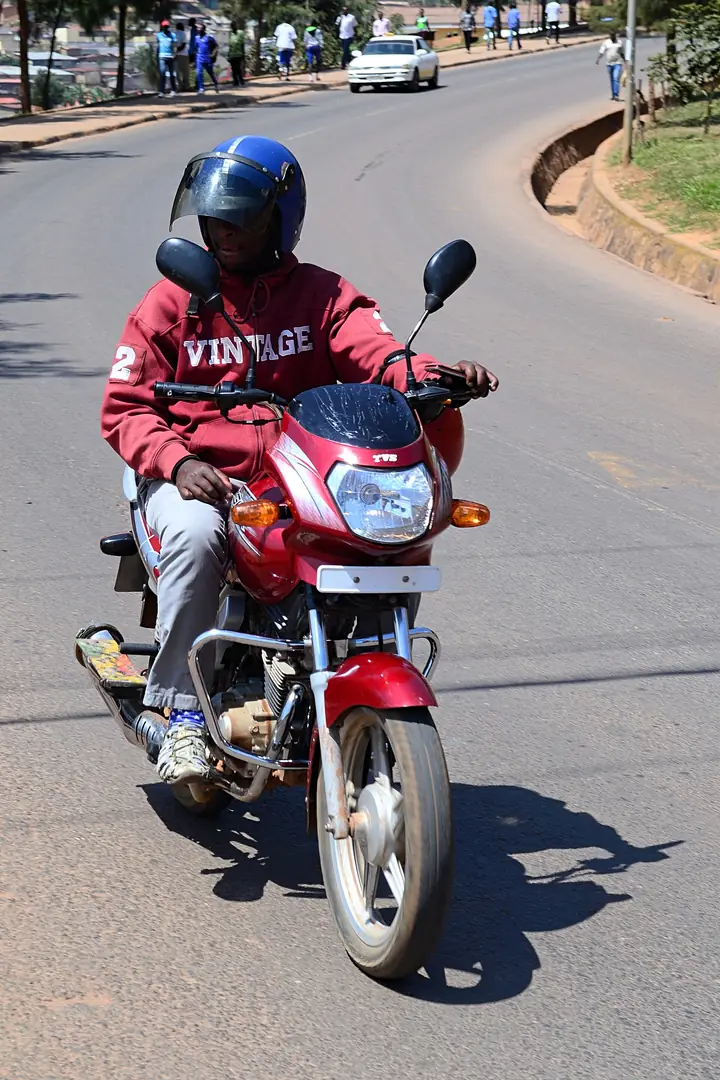
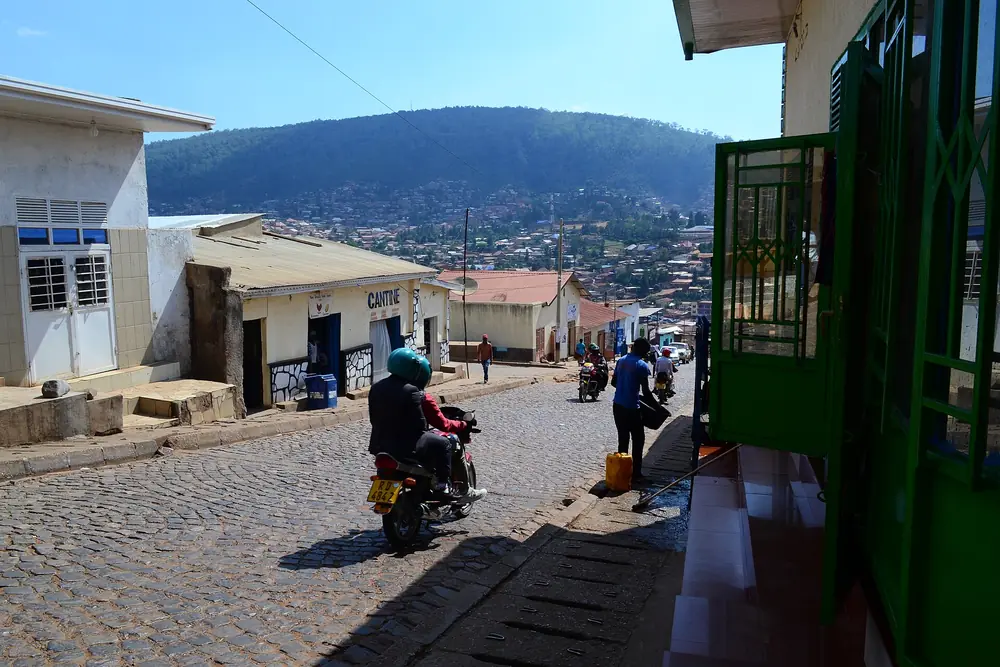
Kigali’s moto-taxis climb steep roads all day, and the city’s electrification push has brought in kits and frames with 48V, 60V or 72V names. Those names do not say how many cells are in series or where the charger must stop. A fleet searching for an electric moto battery pack in Kigali needs the series count, the charge cut-off and the BMS, especially when a hill holds the motor at a high current for minutes at a time.
LJY Energy is a LiFePO4 supplier and OEM/ODM coordinator in Shenzhen, not a factory, and we do not assemble vehicles. We coordinate 51.2V 16S packs as the 48V-class reference. Any 60V or 72V pack is confirmed per project. The BMS is built for one series count, and the charger and controller cut-offs are checked against that count, not against the name on the frame.

Request a quote for a Kigali e-moto pack · WhatsApp +86 159 8945 0735
What the fleet confirms per model
| Item | Why it matters | Confirmed per project |
|---|---|---|
| Series count | a 16S pack is not a 20S pack | cells in series, from the datasheet |
| Charge and discharge cut-off | charger and controller must match the BMS | voltages in writing |
| Hills | sustained current on Kigali climbs | continuous and peak current |
| Connector and size | the pack must fit the frame | drawing |
| Daily kilometres | shift length and mid-day charging | kWh and charging plan |
60V and 72V supply is confirmed per project. We never infer that two motos with the same voltage name can share a pack, a charger or a BMS.
Nominal voltage, charge cut-off, series count and BMS
A 48V, 60V or 72V nameplate (60V and 72V supply confirmed per project) does not say how many cells are in series or where the charger must stop. The table multiplies public per-cell values by the series count: LiFePO4 from the EVE LF304 datasheet, NMC from the Samsung SDI 18650-25R datasheet, and lead-acid from Battery University charge limits. Every 60V or 72V pack is confirmed per project.
| Chemistry and series | Nominal | Charge cut-off | BMS configuration |
|---|---|---|---|
| LiFePO4 16S (3.2V / 3.65V per cell) | 51.2V | 58.4V | 16S board |
| LiFePO4 20S | 64.0V | 73.0V | 20S board |
| LiFePO4 24S | 76.8V | 87.6V | 24S board |
| NMC 16S (3.6V / 4.2V per cell) | 57.6V | 67.2V | 16S board, NMC limits |
| NMC 20S | 72.0V | 84.0V | 20S board, NMC limits |
| Lead-acid 60V (5 × 12V, 30 cells, 2.30–2.45V per cell) | 60V | 69.0–73.5V | no BMS; LiFePO4 replacement confirmed per project |
| Lead-acid 72V (6 × 12V, 36 cells) | 72V | 82.8–88.2V | no BMS; LiFePO4 replacement confirmed per project |
A 72V NMC moto charges to 84.0V, while a 24S LiFePO4 pack stops at 87.6V, so 72V supply is confirmed per project and charger, controller and BMS are checked together. A 16S BMS cannot protect a 20S pack. We never infer compatibility from a voltage name.
What the assembler or fleet sends before a quote
- Vehicle model, controller and charger already chosen.
- Daily kilometres and typical hill routes in Kigali.
- Space for the pack and the connector.
- Number of motos in the first batch and later.
- UN38.3 and SDS come with the quote.
Pilot a few motos on real hills
Fleets that run a pack on a few Kigali motos for a month of real shifts, then freeze one specification, avoid mixing chargers and spare parts. Prices and lead times only in a quotation.

How we proceed
Vehicle, controller and charger data → series count and pack proposal → pilot motos → fleet orders. Prices and lead times only in the formal quote.
Send your vehicle details and request a pack proposal
LJY Energy, Jack Lai. Unit 705, Building 1, Lecai Industrial Park, 10 Kaijing Road, Longtian Street, Pingshan District, Shenzhen 518122, China. +86 159 8945 0735.