
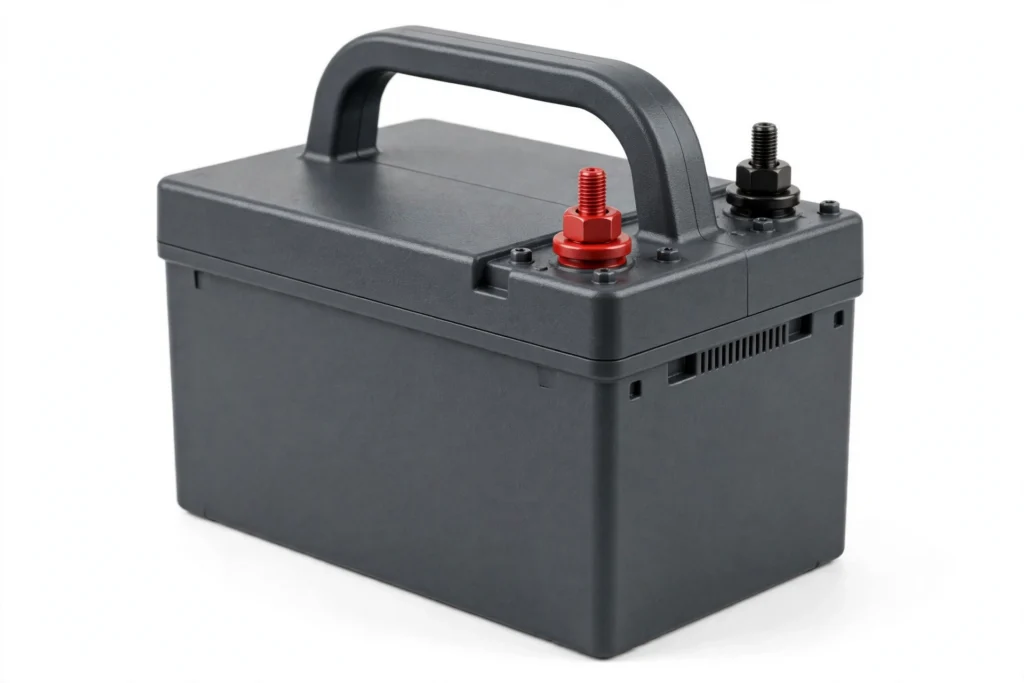
24V 200Ah lithium iron phosphate battery. 5.12kWh modular energy storage for 24V solar systems, RV upgrades and backup power.
Product Overview
The 24V 200Ah LiFePO4 battery stores 5.12kWh in a 25.6V nominal package built for 24V solar installations, RV house systems, and backup power. Doubling the capacity of standard 100Ah units, it reduces the number of parallel batteries needed for mid-size off-grid systems.
For installers, 24V architecture offers lower current than 12V for the same power, reducing wiring costs. See also our 25.6V 100Ah model for smaller systems. Fitting out an RV or caravan instead? See this same battery presented for RV and caravan power systems.
- 5.12kWh usable energy — ideal for mid-size 24V solar
- 150A continuous BMS — supports 3.5kW inverters
- Series/parallel flexible — build 48V banks or expand capacity
- Long lifespan — 4000+ deep cycles
Technical Specifications
| Group | Parameter | Value | Status |
|---|---|---|---|
| Electrical | Nominal voltage | 25.6V (8S) | Typical |
| Electrical | Rated capacity | 200Ah | Typical |
| Electrical | Energy | 5.12kWh | Typical |
| BMS | Continuous discharge | 150A | Typical |
| Charging | Charge voltage | 29.2V | Typical |
Values above are the typical configuration for this model. Final specifications are confirmed per project in the formal quotation.
Building 24V and 48V Banks from This Unit
The 200Ah unit is the flexible middle of the 24V system: big enough to stand alone in a mid-size installation, and the series/parallel flexibility lets the same SKU serve two system voltages:
- Single unit (24V, 5.12kWh): the standard fit for mid-size off-grid solar, larger RV house systems, and small backup installations. One battery, one BMS, no parallel harness.
- Parallel at 24V: add identical units to grow capacity in 5.12kWh steps while staying on 24V — the upgrade path for systems whose inverter and loads are already 24V.
- Series pair (48V, 10.24kWh): two units in series build a 48V bank for larger inverters. Series banks must use identical units at equal state of charge; confirm the series configuration with us before ordering so the BMS setup matches.
One engineering note for installers: at 24V, a 3.5kW inverter already draws around 150A at full load — exactly this unit’s continuous rating. Size cable, fusing, and the battery count for the inverter’s surge as well as its rating, and talk to us about the load profile if the system runs large motor loads.
Applications
- 24V off-grid solar systems
- RV 24V upgrades
- Telecom backup power
- Small commercial backup
Wholesale, OEM & ODM
We supply this model to solar installers, off-grid system integrators, and distributors building 24V product lines. Capacity, BMS, housing, and branding are customizable per project, and the same platform covers smaller systems via the 25.6V 100Ah model. Request a Quote with your system voltage, inverter size, and target capacity for a bank configuration check.
Frequently Asked Questions
Why choose 24V over 12V or 48V?
24V halves the current of a 12V system at the same power — thinner cables, less voltage drop, cheaper wiring — while staying simpler than 48V for mid-size installations. It is the natural step up when a 12V system outgrows its wiring but the loads do not justify a full 48V redesign.
Can I really build a 48V bank from two of these?
Yes — two identical units in series form a 48V, 10.24kWh bank. Use matched units at equal voltage and state of charge, and confirm the series arrangement with us when ordering so the configuration is set up correctly.
What inverter size does it support?
The 150A continuous BMS supports inverters up to about 3.5kW at 24V. For larger inverters, parallel units share the load — send us the inverter model and we will size the bank.
What charger does it need?
A LiFePO4-profile charger or solar charge controller set for a 29.2V charge voltage on a 25.6V nominal pack. If you are reusing an existing controller, confirm it has a true lithium setting.
Where This Battery Is Used
This 5.12kWh unit is a standard building block in our Solar Energy Storage Solutions and Off-Grid Energy Storage pages. Send us your system voltage, daily consumption and inverter size for a bank sizing check.